By Meg Butler
 BETTY BOOP
 Hitler’s Jewish ancestry isn’t the strangest twist in racial history. FBI director J. Edgar Hoover — the man who plagued the black liberation movement from Marcus Garvey to the Black Panther Party — was known by his peers as a passing black man. His childhood neighbor writer Gore Vidal famously quoted, “It was always said in my family and around the city that Hoover was mulatto. And that he came from a family that passed.” And apparently that was a closely-guarded secret. Millie McGhee, author of Secrets Uncovered: J. Edgar Hoover Passing For White, said, “In the late 1950’s, I was a young girl growing up in rural McComb, Mississippi. A story had been passed down through several generations that the land we lived on was owned by the Hoover family. My grandfather told me that this powerful man, Edgar, was his second cousin, and was passing for white. If we talked about this, he was so powerful he could have us all killed. I grew up terrified about all this.”
 It’s hard to get through any school lesson about the Italian Renaissance without talking about the Medici family. What history doesn’t like to talk about is that the financial ruler of the western world — Alessandro de Medici, Duke of Penne and Duke of Florence and commonly called “Il Moro” (Italian for Moor — a term commonly used to describe anyone with dark skin) — was born to an African-Italian mother (a servant) and a white father (who would later become Pope Clement VII).
JACQUELINE ONASSIS
 Was Michelle Obama our first African-American First Lady? Or was it Jackie O? Jacqueline Onassis is a member of the van Salee’s family, famous for their “mulatto” heritage. Jackie O’s ancestor John van Salee De Grasse was the first black American formally educated as a doctor; her socialite father was nicknamed “Black Jack” Bouvier because of his dark complexion. Either Professor Hershkowitz, or Tim Beard, former head of the Genealogical Department of the New York Public Library related this incident regarding van Salee genealogy. At the time the Kennedy administration began implementing its civil rights agenda, the New York Genealogical and Historical Society approached Mrs. Kennedy hoping to discuss the opportunity her African ancestry, through the Van Salees, could have in possibly assisting her husband to realize his social goals regarding race relations. Mrs. Kennedy insisted on referring to the van Salees as 'Jewish,' and the New York Genealogical Society did not push the subject further.
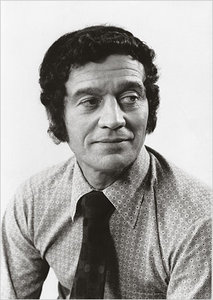 American writer Anatole Broyard passed as white his entire life. It wasn’t until his daughter, Bliss, published One Drop: My Father’s Hidden Life — A Story of Race and Family Secrets was the truth revealed: The famous New York Times book reviewer was born to light-skinned black parents in New Orleans and started passing once he grew up and moved out of his predominantly black Brooklyn neighborhood.
QUEEN CHARLOTTE
 This 18th century painter got into hot water when he painted Queen Charlotte’s features a little too realistically. The painting stirred up long-standing rumors about King George III’s wife’s African heritage. And those rumors turned out to be true. Queen Charlotte was the member of a Portuguese royal family begun by Alfonso III and his lover Madragana “a moor“. Because this makes Queen Elizabeth II, Prince Charles and Prince William technically mixed race, many historians have tried to cast doubt on the nature of Queen Charlotte’s heritage. But her personal physician has noted her “true mulatto face” and the public report released before Queen Elizabeth II’s coronation in 1953 acknowledges the monarchy’s African heritage. It is a great "what if" of history. "If she was black," says the historian Kate Williams, "this raises a lot of important suggestions about not only our royal family but those of most of Europe, considering that Queen Victoria's descendants are spread across most of the royal families of Europe and beyond. If we class Charlotte as black, then ergo Queen Victoria and our entire royal family, [down] to Prince Harry, are also black ... a very interesting concept."
 ALEXANDER PUSHKIN
 The famous classical composer’s mother was a moor. It’s a fact that became popular again after this cast of his African facial features contradicted the “idealized” paintings of the man history likes to re-imagine.
The question was brought to modern science, but recent DNA evidence was inconclusive. For more information, please refer to the related link from the Washington Post. The research team also said that future DNA analysis might answer lingering questions about Beethoven's ethnicity. As a young man, the dark-complexioned Beethoven sometimes was called "the Moor," and some historians have questioned whether he had African blood. Walsh said his analysis of the hair strands showed "no wrinkles or bends" typical among people of African descent, but that more tests may be conducted.
 KING TUT
 The real story of Santa Claus begins with Saint Nicholas (270 – 343 AD), who was born in the village of Patara, an area which was once Greek but is now part of Turkey. He was born to wealthy parents, who died in an epidemic while Nicholas was still young. Nicholas used his entire inheritance to assist the needy, the sick, and the suffering.
 Hannibal of Carthage — one of the greatest military strategists in history is often depicted with much… narrower features. But these coins depicting Hannibal and his famous army of elephants leave little doubt in the minds of many historians of his African ancestry. Here, the focus is the Mediterranean world in antiquity -- things were different then. Hannibal came from an area we refer to as northern Africa, from a Carthaginian family. The Carthaginians were Phoenicians, which means that we would conventionally describe them as a Semitic people. The term Semitic refers to a variety of people from the ancient Near East (e.g., Assyrians, Arabs, and Hebrews), which included parts of northern Africa. [SeeSemitic Languages in Their Original Homelands Map.] The world view was very different.
 No course covering Philosophy 101 is complete without referencing Christian theologian Saint Augustine. What’s less commonly covered is his African origins and birth place of (modern-day) Souk Ahras, Algeria. He was the eldest son of Saint Monica of Saint Augustine. Aurelius Augustinus (his birth name) was born in Africa, educated in Rome, and a Milanese by baptism. He spent his early years in what is now know as Souk-Ahras, Algeria. Often called Augustine of Hippo, "The knowledgeable one," by the Roman Catholic Church, he was considered by Evangelical Protestants to be (together with the Apostle Paul and the Bible) the theological fountainhead of the Reformation teaching on salvation and grace.
 Alexandre Dumas was the son of the General Dumas born in 1762 to a white father and an enslaved mother. General Dumas was such a good general that he made his rival — Napoleon Bonaparte — nervous. Thanks to Napoleon’s machinations, the General ended up imprisoned in a dungeon for years — the story that inspired Alexandre to write The Count of Monte Cristo about his father.
 THE MAN ON THE $10 BILL
 CLARK GABLE
The original “tall, dark and handsome” actor didn’t hide his Black and Native American heritage. And when he saw “colored” and “white” bathrooms on the set of Gone With The Wind, he refused to continue working until all of the cast members were treated equally.
They might have drawn Betty Boop white, but her history is black. The character was actually stolen from Cotton Club singer Esther Jones — known by her stage name “Baby Esther” and the baby talk she used when she sang songs like “I Wanna Be Loved By You (Boop- Boop-BeDoo). Her act later “inspired” cartoonist Max Fleischer to create the character Betty Boop and Esther tried to win the rights back to her character until the day she died.
http://www.littlethings.com/real-betty-boop-baby-esther/
J. EDGAR HOOVER
Hitler’s Jewish ancestry isn’t the strangest twist in racial history. FBI director J. Edgar Hoover — the man who plagued the black liberation movement from Marcus Garvey to the Black Panther Party — was known by his peers as a passing black man. His childhood neighbor writer Gore Vidal famously quoted, “It was always said in my family and around the city that Hoover was mulatto. And that he came from a family that passed.” And apparently that was a closely-guarded secret. Millie McGhee, author of Secrets Uncovered: J. Edgar Hoover Passing For White, said, “In the late 1950’s, I was a young girl growing up in rural McComb, Mississippi. A story had been passed down through several generations that the land we lived on was owned by the Hoover family. My grandfather told me that this powerful man, Edgar, was his second cousin, and was passing for white. If we talked about this, he was so powerful he could have us all killed. I grew up terrified about all this.”
THE MEDICI FAMILY
JACQUELINE ONASSIS
Was Michelle Obama our first African-American First Lady? Or was it Jackie O? Jacqueline Onassis is a member of the van Salee’s family, famous for their “mulatto” heritage. Jackie O’s ancestor John van Salee De Grasse was the first black American formally educated as a doctor; her socialite father was nicknamed “Black Jack” Bouvier because of his dark complexion. Either Professor Hershkowitz, or Tim Beard, former head of the Genealogical Department of the New York Public Library related this incident regarding van Salee genealogy. At the time the Kennedy administration began implementing its civil rights agenda, the New York Genealogical and Historical Society approached Mrs. Kennedy hoping to discuss the opportunity her African ancestry, through the Van Salees, could have in possibly assisting her husband to realize his social goals regarding race relations. Mrs. Kennedy insisted on referring to the van Salees as 'Jewish,' and the New York Genealogical Society did not push the subject further.
ANATOLE BROYARD
American writer Anatole Broyard passed as white his entire life. It wasn’t until his daughter, Bliss, published One Drop: My Father’s Hidden Life — A Story of Race and Family Secrets was the truth revealed: The famous New York Times book reviewer was born to light-skinned black parents in New Orleans and started passing once he grew up and moved out of his predominantly black Brooklyn neighborhood.This 18th century painter got into hot water when he painted Queen Charlotte’s features a little too realistically. The painting stirred up long-standing rumors about King George III’s wife’s African heritage. And those rumors turned out to be true. Queen Charlotte was the member of a Portuguese royal family begun by Alfonso III and his lover Madragana “a moor“. Because this makes Queen Elizabeth II, Prince Charles and Prince William technically mixed race, many historians have tried to cast doubt on the nature of Queen Charlotte’s heritage. But her personal physician has noted her “true mulatto face” and the public report released before Queen Elizabeth II’s coronation in 1953 acknowledges the monarchy’s African heritage. It is a great "what if" of history. "If she was black," says the historian Kate Williams, "this raises a lot of important suggestions about not only our royal family but those of most of Europe, considering that Queen Victoria's descendants are spread across most of the royal families of Europe and beyond. If we class Charlotte as black, then ergo Queen Victoria and our entire royal family, [down] to Prince Harry, are also black ... a very interesting concept."
The man considered the father of Russian literature was he great-grandson of an Ethiopian prince. Among Pushkin’s more famous unpublished works (left after his death in a duel) is an unfinished novel about his Ethiopian great-grandfather. Ossip Abramovich Gannibal's father, Pushkin's great-grandfather, was Abram Petrovich Gannibal (1696–1781), a Black African page kidnapped and brought to Russia as a gift for Peter the Great.
BEETHOVEN
The famous classical composer’s mother was a moor. It’s a fact that became popular again after this cast of his African facial features contradicted the “idealized” paintings of the man history likes to re-imagine.The question was brought to modern science, but recent DNA evidence was inconclusive. For more information, please refer to the related link from the Washington Post. The research team also said that future DNA analysis might answer lingering questions about Beethoven's ethnicity. As a young man, the dark-complexioned Beethoven sometimes was called "the Moor," and some historians have questioned whether he had African blood. Walsh said his analysis of the hair strands showed "no wrinkles or bends" typical among people of African descent, but that more tests may be conducted.
The Boy Pharaoh of Ancient Egypt is often depicted as fair skinned. But these images recovered from his tomb (in addition to several other artifacts) have identified him as a black African. The panelists believe the Egyptians of Tut's time had, for the most part, very dark skin, like people from sub-Saharan Africa. Charles Finch is the director of International Health at Morehouse School of Medicine in Atlanta. "Whenever ancient writers, Hebrew or Greek, make any reference to ancient Egyptians' color, it's always black," Finch said. "There was no issue back then. There was no discussion. There was no debate. It only became a debate in the last 200 years."
SANTA CLAUS
The real story of Santa Claus begins with Saint Nicholas (270 – 343 AD), who was born in the village of Patara, an area which was once Greek but is now part of Turkey. He was born to wealthy parents, who died in an epidemic while Nicholas was still young. Nicholas used his entire inheritance to assist the needy, the sick, and the suffering.
HANNIBAL
SAINT AUGUSTINE
No course covering Philosophy 101 is complete without referencing Christian theologian Saint Augustine. What’s less commonly covered is his African origins and birth place of (modern-day) Souk Ahras, Algeria. He was the eldest son of Saint Monica of Saint Augustine. Aurelius Augustinus (his birth name) was born in Africa, educated in Rome, and a Milanese by baptism. He spent his early years in what is now know as Souk-Ahras, Algeria. Often called Augustine of Hippo, "The knowledgeable one," by the Roman Catholic Church, he was considered by Evangelical Protestants to be (together with the Apostle Paul and the Bible) the theological fountainhead of the Reformation teaching on salvation and grace.
THE AUTHOR OF THE THREE MUSKETEERS AND THE COUNT OF MONTE CRISTO
Alexandre Dumas was the son of the General Dumas born in 1762 to a white father and an enslaved mother. General Dumas was such a good general that he made his rival — Napoleon Bonaparte — nervous. Thanks to Napoleon’s machinations, the General ended up imprisoned in a dungeon for years — the story that inspired Alexandre to write The Count of Monte Cristo about his father.
For black history buffs, it’s really all about the Hamiltons. Alexander Hamilton isn’t just the man on the $10 bill, he was the United States’ first Secretary of the Treasury. His mother, Rachel Fawcett Lavain, was said to be of “mixed blood” and his father was the son of a Scottish Duke. Alexander’s older brother was dark-skinned and treated as black. But Alexander was light enough to pass and went on to establish the first national bank in the American colonies, founded the U.S. mint and wrote most of the Federalist Papers. Hamilton was born as the illegitimate son of Rachel Fawcett Lavien on a Carribean island the size of the town of Kirkland called Nevis. His mother was divorced for infidelity long before Hamilton was born, casting question onto Hamilton's father. Some claim that it was James Hamilton, the man who lived with Rachel. Others claim it was Nicolas Cruger, a Carribean merchant with connections in New York who employed an eleven year old Alexander Hamilton after his alleged father left him and his mother died. Some claim that Hamilton's mother had affairs with her slaves. Additionally, many claim that Hamilton's mother was herself part black, newspapers record Hamilton being called a mustee (implying his mother was a quarter black) by political enemies.
CLARK GABLE
The original “tall, dark and handsome” actor didn’t hide his Black and Native American heritage. And when he saw “colored” and “white” bathrooms on the set of Gone With The Wind, he refused to continue working until all of the cast members were treated equally.
Article reprinted from: madamenoire.com