Showing posts with label Early Americas History. Show all posts

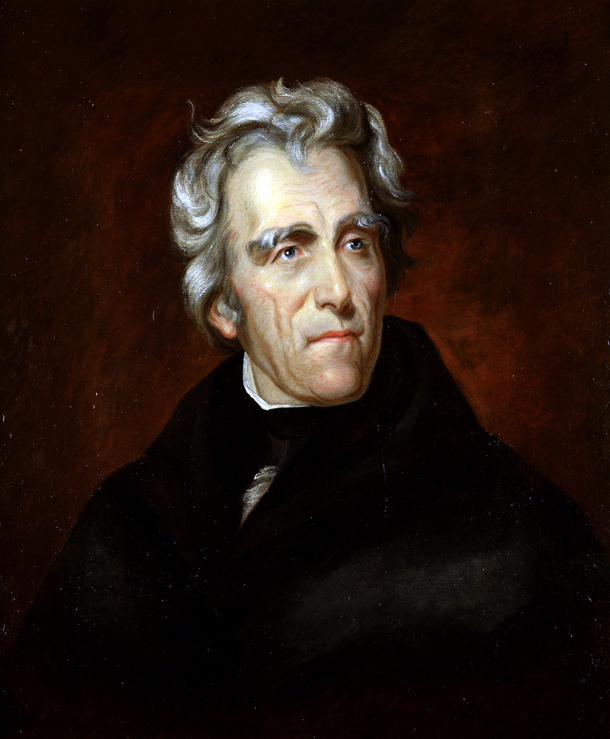
10 Things You May Not Know About Andrew Jackson

Thursday, March 16, 2017

tennessean.com/story Historical reputations rise and fall; Jackson isn’t unique in this regard. But his case is peculiar in the extent of the fall and for what it says about historical memory. Oddly, Jackson’s reputation was the victim of his success. His sins were remembered because his achievements were so profound.
 

President Andrew Jackson

Andrew Jackson called himself a Jeffersonian Democrat, while Thomas Jefferson called Jackson a dangerous man. Find out more about this "hero of the common man."

The first Irish-American president? The answer may surprise you. While John F. Kennedy was the first Irish-Catholic president, Andrew Jackson was the first chief executive with roots in the Emerald Isle. Check out that and nine other surprising facts about “Old Hickory.”


Jackson’s parents emigrated from Ireland.

Both of Jackson’s parents, Andrew and Elizabeth, were born in Ireland’s Country Antrim (in present-day Northern Ireland), and in 1765 they set sail with their two sons, Hugh and Robert, from the port town of Carrickfergus for America. The Jacksons settled with fellow Scotch-Irish Presbyterians in the Waxhaws region that straddled North and South Carolina.

Both North Carolina and South Carolina claim to be his birthplace.

The seventh president was born on March 15, 1767, but exactly where is disputed. The Waxhaws wilderness was so remote that the precise border between North and South Carolina had yet to be surveyed. In an 1824 letter, Jackson wrote that he had been told that he had been born in his uncle’s South Carolina home, but dueling historic markers in both states still claim to be the true locations of Jackson’s birthplace.


Jackson killed a man in a duel.

The fiery Jackson had a propensity to respond to aspersions cast on his honor with pistols. Historians estimate that “Old Hickory” may have participated in anywhere between 5 and 100 duels. When a man named Charles Dickinson called Jackson “a worthless scoundrel, a paltroon and a coward” in a local newspaper in 1806, the future president challenged his accuser to a duel. At the command, Dickinson fired and hit Jackson in the chest. The bullet missed Jackson’s heart by barely more than an inch. In spite of the serious wound, Jackson stood his ground, raised his pistol and fired a shot that struck his foe dead. Jackson would carry around the bullet in his chest as well as another from a subsequent duel for the rest of his life.

He won the popular vote for president three times.

Jackson captured nearly 56% of the popular vote in winning the presidency in 1828, and he nearly matched that figure four years later in his reelection. “Old Hickory” also won the most popular votes, although not a majority, in his first presidential run in 1824. Since no candidate won a majority of electoral votes, the 1824 election was thrown into the House of Representatives, which selected John Quincy Adams in what Jackson’s supporters claimed was a “corrupt bargain” with Speaker of the House Henry Clay, who was named secretary of state by Adams. In his annual messages to Congress, Jackson repeatedly lobbied for the abolition of the Electoral College.

He was the target of the first attempted presidential assassination.
As Jackson was leaving the U.S. Capitol on January 30, 1835, following a memorial service for a congressman, a deranged house painter named Richard Lawrence fired a pistol at the president from just feet away. When Lawrence’s gun misfired, he pulled out a second weapon and squeezed the trigger. That pistol also misfired. An enraged Jackson charged Lawrence with his cane as the shooter was subdued. A subsequent investigation found the pistols to be in perfect working order. The odds of both guns misfiring were found to be 125,000 to 1.

Unbeknownst to Jackson, he married his wife before she had been legally divorced from her first husband.

After moving to Nashville, Tennessee, in the 1780s, Jackson fell in love with the unhappily married Rachel Donelson Robards. After she separated from her husband and believing that she was granted a legal divorce, Robards wed Jackson. In fact, however, the divorce had not yet been finalized, and her first husband accused her of adultery. Jackson legally remarried Robards in 1794, but the episode resurfaced in the nasty 1828 presidential campaign when Jackson’s political opponents spread the gossip about his wife’s alleged adultery. After Rachel Jackson died just weeks after her husband’s election, the grieving president-elect believed the anguish caused by the slander hastened her demise.

He was the only president to have been a former prisoner of war.

During the Revolutionary War, the 13-year-old Jackson joined the Continental Army as a courier. In April 1781, he was taken prisoner along with his brother Robert. When a British officer ordered Jackson to polish his boots, the future president refused. The infuriated Redcoat drew his sword and slashed Jackson’s left hand to the bone and gashed his head, which left a permanent scar. The British released the brothers after two weeks of ill treatment in captivity, and within days Robert died from an illness contracted during his confinement.

He adopted two Native American boys.
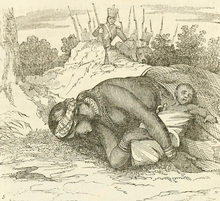
Although he led campaigns against the Creeks and Seminoles during his military career and signed the Indian Removal Act as president, Jackson also adopted a pair of Native American infants during the Creek War in 1813 and 1814. Orphaned himself at age 14, Jackson sent back to Rachel an infant orphan named Theodore, who died early in 1814, and a child named Lyncoya, who was found in his dead mother’s arms on a battlefield. “He is a savage that fortune has thrown in my hands,” Jackson wrote to his wife about the boy. Lyncoya died of tuberculosis in 1828, months before Jackson’s election.

He was a notorious gambler.

Jackson had a taste for wagering—on dice, on cards and even on cockfights. As a teenager, he gambled away all of his grandfather’s inheritance on a trip to Charleston, South Carolina. Jackson’s passion in life was racing and wagering on horses.

Jackson’s portrait appears on the $20 bill although he detested paper money.

Chastened by a financial hit he once took from devalued paper notes, Jackson was opposed to the issuance of paper money by state and national banks. He only trusted gold and silver as currency and shut down the Second Bank of the United States in part because of its ability to manipulate paper money. It’s ironic that Jackson not only appears on the $20 bill, but his portrait in the past has also appeared on $5, $10, $50 and $10,000 denominations in addition to the Confederate $1,000 bill.

REFERENCE: history.com/news
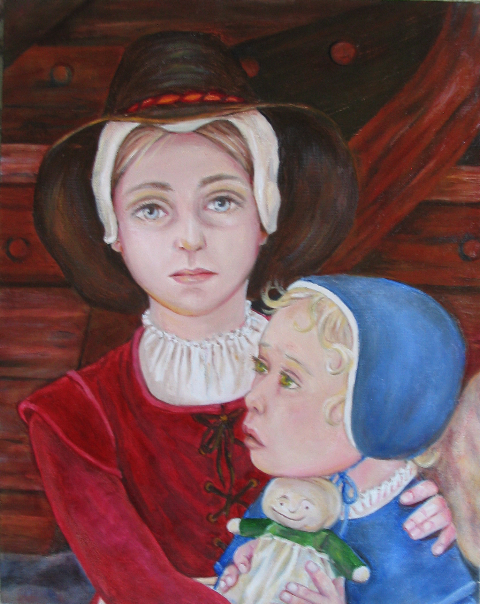
Orphans on the Mayflower: When Morals Go Wrong

Sunday, August 9, 2015

The story of the four More children, Ellen, Jasper, Richard, and Mary, is a tragic one.  They were all baptized in the parish of Shipton, Shropshire, England to Samuel and Katherine More, cousins from a wealthy and prominent family that had had their marriage prearranged.  It was not a happy marriage, and Katherine had a longstanding but secret extramarital affair with a neighbor by the name of Jacob Blakeway.  Samuel began working in London as secretary to Lord Edward Zouche, privy councillor, diplomat and courtier. Over the next four years, Katherine bore four children. At some point, Samuel More began to notice a resemblance between "his" children, and Jacob Blakeway whom he had come to suspect was with his wife.  When he realized his four children were not actually "his", but were bastards, he and his wife engaged in a bitter divorce in 1616 and Samuel ended up getting custody of the children he claimed were not his.  By a deed dated 20 April 1616, Samuel cut the entail on the Larden estate to prevent any of the children from inheriting. During the long court battle, Samuel would deny that he was the father of the children borne by his wife, Katherine, and stated them to be children of the adulterous relationship. Katherine did not deny her relationship with Jacob, stating there was a former betrothal contract with him, and therefore he was her true husband. This would have made her marriage to Samuel invalid. Samuel quotes her words in his declaration, "though she could not sufficiently prove by witnesses yet it was all one before god as she sayed".


In 1616, when Samuel More accused his wife of adultery and, at the direction of his father, Richard, they devised a plan to rid himself of Katherine and the children. Samuel went to his employer and a More family friend, Lord Zouche, Lord President of the Council of Wales, Lord Warden of the Cinque Ports and Privy Counselor, to draw up a plan for the disposition of the children. Zouche had been a member of the Virginia Company and in 1617 he invested £100 in an expedition to the Colony of Virginia, which is where the Mayflower was supposed to have landed. It was his actions that were instrumental in putting the More children on the Mayflower. (At that time, children were routinely rounded up from the streets of London or taken from poor families receiving church relief to be used as labourers in the colonies.) Katherine engaged in a struggle to take her children back.  Any legal objections to the involuntary transportation of the children were over-ridden by the Privy Council, namely, Lord Zouche. There were at least twelve actions recorded between December 1619 and 8 July 1620, when it was finally dismissed. Most people thought it a death sentence and, indeed, many did not survive either the voyage or the harsh climate, disease and scarcity of fresh food for which they were ill-prepared.


Samuel promptly paid for the children to be shipped off to America with a band of "honest and religious" Separatists. The four children, aged 4 to 8 years old, were placed into the households of some of the most prominent Pilgrims.  Richard and Mary More were placed with Elder William Brewster. Jasper was placed with Governor John Carver.  And Ellen was placed with Edward Winslow. Within several weeks of the More children’s arrival in London, and without their mother Katherine More’s knowledge or approval, they were placed in the care of others on the Mayflower, bound for New England.


After the Mayflower sailed, Katherine made another attempt to challenge the decision through the courts. It was this legal action in early 1622 before Chief Justice James Ley which led to the statement from Samuel explaining where he sent the children and why, the historical evidence for Richard More's early history.


The voyage was rough on the young and presumably quite traumatized children.  Only Richard survived the first winter at Plymouth.  Jasper More died in December while the Pilgrims were still exploring Cape Cod trying to find a place to settle, and Ellen and Mary More died sometime likely between January and March 1621.  


Richard More was still living with the Brewsters in 1627.  He married Christian Hunter in 1636 in Plymouth, and moved very shortly thereafter to Salem.  Richard More became a seaman and ship captain, and made trips to England, Nova Scotia, West Indies, Manhattan, and Virginia.  In February and March 1642/3, he joined the church at Salem and baptized his children there.

His wife Christian died on 18 March 1676, at the age of 60.  Richard More then married to Mrs. Jane Crumpton; she died in October 1686 at Salem, aged 55.  In 1688, the Salem Church recorded: "Old Captain More having been for many years under suspicion and common fame of lasciviousness, and some degree at least of inconstancy ... but for want of proof we could go no further.  He was at last left to himself so far as that he was convicted before justices of peace by three witnesses of gross unchastity with another man's wife and was censured by them." Richard More died sometime between 1693 and 1696 at Salem, living just long enough to have witnessed the Salem Witchcraft paranoia of 1692.

La Malinche - harlot or heroine?

Sunday, March 8, 2015

"La Malinche." Slave, interpreter, secretary, mistress, mother of the first "Mexican." her very name still stirs up controversy.
Many Mexicans continue to revile the woman called Doña Marina by the Spaniards and La Malinche by the Aztecs, labeling her a traitor and harlot for her role as the alter-ego of Cortes as he conquered Mexico.
They ignore that she saved thousands of Indian lives by enabling Cortes to negotiate rather than slaughter. Her ability to communicate also enabled the Spaniards to introduce Christianity and attempt to end human sacrifice and cannibalism. Herself a convert, baptized Marina, she was an eloquent advocate for her new faith. As for the charges against her, they are in my opinion baseless. So let us visit this remarkable woman and examine the facts.
All historians agree that she was the daughter of a noble Aztec family. Upon the death of her father, a chief, her mother remarried and gave birth to a son. Deciding that he rather than Marina, should rule, she turned her young daughter over to some passing traders and thereafter pro- claimed her dead. Eventually, the girl wound up as a slave of the Cacique (the military chief) of Tabasco. By the time Cortes arrived, she had learned the Mayan dialects used in the Yucatan while still understanding Nahuatl, the language of the Aztecs and most Non-Mayan Indians.
"La Malinche" did not choose to join Cortes. She was offered to him as a slave by the Cacique of Tabasco, along with 19 other young women. She had no voice in the matter.
Up till then, Cortes had relied on a Spanish priest, Jeronimo de Aguilar, as his interpreter. Shipwrecked off Cozumel, Aguilar spoke the Mayan language as well as Spanish. But when the expedition left the Mayan-speaking area, Cortes discovered that he could not communicate with the Indians. That night he was advised that one of the women given to him in Tabasco spoke "Mexican."
Doña Marina now enters Mexican history. It was she who served as the interpreter at the first meetings between Cortes and the representatives of Moctezuma. At that time Marina spoke no Spanish. She translated what the Aztecs said into the Mayan dialect understood by de Aguilar and he relayed it to Cortes in Spanish. The process was then reversed, Spanish to Mayan and Mayan to Nahuatl.
Bernal Diaz, author of "The Conquest of New Spain" authenticated her pedigree. An eyewitness to the events, he did not describe her physically, but related that after the Conquest he attended a reunion of Doña Marina, her mother and the half- brother who had usurped her rightful place. Diaz marveled at her kindness in forgiving them for the injustice she had suffered. The author referred to her only as Marina or Doña Marina. So whence came the name "La Malinche?" Diaz said that because Marina was always with Cortes, he was called "Malinche"--which the author translated to mean "Marina's Captain." Prescott, in the "Conquest of Mexico," (perhaps the best known book on the subject) confirms that Cortes was always addressed as "Malinche" which he translated as Captain and defined "La Malinche" as "the captain's woman."
Both definitions confirm that the Indians saw Cortes and his spokesperson as a single unit. They recognized that what they heard were the words of "Malinche," not "La Malinche. " So much for the charge that she was a traitor, instigating the destruction of the Aztec Empire.
As for the charge of "harlotry," it is equally flawed. She was totally loyal to Cortes, a one-man woman, who loved her master. Cortes reciprocated her feelings. Time after time he was offered other women but always refused them. Bernal Diaz frequently commented on the nobility of her character and her concern for her fellow "Mexicans."
It is very possible that without her, Cortes would have failed. He himself, in a letter preserved in the Spanish archives, said that "After God we owe this conquest of New Spain to Doña Marina. "
Doña Marina's progress from interpreter to secretary to mistress, as well as her quick mastery of Spanish, are remarkable--and all this amidst the turmoil of constant warfare, times when a woman less courageous and committed might well have fled.
The ability of Marina to help Cortes to communicate with the Indians shaped the entire campaign. From the very first meeting between Cortes and the emissaries of Moctezuma, an effort was made to establish friendly relations with the Aztec Emperor.
Later, during Cortes's encounter with the Caciques of Cempola, that same talent opened the door to the Conquest. Here, Cortes met the "Fat Cacique" and by arresting five tax collectors sent by the Aztecs, made his first Indian allies: Cempoalans were the first of the Indian warriors to join him.
Yet even then, he tried to persuade Moctezuma to invite him to Tenochtitlan, freeing the captives to carry a message to the Emperor that he had come in peace.
Without Marina, attempts to negotiate with the Aztecs would have been impossible.
These efforts did much to keep Moctezuma undecided about how to deal with the invaders. This hesitancy played a large part in the outcome of the Conquest.
Perhaps the most important negotiations Marina made possible were those with the Tlascalans. After an initial armed clash, an alliance was forged that brought thousands of warriors to fight alongside the Spaniards.
As Cortes moved toward the Aztec capital, a pattern evolved.
First conflict, then meetings in which Doña Marina played a key role in avoiding more bloodshed. Hence, the picture of Marina that emerges is that of an intelligent, religious, loyal woman.
Her contribution to the success of the Conquest is immense, but she cannot be held responsible for it happening. To a very large degree, the Conquest came because of the brutality of the Aztecs: a rebellion by their oppressed neighbors, who would have rallied to anyone who promised them relief from the Aztecs' constant demands for tribute and sacrificial victims.
But from another standpoint, the fate of the Aztec Empire was sealed in the very first meetings of the emissaries of Moctezuma with Cortes, when they gave him gifts of gold and silver that Sernal Diaz valued at over 20,000 pesos de oro. Prescott, writing in 1947, valued each peso de oro at $11.67 U.S. Dollars. The Spanish appetite for gold was whetted, making the Conquest inevitable. But had Cortes failed, the next expedition, perhaps without an interpreter, would certainly have shed more Mexican blood.
Then too, had Cortes met with no success, the Smallpox epidemic that raged in the Aztec Capital might well have spread throughout the entire empire. By destroying the city, he perhaps saved the country. Bernal Diaz wrote: "When we entered the city every house was full of corpses. The dry land and stockades were piled high with the dead. We also found Mexicans lying in their own excrement, too sick to move."
After the Conquest, Cortes, with a wife in Spain, arranged to have Marina married to a Castilian knight, Don Juan Xamarillo.
Soon thereafter she disappeared from history.
But she had borne Cortes a son, Don Mahin Cortes. While many other Indian women were impregnated by Spaniards, we have no record of their fate. Hence, if modern-day Mexicans are a blend of Spanish and Indian blood, Doña Marina's son was the first "Mexican" whose career we can follow. He rose to high government position and was a "Comendador" of the Order of St. Jago. In 1548, accused of conspiring against the Viceroy, he was tortured and executed.
In more recent times, the term "Malinchista" has been used by some to describe those who dislike Mexicans. But Doña Marina deserves better. A fearless, loyal and determined woman, she was a heroine who helped save Mexico from its brutal, blood-thirsty rulers--and in doing so she played a major role in fashioning what is today one of the most dynamic societies in all of Latin America.
Published or Updated on: January 1, 1997 by Shep Lenchek © 2008 

Columbus Day? True Legacy: Cruelty and Slavery

Thursday, October 9, 2014

Eric Kasum Headshot


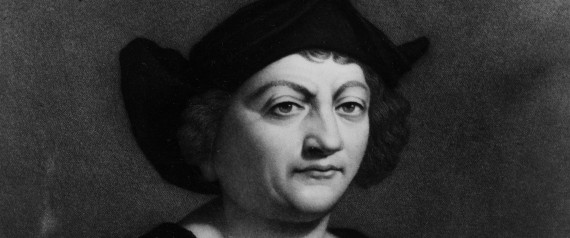
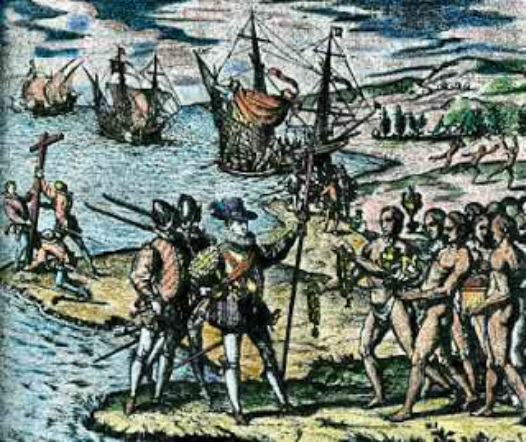
Once again, it's time to celebrate Columbus Day. Yet, the stunning truth is: If Christopher Columbus were alive today, he would be put on trial for crimes against humanity. Columbus' reign of terror, as documented by noted historians, was so bloody, his legacy so unspeakably cruel, that Columbus makes a modern villain like Saddam Hussein look like a pale codfish.
Question: Why do we honor a man who, if he were alive today, would almost certainly be sitting on Death Row awaiting execution?
If you'd like to know the true story about Christopher Columbus, please read on. But I warn you, it's not for the faint of heart.
Here's the basics. On the second Monday in October each year, we celebrate Columbus Day (this year, it's on October 11th). We teach our school kids a cute little song that goes: "In 1492, Columbus sailed the ocean blue." It's an American tradition, as American as pizza pie. Or is it? Surprisingly, the true story of Christopher Columbus has very little in common with the myth we all learned in school.
Columbus Day, as we know it in the United States, was invented by the Knights of Columbus, a Catholic fraternal service organization. Back in the 1930s, they were looking for a Catholic hero as a role-model their kids could look up to. In 1934, as a result of lobbying by the Knights of Columbus, Congress and President Franklin Roosevelt signed Columbus Day into law as a federal holiday to honor this courageous explorer. Or so we thought.
There are several problems with this. First of all, Columbus wasn't the first European to discover America. As we all know, the Viking, Leif Ericson probably founded a Norse village on Newfoundland some 500 years earlier. So, hat's off to Leif. But if you think about it, the whole concept of discovering America is, well, arrogant. After all, the Native Americans discovered North America about 14,000 years before Columbus was even born! Surprisingly, DNA evidence now suggests that courageous Polynesian adventurers sailed dugout canoes across the Pacific and settled in South America long before the Vikings.
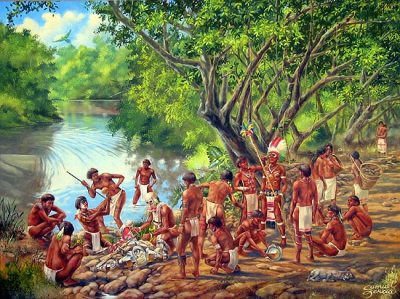
Second, Columbus wasn't a hero. When he set foot on that sandy beach in the Bahamas on October 12, 1492, Columbus discovered that the islands were inhabited by friendly, peaceful people called the Lucayans, Taínos and Arawaks. Writing in his diary, Columbus said they were a handsome, smart and kind people. He noted that the gentle Arawaks were remarkable for their hospitality. "They offered to share with anyone and when you ask for something, they never say no," he said. The Arawaks had no weapons; their society had neither criminals, prisons nor prisoners. They were so kind-hearted that Columbus noted in his diary that on the day the Santa Maria was shipwrecked, the Arawaks labored for hours to save his crew and cargo. The native people were so honest that not one thing was missing.
Columbus was so impressed with the hard work of these gentle islanders, that he immediately seized their land for Spain and enslaved them to work in his brutal gold mines. Within only two years, 125,000 (half of the population) of the original natives on the island were dead.
If I were a Native American, I would mark October 12, 1492, as a black day on my calendar.
Shockingly, Columbus supervised the selling of native girls into sexual slavery. Young girls of the ages 9 to 10 were the most desired by his men. In 1500, Columbus casually wrote about it in his log. He said: "A hundred castellanoes are as easily obtained for a woman as for a farm, and it is very general and there are plenty of dealers who go about looking for girls; those from nine to ten are now in demand."
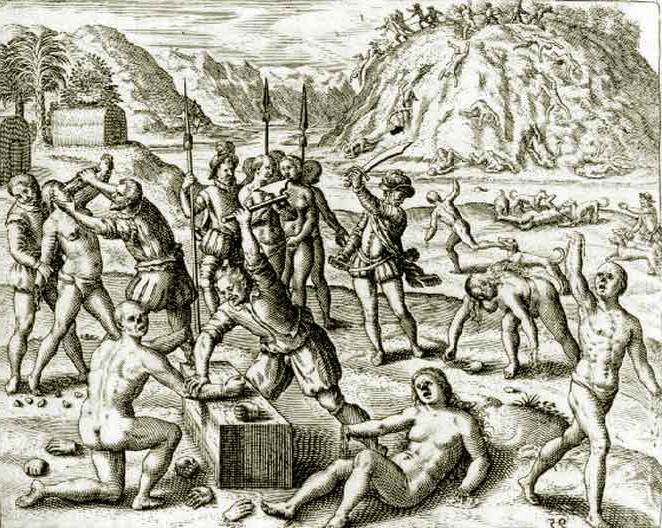
He forced these peaceful natives work in his gold mines until they died of exhaustion. If an "Indian" worker did not deliver his full quota of gold dust by Columbus' deadline, soldiers would cut off the man's hands and tie them around his neck to send a message. Slavery was so intolerable for these sweet, gentle island people that at one point, 100 of them committed mass suicide. Catholic law forbade the enslavement of Christians, but Columbus solved this problem. He simply refused to baptize the native people of Hispaniola.
On his second trip to the New World, Columbus brought cannons and attack dogs. If a native resisted slavery, he would cut off a nose or an ear. If slaves tried to escape, Columbus had them burned alive. Other times, he sent attack dogs to hunt them down, and the dogs would tear off the arms and legs of the screaming natives while they were still alive. If the Spaniards ran short of meat to feed the dogs, Arawak babies were killed for dog food.
Columbus' acts of cruelty were so unspeakable and so legendary - even in his own day - that Governor Francisco De Bobadilla arrested Columbus and his two brothers, slapped them into chains, and shipped them off to Spain to answer for their crimes against the Arawaks. But the King and Queen of Spain, their treasury filling up with gold, pardoned Columbus and let him go free.
One of Columbus' men, Bartolome De Las Casas, was so mortified by Columbus' brutal atrocities against the native peoples, that he quit working for Columbus and became a Catholic priest. He described how the Spaniards under Columbus' command cut off the legs of children who ran from them, to test the sharpness of their blades. According to De Las Casas, the men made bets as to who, with one sweep of his sword, could cut a person in half. He says that Columbus' men poured people full of boiling soap. In a single day, De Las Casas was an eye witness as the Spanish soldiers dismembered, beheaded, or raped 3000 native people. "Such inhumanities and barbarisms were committed in my sight as no age can parallel," De Las Casas wrote. "My eyes have seen these acts so foreign to human nature that now I tremble as I write."
De Las Casas spent the rest of his life trying to protect the helpless native people. But after a while, there were no more natives to protect. Experts generally agree that before 1492, the population on the island of Hispaniola probably numbered above 3 million. Within 20 years of Spanish arrival, it was reduced to only 60,000. Within 50 years, not a single original native inhabitant could be found.
In 1516, Spanish historian Peter Martyr wrote: "... a ship without compass, chart, or guide, but only following the trail of dead Indians who had been thrown from the ships could find its way from the Bahamas to Hispaniola."
Christopher Columbus derived most of his income from slavery, De Las Casas noted. In fact, Columbus was the first slave trader in the Americas. As the native slaves died off, they were replaced with black slaves. Columbus' son became the first African slave trader in 1505.
Are you surprised you never learned about any of this in school? I am too. Why do we have this extraordinary gap in our American ethos? Columbus himself kept detailed diaries, as did some of his men including De Las Casas and Michele de Cuneo. (If you don't believe me, just Google the words Columbus, sex slave, and gold mine.)
Columbus' reign of terror is one of the darkest chapters in our history. The REAL question is: Why do we celebrate a holiday in honor of this man? (Take three deep breaths. If you're like me, your stomach is heaving at this point. I'm sorry. Sometimes the truth hurts. That said, I'd like to turn in a more positive direction.)
Call me crazy, but I think holidays ought to honor people who are worthy of our admiration, true heroes who are positive role models for our children. If we're looking for heroes we can truly admire, I'd like to offer a few candidates. Foremost among them are school kids.
Let me tell you about some school kids who are changing the world. I think they are worthy of a holiday. My friend Nan Peterson is the director of the Blake School, a K-12 school in Minnesota. She recently visited Kenya. Nan says there are 33 million people in Kenya... and 11 million of them are orphans! Can you imagine that? She went to Kibera, the slum outside Nairobi, and a boy walked up to her and handed her a baby. He said: My father died. My mother died... and I'm not feeling so good myself. Here, take my sister. If I die, they will throw her into the street to die.
There are so many orphans in Kenya, the baby girls are throwaways!
Nan visited an orphanage for girls. The girls were starving to death. They had one old cow that only gave one cup of milk a day. So each girl only got ONE TEASPOON of milk a day!
After this heartbreaking experience, Nan went home to her school in Minnesota and asked the kids... what can we do? The kids got the idea to make homemade paper and sell it to buy a cow. So they made a bunch of paper, and sold the paper, and when they were done they had enough money to buy... FOUR COWS! And enough food to feed all of the cows for ONE FULL YEAR! These are kids... from 6 years old to 18... saving the lives of kids halfway around the world. And I thought: If a 6-year-old could do that... what could I do?
At Casady School in Oklahoma City, Oklahoma, seemingly "average" school kids raised $20,000 to dig clean water wells for children in Ethiopia. These kids are heroes. Why don't we celebrate "Kids Who Are Changing the Planet" Day?
Let me ask you a question: Would we celebrate Columbus Day if the story of Christopher Columbus were told from the point-of-view of his victims? No way!
The truth about Columbus is going to be a hard pill for some folks to swallow. Please, don't think I'm picking on Catholics. All the Catholics I know are wonderful people. I don't want to take away their holiday or their hero. But if we're looking for a Catholic our kids can admire, the Catholic church has many, many amazing people we could name a holiday after. How about Mother Teresa day? Or St. Francis of Assisi day? Or Betty Williams day (another Catholic Nobel Peace Prize winner). These men and women are truly heroes of peace, not just for Catholics, but for all of us.
Let's come clean. Let's tell the truth about Christopher Columbus. Let's boycott this outrageous holiday because it honors a mass murderer. If we skip the cute song about "In 1492 Columbus sailed the ocean blue," I don't think our first graders will miss it much, do you? True, Columbus' brutal treatment of peaceful Native Americans was so horrific... maybe we should hide the truth about Columbus until our kids reach at least High School age. Let's teach it to them about the same time we tell them about the Nazi death camps.
While we're at it, let's rewrite our history books. From now on, instead of glorifying the exploits of mass murderers like Alexander the Great, Julius Caesar, Genghis Khan, and Napoleon Bonaparte, let's teach our kids about true heroes, men and women of courage and kindness who devoted their lives to the good of others. There's a long list, starting with Florence Nightingale, Mahatma Gandhi, Rev. Martin Luther King, and John F. Kennedy.
These people were not adventurers who "discovered" an island in the Caribbean. They were noble souls who discovered what is best in the human spirit.
Why don't we create a holiday to replace Columbus Day?