The Ration Card: Ugly Remnant of How U.S. Decimated Indian Culture

Tuesday, October 7, 2014

Of the some 136 million objects and specimens in the grand Smithsonian collections, most carry an implied positive energy, or a promise of better things to come, or sometimes just simple joy. But there are also, though fewer, things of a darker mien, artifacts revealing caliginous corners of American history, including one so unimposing in size and materials as to appear insignificant; you could slip it into a shirt pocket, forget it’s there and run it through to its destruction in the wash.
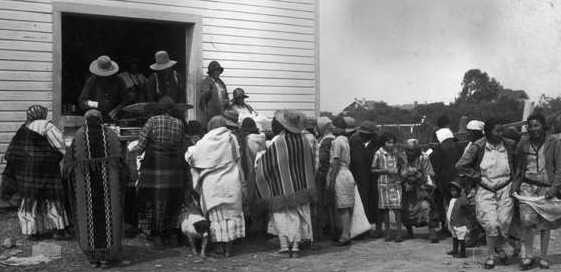
About the size of a business card or a major-league bleachers ticket, this little piece of heavy, printed paper is the federal government’s substitute for the bison of the Great Plains, that source of life and culture that unknown thousands of aboriginal Americans depended on for generations beyond counting. Until the ghost dance generation—the one that kissed the old life goodbye to face an enemy future—the tribes that dominated the grasslands for 8,000 years fought most of their battles over bison hunting grounds. The red people ate bison, dressed in bison, imitated and talked to bison, and died for and by the sacred bison.
This ration ticket, this seeming inconsequential token of conquest and devastation, is the graphic expression of an 1883 act of Congress that furthered the appropriation of Indian lands west of the Missouri by moving tribal peoples onto assigned reservations, where, proclaims the act, “they may live after the manner of white men.” The reality was something else. The enforced reservation system meant native, nomadic tribes could live neither like white men—unless those whites were indigents—nor like the red men they had so recently been.
The ration ticket shown here was issued in the mid-1880s to someone called Woman’s Dress (perhaps, though not certainly, a female head of family), a member of the Oglala Lakota tribe quartered on the Pine Ridge reservation in the southwest corner of what is today South Dakota. Pine Ridge in our time lies almost in the shadow of Mount Rushmore and its four granite presidential physiognomies, none of whom would have perceived the sorrow resident in this paper faux-bison. The penned numeral nine probably indicates Woman’s Dress was allowed to draw rations of beef—and, also when available, beans, corn, flour, salt, and occasionally sugar, coffee, soap and tobacco—for nine dependents each Saturday.
Never mind that the flour and grains sometimes had gone moldy or that most of the Indians found the taste of beef no match for the rich flavor of bison. For these foreign and sorry substitutions, Indian men no longer able to support themselves sometimes had to perform labor. An Oglala Lakota once memorably said to me, “They take our land, they take our hunting and then they force us to work for food that made us sick.”
When this ticket was issued, the Plains bison had largely been exterminated, an extirpation heavily assisted by white hunters who would slaughter bison for nothing more than the delicacy of its tongue or merely for the pleasure of the kill. In the winter of 1884, government rations were so deficient on the Blackfoot reservation in Montana, the people suffered from malnutrition: A quarter of them died of starvation. They couldn’t eat paper.
Perhaps it was Woman’s Dress who decorated the ticket with a rawhide thong partly wrapped with dyed porcupine quills and finial cones of tin. I see that craft as an attempt to give it a touch of cultural meaning once rendered to a real bison, an attempt to turn a piece of bureaucracy and (ironically)red tape into something at least suggesting the sacred. Not uncommonly, Plains Indians also made beautifully decorated, cow-leather pouches to carry and protect their tickets. With quills and tin, the people tried to put a benign face on a graphic token of a blatantly imperialistic action worked upon those who had lived on the land for 15,000 years.
The lower third of the ticket, once imprinted with the dates for collecting rations, shows each numeral punched out with a hole in the shape of a cross. Whether that figure is deliberate, I don’t know, but it surely appears symbolic.
The degree of genuine humanity and generosity behind the rationing system is revealed by a remark in the 1850 Annual Report of the Commissioner of Indian Affairs: “It is, in the end, cheaper to feed the whole flock for a year than to fight them for a week.” Two years later, Gen. E. D. Townsend wrote in his California Diary of the Indians facing pressure from the 1849 gold rush: “If the tale of the poor wretches... could be impartially related, it would exhibit a picture of cruelty, injustice, and horror scarcely surpassed by that of the Peruvians in the time of Pizarro.”
A memoirist and novelist of English, Irish and Osage ancestry, William Least Heat-Moon says his research into 1880s Indian ration tickets was “some of the saddest work I’ve ever done.” This piece originally appeared in the November 2013 issue of SMITHSONIAN Magazine.


16 Of The Most Evil Women In History

Sunday, September 14, 2014

Serial killers and other evil actions are generally attributed to men, but these women certainly proved that evil deeds are not limited to just one sex. The brutality and horror in the hearts of these women is unbelievably cruel. Some of these women make Hannibal Lecture look civilized!


16. Enriqueta Marti

This cruel woman preyed on homeless children and would put them into prostitution or murder them and use their remains for ointments that she claimed cured tuberculosis. She was eventually arrested and hung by her prison mates before trial.


15. Aileen Wuornos

Having a difficult childhood, Aileen grew up hating all men and became a serial killer. She stole cars, stuck up convenience stores and killed a lot of different men before she was arrested and killed in 2002. A movie titled "Monster" demonstrates her life.


14. Wu Zetian

This evil Chinese empress put countless people to death for threatening her rule. She even put her own infant daughter to death as well as other family members.


13. Queen Mary I

This Catholic queen murdered all Protestants in England and was nicknamed Bloody Mary. Every Protestant was forced to flee England in order to survive until Queen Mary died in 1558.


12. Griselda Blanco

This infamous "cocaine godmother," who was already kidnapping and murdering children at age 11, ran the cocaine trade with murderous force in New York and Miami before being shot in the head in 2012. HBO will release Cocaine Godmother in 2018.

 11. Belle Gunness

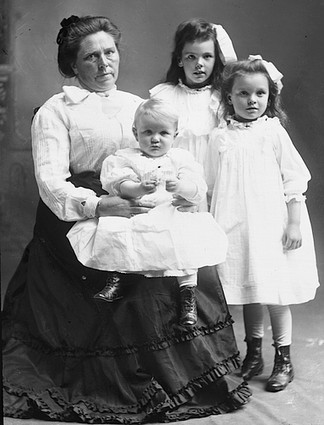
She killed her three children and husband, used the insurance money to buy a home, remarried and killed his infant daughter and him as well. She then took out an ad as an eligible widow with property. Each prospective buyer would be killed and robbed. She left the country after 40 separate murders and was never found.


10. Ilse Koch

This Nazi wife tortured and killed many Jewish inmates and made lampshades and other household items out of their skin.


9. Irma Grese

This Nazi woman tortured and killed Jewish women who were more attractive than herself. She believed she would have a career in the movies once Germany won World War II but instead was hanged for her crimes in 1945.


8. Katherine Knight

Knight is known for strangling her husband for falling asleep during sex, slitting a boyfriends dog’s throat right in front of him and most infamously stabbing a man 37 times, decapitating him, hanging his body on a meat hook and attempting to feed his cooked body parts to his children.


7. Elizabeth Bathory

Using her political status as a murder hungry housewife in the 16th century, she was responsible for the torture and murder of over 650 women whom would be lured into her castle in hopes of finding a job. (Despite the evidence against Elizabeth, her family's influence kept her from facing trial. She was imprisoned in December 1610 within Csejte Castle, Upper Hungary, now in Slovakia, where she remained immured in a set of rooms until her death four years later.)


6. Lizzie Borden

Accused of murdering her family with an ax, she was one of the first criminal cases to gain nationwide attention. Acquitted after trial, speculation continues to this day -- as her guilt is still widely assumed.


5. Maria 'Chata' Leon

As the head of The Avenues, Chata ran one of the most dangerous street gangs in the history of Los Angeles. From her fortress home on Drew St, she ran a criminal enterprise based on drugs, murder, and intimidation. Much of the gang's higher leadership was made up of her children.


4. Myra Hindley

Together with her boyfriend, Ian Brady, Hindley was responsible for the rape and murder of five young children between 1962-68. Hindley died in prison in 2002.


3. Dorothea Binz

As the SS supervisor at the Ravensbruck concentration camp, her dedication to her work was described by her fellow Nazis as "unyielding." Known for patrolling the camp with a whip in one hand and a German Shepard in the other, inmates reportedly fell silent upon her approach. Her reputation of whipping, beating, and even shooting female inmates earned her the position of supervising the torture bunkers at the camp as well as training guards.

2. Biljana Plavšić

As the former president of Republika Srpska, she lead Bosnia-Herzegovina during the Serbian genocides of the 1990s. It was her comments that ethnic cleansing was a "natural thing" and that six million Serbs needed to die, that rallied her republic to perpetrate genocide. After her arrest, she plea bargained with the war crimes tribunal and remained in prison until her release in 2009. She is currently staging a political comeback.


1. Fusako Shigenobu

After a career as a student activist, she volunteered with the PLO before forming the
Japanese Red Army. In her attempts to unite Japan under Communist revolution, she became a full-fledged terrorist. She is responsible for orchestrating the 1974 attack on the French embassy in The Hague, and assisting the 1960 hijacking of TWA flight 840. Until her arrest in 2000, she was the most wanted terrorist on Earth.

When lying is a good thing

Wednesday, September 10, 2014

An obvious cliche is defined by one the most natural and primitive motive by human nature: lying.  Why is it such a cliche?  Well, I’m not going to blow smoke up your ass, or tell a cock ‘n bull story,  or pee on your leg and tell you it’s raining,  because, I’m quite sure you’ve heard it all before so I don’t need to reinvent the wheel.  The art of lying is much older than the oldest profession in the world, and yes, both are considered viral and can be harmful.  After all, who wants to get caught with their pants down in either situation?
Of course lying leads down the road of questioning morality.  Large lies are destructive.  Marriages and friendships fall apart.  Wars rage on.  Politicians stay in business.  You know the deal.  Small lies are forgivable.  We don’t want to hurt people’s feelings with the small stuff.  Or we just don’t really feel like going to work or taking our kids to the park because we’re just too tired and need a break.  So the margin between how we justify telling lies can easily be deluded or misunderstood, thereby creating this moral conundrum.
I am one of the biggest liars I know. Every time I sit in front of a computer I tell lies consistently, obsessively. Why?  Because I write fiction. The stories I tell are half true, half false.  And the best part about it, you believe what I tell. When you begin to process that concept, it’s really an incredible experience we both share, and it’s as natural as breathing. Logically we should reject this acceptance. My father, the engineer, rejects it. He doesn’t read fiction because he would rather fill his mind with information that’s legitimate and direct. But for the rest of us, we not only marvel in it, we dip our entire souls into it because it feels good. It releases a part of our imagination that we can’t operate in the physical world.

So, yes, I write fiction. And I write fiction with a historical twist. Although I dig deeply into research, I chose to reproduce history in a fictitious form. It’s like having immunity. I can break off story lines from real events, and then turn around to commit forgery without blame.  If you think about it, it sounds bad; however there is a legitimate purpose.  Fiction, like all other art, serves a higher calling. It allows an opportunity to blend real-life people into one character as a representative, a symbol of who that character represents, whether a crusader for equality or an irredeemable brute, to bring forth criticism and awareness. Fiction doesn’t fall far from the truth. It has to come from somewhere authentic, otherwise readers will have no commonality to grasp upon.
I believe writing about history in a fictional context can be intellectually, spiritually, and humanely liberating. Fact or fiction, the art of lying unveils misconceptions about ourselves, our humanity, and our future. We lie, we reinforce. We gossip, we self-destruct. We seek, we fail. We grow, we die. But always we hope. To escape. To learn. To rediscover. To reinvent. It matters, all, it matters because we are here. I encourage this philosophy: Submitting to a moment in time allows us to remember, or to muse even, over our society’s past. Although writing can educate as well as entertain, yet what makes art incredibly amazing, to that of paintings, photographs, and music, it transposes emotion into another form of humanity, and therefore, it is our humanity which keeps all of us striving for an improved future.
So, if you think I’m trying to pull wool over your eyes, or even trying to pull your leg, then you’re right. I am. That’s my job.  And I hope you ponder over what I tell you.  Let us explore our vices outside of our everyday life. Let us think about how reading fiction, that, although is regarded as false and abstract, can reveal truths about ourselves. About our humanity. And allow a freedom to examine these controversies with creativity and heart. This type of lying can actually be a good thing.  

Annie Chambers: notorious Kansas City madam

Sunday, August 24, 2014

Annie’s life threw her some fast curve balls during the frontier days when women didn’t have a lot of choices in how to support themselves. Annie had other friends that had gone and plied their trade as prostitutes and so after reviewing her present situation and taken in review of her life; it is with determination she decided she would have “a short life, but a fast and merry one.”

Annie Chambers was born into the world as Leannah Loveall in Sullivan, Kentucky on June 6, 1843. Annie’s life was fraught with misfortune. Annie would be married as a young woman to William Chambers. The first child from this marriage, a son would die in the first year of his life. Annie was to go on carriage rides daily for health purposes where a second tragedy would occur.
On one of Annie’s daily buggy rides she would be thrown from the wagon and go into a coma for three days. Upon awakening from her coma she was to learn that her child was stillborn and her husband was dead. It was here that Annie relented into the idea that prostitution was the only way to care of herself.
Annie slowly made her way to Kansas City where she would open her own “resort.” Around 1872, she would open a two-story 25-room bordello located on the south west corner of 3rd and Wyandotte. Annie’s resort was a place of plush, feminine elegance.
Upon opening the door to Annie’s the guests would be treated to chandeliers, thick red carpeting, the finest silk drapes, luxurious furniture and artwork devoted to the sensuality of woman. One would also be greeted by beautiful, well-mannered and exquisitely dressed women.
In 1923 Annie’s “resort” would be turned into a legitimate boarding home. Amazingly Annie had run her business just two blocks east of the Kansas City Police Headquarters and city hall. But it was in the end that the community and police pressure forced her hand.
Annie often defended her business stating that he she took care of her girls who came to her sick and broken. I believe she saw herself as a surrogate mother to her girls who had nowhere else to turn. When her girls wanted to leave she would give them a helping hand in starting a new life.
Annie had turned to Christianity prior to her death and donated her home. Her home became a haven for the homeless as the Union City Mission. Annie would die on March 24, 1935. She is buried in the Elmwood Cemetery in Kansas City, Missouri as Leannah Kearns.
Annie’s home no longer stands but her legacy remains. Her life was filled with personal tragedy, sorrow and perseverance. She is to be admired simply because she did not allow despair to take her down into its dark depths but rather dug in her heels and continued on life’s paths.

from KCTT on YouTube

14 Fascinating Facts From Famous Death Records

Wednesday, August 20, 2014

From the king who ate himself to death to the comedian whose audience didn’t know his death wasn’t a joke, many high-profile people have left this world in unusual ways. Even many perfectly ordinary endings are fascinating because of coincidence, timing, or plain old bad luck. Here are some interesting facts about the deaths of famous people, or just famous deaths, that made news or made history.
1. “Death by digestion” claimed a royal life.
In 1771, King of Sweden Adolf Frederick died of digestive problems after eating a meal of lobster, caviar, sauerkraut, smoked herring, champagne, and 14 servings of dessert.
2. Jane Austen died of Addison’s Disease three decades before it was discovered.
Austen remains one of the most famous authors of the last 200 years. When she died in 1817, no one knew what strange disease had caused her to suffer for years. Now, many believe she succumbed to Addison’s disease, which, among other ills, causes darkening of the skin and extreme gastrointestinal irritation. The disease wasn’t even named until more than 30 years after her death. However, because she took such detailed notes of her symptoms, doctors in 1964 identified Addison’s as a likely cause of death according toExtraordinary Endings of Practically Everything & Everybody by Charles Panati.
3. Three of the Founding Fathers died on the Fourth of July.
John Adams and Thomas Jefferson both signed the Declaration of Independence, and they also died on the exact same day: July 4, 1826. Five years later, James Monroe died on Independence Day as well.
4. President James A. Garfield was shot by an assassin, but killed by his doctors.
Garfield served a mere 200 days as the 20th president of the United States before he died. In July 1881, he was shot by Charles Guiteau. One bullet grazed his arm, while another went into his back. However, the autopsy revealed it wasn’t the two gunshots that killed him — it was medical malpractice. Doctors poked unwashed fingers and unsterilized medical instruments into the wound trying to find the bullet lodged in his body. One doctor punctured Garfield’s liver while hunting for the slug. In the end, intervention by Garfield’s 16 doctors turned a relatively harmless, three-inch hole into a 20-inch infected passageway stretching from his ribs to his groin. According to Extraordinary Endings, the autopsy also revealed doctors were dead wrong about the bullet’s location to begin with, as it sat four inches to the right of the spinal cord in a bed of tissue. Garfield went from 210 pounds to 130 within a month, as doctors bickered for 80 days about the lost bullet’s location. He died in September of blood poisoning and widespread infection. At least the government refused to pay the doctors’ $85,000 bill.
5. A lot of famous people died of syphilis.
Syphilis is a deadly sexually transmitted disease. But after the discovery of penicillin in the 1940s, it was easily treated and no longer a fatal diagnosis. Before then, many famous people died of the disease, including gangster Al Capone; painters Henri de Toulouse-Lautrec, Paul Gaugin, and Edouard Manet ; writers Oscar Wilde and Guy de Maupassant ; and poet Charles Baudelaire.
6. Mark Twain was born when Halley’s Comet came and died when it returned.
Halley’s Comet only reaches Earth once every 75 years. So it’s remarkable that it was visible the day Twain was born in 1835 and again right after his death in 1910. Twain was quoted as saying he was born with the comet and “would go out with it, too.”
7. The jockey who died and then won the race.
Jockey Frank Hayes died of a massive heart attack during a race at Belmont, New York, in 1923. His horse finished first despite this, making Hayes the only jockey to win a race posthumously.
8. Novelist Sherwood Anderson was done in by the toothpick in a martini olive.
Anderson’s literary career was at its height in the 1920s thanks to celebrated books likeWinesburg, Ohio. Although, he is most remembered for his influence on the next generation of writers, including helping William Faulkner and Ernest Hemingway their first works published. In 1941, he suffered from abdominal illness on a South American cruise and died in a Panamanian hospital. It wasn’t until the autopsy that the true cause of death was discovered: He had swallowed the toothpick that an olive was speared on, which damaged his internal organs and gave him the infection that killed him.
9. C. S. Lewis, Aldous Huxley, and John F. Kennedy all died on the same day.
Lewis is most famous for writing The Chronicles of Narnia, while Huxley is best known as the author of Brave New World. Both writers died the same day as the 35th President of the United States: November 22, 1963.
10. The only known space deaths all happened on the same mission.
In 1971, Soviet cosmonauts Georgi Dobrovolsky, Vladislav Volkov, and Viktor Patsayev all died when their Soyuz-11 spacecraft depressurized during re-entry. No other deaths outside the Earth’s atmosphere have been recorded.
11. Janis Joplin, Jimi Hendrix, Jim Morrison, Brian Jones, Kurt Cobain, Amy Winehouse, and many other artists all died at 27.
Many have morbidly dubbed celebrities who die at 27 year old “The 27 Club” because so many well-known musicians and artists have died at that tender age. Sadly, many of the deaths have been drug related.
12. Marvin Gaye was killed the day before his birthday.
Tragically, the legendary singer was shot by his father and died hours shy of his 45th birthday.
13. John Lennon, Selena, and Rebecca Schaeffer were all murdered by obsessed fans.
Celebrity stalkers are not uncommon. However, for the famous Beatle, the Latin music sensation, and up-and-coming actress, fan obsession escalated to violence, and they were all gunned down by mentally unstable stalkers.
14. Comedian Dick Shawn died on stage and the audience thought it was part of the act.
Shawn was a stand-up comedian who was featured in popular films including The Producersand It’s a Mad, Mad, Mad, Mad World. In 1987, when he collapsed on stage due to a heart attack, the audience assumed it was part of the act because he had just joked, “If elected, I will not lay down on the job.”

8 Truly Weird Deaths in History

Wednesday, August 13, 2014

Though it may seem morbid, death fascinates us all. Whether it’s a dramatization of a murder case on television, or just a routine examination of newspaper obituaries, stories about how people died always inspire curiosity.

Grigory Rasputin, Dec. 16, 1916: The Russian mystic and confidante of the ruling Romanov family was perceived as a threat to a continued monarchy due to his uncanny ability to distract Czar Nicholas II and his wife, Empress Alexandra. There are very few confirmed facts about Rasputin’s death, but the legend around it says that a group from within the czar’s own circle took matters into their own hands. But the assassination did not go as planned. The plan was to use cyanide to poison Rasputin, but it was served in sugary petit fours, which deactivated the poison. Four gunshots later, Rasputin was still alive and the assassins finally had to drown him to achieve their goal.

Alexander Litvinenko, Nov. 23, 2006: Litvinenko was a relative unknown until his dramatic death by radiation poisoning. A former Russian secret service officer, Litvinenko fled to Britain with his family in 2000. It is thought that two former KGB agents with whom Litvinenko had met earlier on the day of his poisoning may have been responsible.

Isadora Duncan, Sept. 14, 1927: The famous American dancer met an untimely death at age 50 while riding in an open-top Amilcar model automobile in Nice, France. The flowing scarf she chose to wear that cool autumn evening became tangled in the car’s open-spoke wheels, throwing Duncan from the vehicle and snapping her neck.


Marie Curie, July 4, 1934: Nobel Laureate Madame Curie is one of the most well-known names in science, and she was killed by her own success. Curie is famous for having discovered polonium and radium and for isolating radioactive isotopes. Unfortunately, the experiments that led her to these discoveries were slowly killing her. Curie succumbed to aplastic anemia, a result of her many years of exposure to radiation, at age 67.


George Herbert, 5th Earl of Carnarvon, April 5, 1923: Lord Carnarvon, a former owner of Highclere Castle (the setting for the fictional BBC production Downton Abbey) died of a mosquito bite. This was no normal mosquito bite, however; urban legend has it that Carnarvon’s death was an instance of the so-called “Mummy’s Curse,” which would result in members of the expedition to open Egyptian tombs dying mysterious deaths. Carnarvon sustained the bite while in Egypt, and it became infected when he cut it while shaving. He died of blood poisoning at age 57.


Tennessee Williams, Feb. 25, 1983: The playwright famous for such masterworks as A Streetcar Named Desire, Cat on a Hot Tin Roof, and The Glass Menagerie met his end in a decidedly unpoetic way — the official medical examiner’s report says he he choked to death on a bottle cap after a night of heavy drinking and drug use (his friends later said that he actually died from intolerance to a barbiturate).


Molière, Feb. 17, 1673: The French playwright’s most dramatic moment was his last — while playing the title role in his play Le Malade imaginaire (The Hypochondriac), Moliere endured a prolonged coughing fit brought on by his lengthy struggle with tuberculosis. This led to convulsions and his death later the same night.


Ray Chapman, Aug. 17, 1920: Chapman played shortstop for the Cleveland Indians and paid the ultimate price for it at age 29 — he was killed when a spitball-style pitch from the Yankees’ Carl Mays struck his temple. Chapman remains the only professional baseball player to be killed by a pitch, though baseball helmets didn’t become mandatory until the 1970s.
 

—Melanie Linn Gutowski