Showing posts with label Civil rights. Show all posts

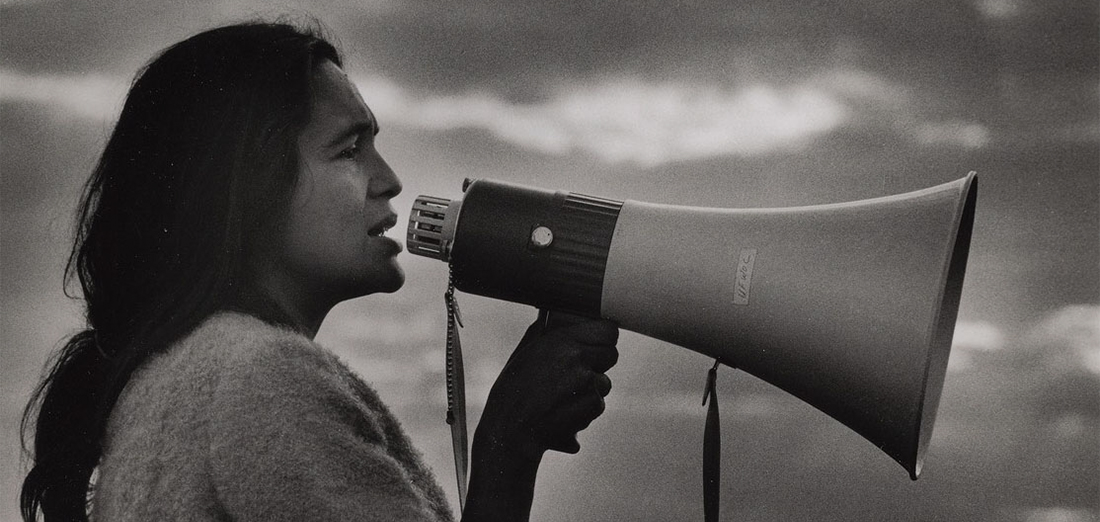
Dolores Huerta: Activist

Thursday, July 6, 2017

“Every moment is an organizing opportunity, every person a potential activist, every minute a chance to change the world.”
—Dolores Huerta

Dolores Huerta has worked to improve social and economic conditions for farm workers and to fight discrimination. To further her cause, she created the Agricultural Workers Association (AWA) in 1960 and co-founded what would become the United Farm Workers (UFW). Huerta stepped down from the UFW in 1999, but she continues her efforts to improve the lives of workers, immigrants and women.

Early Life 

Activist and labor leader Dolores Fernández, better known as Dolores Huerta, was born April 10, 1930, in Dawson, New Mexico, the second child of Juan and Alicia (Chavez) Fernandez. The young family struggled, and by the time Dolores was three, her parents divorced and her mother moved Dolores and her two brothers to Stockton, California. Dolores maintained a relationship with her father, who later became a union activist and a New Mexico state assemblyman. Juan’s own political and labor activism later proved inspirational to Dolores.

Migrant Workers in Stockton, CA
When the family first arrived in Stockton, a farming community in the San Joaquin Valley, Alicia worked two jobs to provide for the family. Dolores’s grandfather, Herculano Chavez, took care of the children, serving as the children’s adult male figure. Dolores admired her mother, who was always encouraged her children to get involved in youth activities and become something. Alicia worked hard to provide music lessons and extracurricular activities for Dolores and her brothers. Dolores played violin and piano and took dance lessons. A good student, she was also a Girl Scout up until she turned 18, and she won second place in a national essay contest.

Despite her achievements, Dolores experienced the racism many Mexicans and Mexican Americans suffered from, especially those who were farm workers. At school she was sometimes treated with suspicion and scorn. She was once accused by a teacher of stealing another student’s work because the teacher was convinced that Dolores was incapable, due to her ethnic origin. However, with time, her family’s economic conditions improved. During World War II, Alicia ran a restaurant and then purchased a hotel in Stockton with her second husband, James Richards. The businesses served the farm workers and day laborers, offering affordable rates and welcoming the diversity of the area.
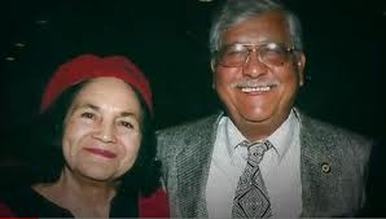
Dolores with her husband, Ventura
After graduating from Stockton High School, in 1947, Dolores Fernandez went through a marriage, the birth to two children and a divorce. After a series of unsatisfying jobs, she returned to school and eventually completed a teaching degree at Stockton College, part of the University of the Pacific. She briefly worked as an elementary school teacher, but resigned because she was so distraught over the poor living conditions of her students, many of them children of farm workers. Determined to help, in 1955, she and Fred Ross started the Stockton chapter of the Community Services Organization (CSO), a grassroots group that worked to end segregation, discrimination and police brutality and improve social and economic conditions of farm workers. During this time, Dolores married Ventura Huerta, another labor activist. The couple would go on to have five children.

A Life of Activism

Cesar Chavez
In 1960, Dolores Huerta started the Agricultural Workers Association (AWA). She set up voter registration drives and lobbied politicians to allow non–U.S. citizen migrant workers to receive public assistance and pensions and provide Spanish-language voting ballots and driver's tests. During this time, Dolores met Cesar Chavez, a fellow CSO official, who had become its director. In 1962, both Huerta and Chavez lobbied to have the CSO expand its efforts to help farm workers, but the organization was focused on urban issues and couldn’t move in that direction. Frustrated, they both left the organization and, with Gilbert Padilla, co-founded the National Farm Workers Association (NFWA). The two made a great team. Chavez was the dynamic leader and speaker; and Huerta the skilled organizer and tough negotiator.

In 1965, the AWA and the NFWA combined to become the United Farm Workers Organizing Committee (later, simply the United Farm Workers). That year, the union took on the Coachella Valley grape growers, with Chavez organizing a strike of all farm workers and Huerta negotiating contracts. After five hard years, the United Farm Workers (now affiliated with the American Federation of Labor and Congress of Industrial Organizations) signed an historic agreement with 26 grape growers that improved working conditions for farm workers, including reducing the use of harmful pesticides and initiating unemployment and healthcare benefits. In the 1970s, Huerta coordinated a national lettuce boycott and helped create the political climate for the passage of the 1975 Agricultural Labor Relations Act, the first law to recognize the rights of farm workers to bargain collectively.

During the 1980s, Dolores Huerta served as vice president of the UFW and co-founded the UFW’s radio station. She continued to speak for a variety of causes, advocating for a comprehensive immigration policy and better health conditions for farm workers. In 1988, she nearly lost her life when she was beaten by San Francisco police at a rally protesting the policies of then-presidential candidate George H. W. Bush. She suffered six broken ribs and a ruptured spleen.

Later Life

Dolores Huerta has been honored for her work as a fierce advocate for farm workers, immigration and women. She received the Ellis Island Medal of Freedom Award and was inducted in the National Women’s Hall of Fame in 1993. That year proved bitter-sweet for her as she also experienced the passing of her beloved friend Cesar Chavez. In 1998, she received the Eleanor Roosevelt Award, a year before she stepped down from her position at the United Farm Workers. In 2002, she received the Puffin/Nation Prize for Creative Citizenship. The $100,000 award provided her the means to create the Dolores Huerta Foundation, whose purpose is to bring organizing and training skills to low-income communities. Huerta continues to lecture and speak out on a variety of social issues involving immigration, income inequality and the rights of women and Latinos.  

Resource: www.biography.com


In 2006, Dolores Huerta visits Tucson High School and makes a speech. Within the speech, she states "Republicans Hate Latinos." In 2010, Arizona Attorney Tom Horne and other politicians used these words as their rationale for passing HB-2281-The Ethnic Studies Ban. In this interview, Dolores Huerta discusses the statement and its affect. 

more about Latino History: rudyacuna.net

Brief History of Feminism

Saturday, March 11, 2017

A Brief History: The Three Waves of Feminism

SEPTEMBER 22, 2015 BY CAROLINE DOREY-STEIN

While the roots of feminism are buried in ancient Greece, most recognize the movement by the three waves of feminism. The third being the movement in which we are currently residing.

The first wave (1830’s – early 1900’s): Women’s fight for equal contract and property rights

Often taken for granted, women in the late 19th to early 20th centuries, realized that they must first gain political power (including the right to vote) to bring about change was how to fuel the fire. Their political agenda expanded to issues concerning sexual, reproductive and economic matters. The seed was planted that women have the potential to contribute just as much if not more than men.

The second wave (1960’s-1980’s): Broadening the debate

Coming off the heels of World War II, the second wave of feminism focused on the workplace, sexuality, family and reproductive rights. During a time when the United States was already trying to restructure itself, it was perceived that women had met their equality goals with the exception of the failure of the ratification of the Equal Rights Amendment (which has still yet to be passed).

Misconceptions…

This time is often dismissed as offensive, outdated and obsessed with middle class white women’s problems. Conversely, many women during the second wave were initially part of the Black Civil Rights Movement, Anti Vietnam Movement, Chicano Rights Movement, Asian-American Civil Rights Movement, Gay and Lesbian Movement and many other groups fighting for equality. Many of the women supporters of the aforementioned groups felt their voices were not being heard and felt that in order to gain respect in co-ed organizations they first needed to address gender equality concerns.

Women cared so much about these civil issues that they wanted to strengthen their voices by first fighting for gender equality to ensure they would be heard.

The third wave (1990’s – present): The “micropolitics” of gender equality

Today and unlike the former movements, the term ‘feminist’ is received less critically by the female population due to the varying feminist outlooks. There are the ego-cultural feminists, the radicals, the liberal/reforms, the electoral, academic, ecofeminists… the list goes on.

The main issues we face today were prefaced by the work done by the previous waves of women. We are still working to vanquish the disparities in male and female pay and the reproductive rights of women. We are working to end violence against women in our nation as well as others.

We are still fighting for acceptance and a true understanding of the term ‘feminism,’ it should be noted that we have made tremendous progress since the first wave. It is a term that has been unfairly associated first, with ladies in hoop skirts and ringlet curls, then followed by butch, man-hating women. Due to the range of feminist issues today, it is much harder to put a label on what a feminist looks like.

Quite frankly, it all comes down to the dictionary’s very simple yet profound definition: “the theory of the political, economic and social equality of the sexes.” If that’s what a feminist is – who wouldn’t want to be called that?

Feminism: Why Not ‘Egalitarianism’ or ‘Humanism’?

Caroline Dorey-Stein
SEPTEMBER 24, 2015 BY CAROLINE DOREY-STEIN

During my studies of women’s leadership and equality, I have become increasingly frustrated with the hesitance some co-workers, friends and family respond with when I discuss feminism. The most common rebuttal is “why is it called feminism if it’s the equality of both men and women?” or, my personal favorite, “why not ‘Egalitarianism’ or ‘Humanism’ instead?”

I’ve even been told “Caroline, I don’t think you’re a feminist.”

I wanted to address this question because if I hear it frequently, chances are so do others and we should all be equipped to answer.

Before I begin my explanation of why it is ‘feminism’ and not another word signifying equality, I want to stress something. I do not just go up to people and blab about how great feminism is! I am not preachy with a few exceptions in my writings and sometimes when I talk with fellow feminists (that’s preaching to the choir, however). Typically feminist arguments surface when someone just simply asks me about my work. When I explain I’m studying women’s leadership and gender equality and it makes them somehow uncomfortable, this is when the retorts to the term arise.

The movement was given the name ‘feminism’ because it focuses on the gender inequality issues that impact women.  Just like any other civil rights category, feminism is a term used to show that one supports women’s equality and wants to address the serious amount of gender discrepancies they face daily. It does not take away from other civil rights matters.

Feminism is not called Humanism or Egalitarianism because Feminism, Humanism and Egalitarianism are three distinct theories.

Humanism is a branch of philosophy and ethics that advocates for equality, tolerance and secularism. It recognizes that human beings do not “require” religion in order to develop moral systems or behave morally. More simply, Humanism is the theory that humans are allowed to use logic to decide what is ethical instead of using a higher power to define for them.

Egalitarianism is a form of political philosophy that advocates all human beings are fundamentally equal and therefore equally entitled to resources. Yet, it has some distinct limits in applied practice. Egalitarianism has been an inactive socio-political movement for quite a while now.

Equality was originally conceptualized as a means to give everyone the same things, and although concepts and theories of equality are meant to be fair, rarely if ever are they in practice in reality.

This is not to infer that these two practices did not help shape Feminism. Humanism and Egalitarianism are important intellectual movements whose philosophies inform Feminism as well as global human rights legislation. But Feminism is the only movement actively advocating for gender equality.

The movement operates on the tenant that gender is not an acceptable basis for discrimination, oppression and/or eradication. It’s called Feminism because the gender being denied personhood and subjected to oppression is female. Feminism was given its name because it began as a socio-political movement to achieve gender equality for females and through its own rhetoric has become a movement to achieve equality for all persons regardless of gender.

Interracial Relationships that Changed History

Saturday, June 13, 2015

Header_Interracial Relatinoships.jpg
Join PBS Black Culture Connection, PBS Learning Media and Listverse as we revisit groundbreaking relationships, cases and rulings that have made a mark on history!  Browse the profiles of influential couples around the world or visualize some of their stories through an infographic. 
GreyBar.png
| Mildred and Richard Loving
On July 11, 1958, newlyweds Richard and Mildred Loving were asleep in bed when three armed police officers burst into the room. The couple were hauled from their house and thrown into jail, where Mildred remained for several days, all for the crime of getting married.  At that time, 24 states across the country had laws strictly prohibiting marriage between people of different races. Five weeks earlier, the longtime couple had learned Mildred was pregnant and decided to wed in defiance of the law. In order to evade Virginia’s Racial Integrity Act, the pair had traveled to Washington, D.C. for the ceremony. Upon their return to Virginia, they were arrested and found guilty, with the judge informing Mildred that “as long as you live you will be known as a felon.” The Lovings moved to the relative safety of Washington, but longed to return to their home state.
In 1963, they approached the American Civil Liberties Union to fight their case in court. After an extensive legal battle, the Supreme Court ruled that laws prohibiting interracial marriage were unconstitutional. Although such laws officially remained on the books in several states, the Lovings’ landmark victory rendered them effectively unenforceable, ensuring nobody else would have to endure the same treatment. The last law officially prohibiting interracial marriage was repealed in Alabama in 2000.
Photo © Bettmann/CORBIS
| Ruth Williams Khama and Sir Seretse Khama
While attending law school in England, Ruth met Sir Seretse Khama (then Prince Seretse Khama), the chief of the Bamangwato tribe, who became Botswana's first president in 1966. Under his leadership, the country underwent significant economic and social progress, while Ruth was apolitically active and influential First Lady. But first they had to overcome the wave of bigotry brought about by their controversial marriage. When they announced the news in 1948,Ruth’s father threw her out of the house, while Seretse’s uncle declared “if he brings his white wife here, I will fight him to the death.” Bowing to pressure from apartheid South Africa, the British government attempted to stop the marriage and then prevented the couple from returning to Botswana.
For eight years they lived as exiles in England, until the Bamangwato sent a personal cable to the Queen in protest. Their sons Ian and Tshekedi later became significant political figures as well. The marriage is said to have inspired the film A Marriage of Inconvenience and the book Colour Bar.
Photo © Hulton-Deutsch Collection/CORBIS
| Arcadio Huang and Marie-Claude Regnier  

In the early years of the 18th century, European scholars made huge advances in their understanding of Chinese language and culture. Much of this work rested on the efforts of a remarkable young man named Arcadio Huang. Born in a small town in China’s Fujian province, Huang’s Catholic parents were set on him becoming a priest. He was adopted by a French priest and later traveled to France with Bishop Artus de Lionne. In France, he soon joined with a number of promising young French scholars to develop a Chinese-French dictionary. 
In 1713, Huang married a middle-class Parisian woman named Marie-Claude Regnier. There are very few records of marriages between Europeans and non-Europeans during this time period and many considered such relationships unthinkable. Nevertheless, Marie-Claude’s parents reportedly gave their blessing for the union, and while the couple soon found themselves in financial difficulties, the marriage seems to have been a happy one. A year later, Marie-Claude died giving birth to their first child and Huang, heartbroken, followed her a year later. Historians have speculated that their unusual marriage was one of the first of its kind.
| Gonzalo Guerrero and Zazil Ha
Some of the first people of Spanish/ Mayan heritage were the product of a truly incredible marriage. As a survivor of a shipwreck off the Yucatan coast, Gonzalo Guerrero found himself  held captive by the Maya. Desperate to avoid being killed, he successfully sought to learn his captors’ language and customs. As he gained acceptance into the culture, he taught Spanish combat tactics to the Maya, which are said to have allowed them to drive out the conquistadors. Guerrero himself became a highly respected figure in Mayan society, marrying a princess named Zazil Ha and being given the temples of Ichpaatún, north of Chetumal.
When Hernan Cortez arrived in the area, an attempt was made to retrieve Guerrero and one other survivor. But Guerrero refused to leave, saying, “I am married and have three children, and they look on me as a cacique [“lord”] here, and captain in time of war. My face is tattooed and my ears are pierced. What would the Spaniards say if they saw me like this? Go, and God's blessing be with you.”
Photo: Statue of Gonzalo Guerrero guarding over his family.
| Louisa and Louis Gregory
Both Louis Gregory, an African American man and Louisa Mathews, a British woman were of the Bahá’í faith: a religion centered on unity. The two met in 1911 on a pilgrimage to the Holy Land in Egypt. Their love for one another was not received well by the general public, especially in the United States, where racism was still very much the norm. In spite of the Bahá’í faith’s innermost message of “Oneness of Mankind,” many people of the faith living in Washington, D.C. adhered to the attitude of racial segregation that was rampant during the time.
With Bahá’í leader Abdu’l-Bahá declaring his staunch support for interracial marriages, Louis and Louisa were married in 1912 in New York, becoming the first interracial Bahá’í couple. Louis Gregory became a strong advocate for racial unity in both the United States as well as within the Bahá’í community; his most significant expression of the teachings of his faith come from his marriage. Despite countless obstacles, the couple remained married for almost 40 years, until Louis Gregory’s death in 1951.
Photo:Louis and Louisa Gregory
| Leonard Kip Rhinelander and Alice Jones
The marriage and divorce trial of Kip Rhinelander and Alice Jones brought the racial tensions of a nation to court, examining how a person is labeled as “colored” and “white” in legal terms. Rhinelander was a white socialite born into a prominent New York family. Jones was the biracial daughter of a working class couple. In 1921, the two met in Stamford, Connecticut at a clinic where Kip was working through his issues of anxiety and stuttering. The couple had a three-year love affair before marrying in 1924. Because of the Rhinelanders’ high position in society, their marriage was listed in the New York Social Register. Alice became the first black woman to appear in its pages, and the media swung into action.
Headlines immediately blared the news of the marriage. Kip’s family quickly followed this with a demand that he divorce his wife, and he eventually succumbed to their will. The divorce trial was centered on Kip’s claim that Jones had passed herself off as a white woman. Under the eyes of an all-white, all-male jury, the focus of the trial became whether Rhinelander must have reasonably known of Jones’s mixed heritage. In a move that can only be described as grossly demeaning, Jones was ordered to strip off her clothes so the jury could determine if she was to be considered “colored.” They ruled in Jones’s favor, and the annulment was denied. Kip's estate was ordered to pay a yearly allowance to Alice for the rest of her life. The two never reunited.

Photo © Bettmann/CORBIS
| James Achilles Kirkpatrick and Khair un-Nissa
James Kirkpatrick was a high-ranking diplomat from the East India Company who became captivated by Indo-Persian culture after traveling to India with imperialist intentions. He quickly gave up his English habits and wardrobe and replaced them with nautch parties and Mughal-style outfits. As he delved deeper and deeper into the culture, Kirkpatrick converted to Islam and in 1801 married Khair un-Nissa, the teenage granddaughter of the prime minister of Hyderabad. Local officials only allowed the marriage on the condition that he “strive for the best interests of the [Hyderabadi] government.” He accepted the conditions, and the marriage was done.
A public outrage quickly ensued in Calcutta because the marriage was interracial. As imperialism swept across India, the union became even more of a taboo, especially because Kirkpatrick was the highest-ranking official yet to be involved in this type of marriage. Upon hearing of the scandal, newly appointed governor of India Lord Rickard Wessesley summoned Kirkpatrick to Calcutta, where he was reprimanded and dismissed from his position. He went on to have two children with his wife. A few years later, Kirkpatrick decided his children should be sent to England to for schooling and to receive Christian names. They never returned to India. Tragically, James didn’t make it back to town to bid his children goodbye. Immediately after they left, he came down with a fever and died (around 1807). Khair un-Nissa would die of natural causes only a few years later.
| Bill de Blasio and Chirlane McCray
In spite of the increased acceptance of interracial marriage across the United States, Bill de Blasio, elected Mayor of New York in 2013, is the first white official to be elected into a major office with a black spouse by his side. McCray is expected to play a major role in de Blasio's administration.
While polls show that interracial marriages across the United States are increasingly accepted, some disapproval is still overt: A 2013 Cheerios ad featuring a biracial family sparked so many racist remarks on Youtube that comments had to be disabled.
Many celebrate the de Blasio marriage as another significant milestone and hope it will help combat the racism that still exists in a country constantly striving to uphold its cornerstone value of equality.
Photo © Janet Mayer/Splash News/Corbis

So, what's so important about the month of February?

Saturday, January 31, 2015

Other than Valentine's Day, just what in the heck is so special about the month of February? There are only 28 days and it's in the middle of winter.  Let's take a recap on American history:

Feb. 1

_________________________________________________________________________
Feb. 2

_________________________________________________________________________
Feb. 3


_________________________________________________________________________
Feb. 4


_________________________________________________________________________
Feb. 5


_________________________________________________________________________
Feb. 6


_________________________________________________________________________

Feb. 7

_________________________________________________________________________
Feb. 8

_________________________________________________________________________
Feb. 9


_________________________________________________________________________

Feb. 10

_________________________________________________________________________
Feb. 11

_________________________________________________________________________
Jan. 12

_________________________________________________________________________
Feb. 13

_________________________________________________________________________
Feb. 14

  • 2005 – YouTube is launched by a group of college students, eventually becoming the largest video sharing website in the world and a main source for viral videos.
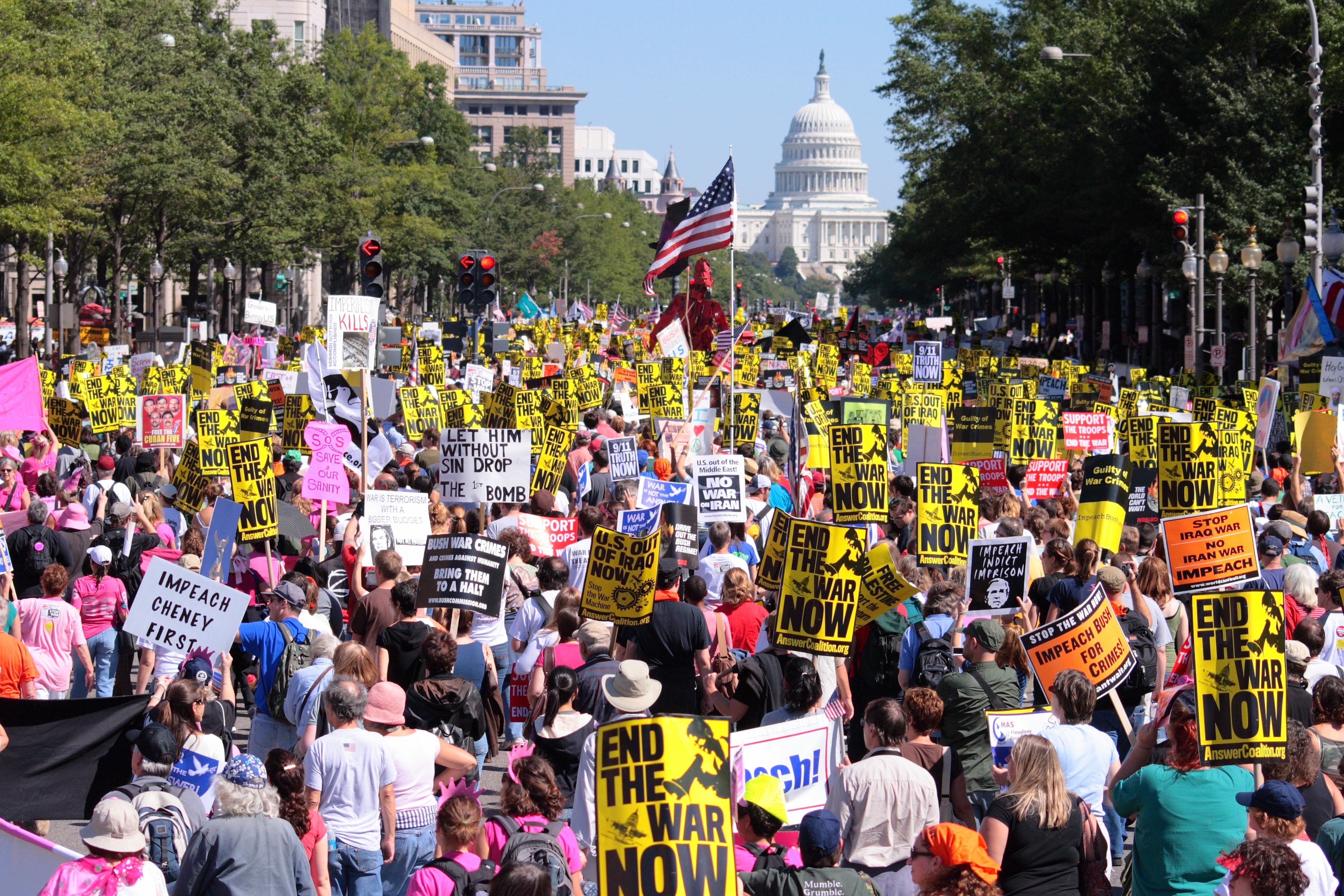
  • 2003 – Protests against the Iraq war take place in over 600 cities worldwide. It is estimated that between 8 million to 30 million people participate, making this the largest peace demonstration in history.
    ________
    ____________________________________________________________

    Feb. 16
_________________________________________________________________________
Feb. 17

_________________________________________________________________________
Feb. 18

_________________________________________________________________________
Feb. 19

_________________________________________________________________________
Feb. 20

_________________________________________________________________________
Feb. 21

_________________________________________________________________________
Feb. 22

_________________________________________________________________________
Feb. 23

_________________________________________________________________________
Feb. 24

_________________________________________________________________________
Feb. 25

_________________________________________________________________________
Feb. 26

_________________________________________________________________________
Feb. 27

_________________________________________________________________________
Feb. 28