Showing posts with label Irish. Show all posts

Wolf Land - a history of wolves in Ireland

Sunday, September 23, 2018

Wolves from Oppian of Apamea Cynegetica, 10th Century.


Wolves in Ireland were once an integral part of the Irish countryside and culture, but are now extinct. The last wild wolf in Ireland is said to have been killed in 1786, three hundred years after they were believed to have been wiped out in England and a century after their disappearance in Scotland.  

The grey wolf (Canis lupus) is a canine of the order Carnivora, an apex predator largely feeding on ungulates. The earliest radiocarbon date for Irish wolf remains come from excavated cave sites in Castlepook Cave, north of Doneraile, County Cork, and dates back to 34,000 BC. Wolf bones discovered in a number of other cave sites, particularly in the counties of Cork, Waterford and Clare indicate the presence of wolves throughout the Midlandian ice age which probably reached its peak between 20,000 BC and 18,000 BC. By about 14,000 BC Ireland became separated from Great Britain, which, itself, still formed part of mainland Europe, to become an island. Wolves were one of just a few species of land animal in Ireland that survived through the Nahanagan Stadial, a cold period that occurred between 10,800 BC and 9500 BC. Wolves were a major part of Ireland's postglacial fauna, as evidenced by their prominence in ancient Irish myths and legends, in a number of place names (both Irish and English), in archaeological sites, along with a considerable number of historical references. The ringforts, a common feature of the Irish landscape, were built partly as a defense against wolves and to protect livestock, over the period 1000 BC to AD 1000.

According to the Annals of Loch Cé, the poet Cúán úa Lothcháin (died 1024) was "slain by the men of Tethfa. God performed a ‘poet's miracle,' manifestly, on the party that killed him, for they died an evil death, and their bodies were not buried until wolves and birds preyed upon them." Among one of the earliest historic references to wolves attacking people in Ireland occurs in the Annals of Tigernach under the year 1137: The Blind one of ... that is, Giolla Muire, was killed by wolves. Under the year 1420 in the Annála Connacht is the statement "Wolves killed many people this year."  In 1571, as a result of its comprehensive destruction by "James Mac Maurice ... (and) ... the warlike troops of the Clann-Sweeny and Clann-Sheehy", Kilmallock "became the receptacle and abode of wolves" In 1573, the aftermath of the battle of Bel-an-Chip was described - "Noisy were the ravens and carrion-crows, and other ravenous birds of the air, and the wolves of the forest, over the bodies of the nobles slain in the battle on that day." In 1581 William Odhar O Carroll was put "unsparingly to the sword, and detested (the thought of) shewing him quarter or mercy. They slew him, and left his body under the talons of ravens and the claws of wolves."  In the aftermath of the Desmond rebellion, the body of a Dr. Saunders was found in Desmond in early 1583 who perished miserably, having fallen a victim to famine and the effects of exposure to the weather, and whose body was discovered partially devoured by wolves In the aftermath of the wreck of the Spanish Armada in 1588, Francisco de Cuellar turned to check upon a companion only to find him dead. There he lay on the ground with more than six hundred other dead bodies which the sea cast up, and the crows and wolves devoured them, without there being any one to bury them.

The port books of Bristol record between a yearly average of between 100 and 300 wolfskins exported from Ireland throughout the 1500s and a total of 961 skins in a single year. Pilib Ó Súilleabháin Béirre (c. 1590 – 1660), writing of Ireland and particularly Munster after the end of the Nine Years' War, described the aftermath: THUS the war was finished. Ireland was almost entirely laid waste and destroyed, and terrible want and famine oppressed all, so that many were forced to eat dogs and whelps: many not having even these, died. And not only men but even beasts were hungry. The wolves, coming out of the woods and mountains, attacked and tore to pieces, men weak from want. The dogs rooted from the graves rotten carcases partly decomposed. And so there was nought but abundance of misery ...Throughout most of the first half of the 17th century, Ireland had a substantial wolf population of not less than 400 and may be as high as 1000 wolves at any one time. One of the nicknames used for Ireland at this time was “wolf-land”.

The first instance of legislation against Irish wolves dates back to 1584 when John Perrot, the Lord Deputy of Ireland, ordered Robert Legge to come up with a scheme to encourage the destruction of problem wolves. Further records of legislation occur in 1610 and 1611. In 1614, an Englishman named Henric Tuttesham was offered £3 for every wolf he killed. The wolf population at the time was high enough for Tuttesham to be authorised to keep four men and 24 hounds in every county for seven years, a total of 128 men and 768 hounds. The bulk of anti-wolf legislation occurred during the decade following the Cromwellian conquest of Ireland. A number of writers from this time period suggest that as a result of ongoing military campaigns in Ireland, particularly the Cromwellian wars 1641-1652 and the devastation of much of the country and, with increasing numbers of farmed animals, wolf numbers were increasing and seen as a threat to business.

The level of rewards and bounties established by Oliver Cromwell's regime attracted a few professional wolf hunters to Ireland, mostly from England. Politically, the prospect of numbers of armed Irish roaming around the country hunting wolves was not acceptable, given the ongoing conflict between the Irish and the new English settlers, so it was seen as much safer for the English authorities to encourage men from their own country to deal with the wolf problem. The problems caused by wolves were considered serious enough by Cromwell's government to impose a ban on the exportation of Irish Wolfhounds. 

In 1652 the Commissioners of the Revenue of Cromwell's Irish Government set substantial bounties on wolves, £6 for a female, £5 for a male, £2 for a subadult and 10 shillings for a cub. In the same year, measures were taken for the destruction of wolves in the Barony of Castleknock, county Dublin. A grand total of £243 5s 4d was paid for wolf kills in Galway, Mayo, Sligo and part of Leitrim formerly within the precinct of Galway in 1655 or 1665, depending on the author. Between the period July 1649 and November 1656 the total amount of bounty paid out for wolf kills in Ireland as a whole was £3,847.  Galway, Mayo, Sligo and part of Leitrim had proportionately more wolves than the rest of the country, given that large tracts of this area were relatively untouched by humans.[1] A Captain Edward Piers was leased land over a five-year period in Dunboyne, County Meath on the condition that he kill fourteen wolves and 60 foxes. In the 1690s Rory Carragh was hired to kill the last two wolves in one part of Ulster and was equipped with a boy and two wolf dogs. The last reliable observation of a wolf in Ireland comes from County Carlow when a wolf was hunted down and killed near Mount Leinster for killing sheep in 1786.


Leap Year: A chance for women to pop the question?

Sunday, February 28, 2016

Resource: IrishCentral

Ireland's folklore is full of wonderful, funny, strange, but sometimes out-dated traditions and in this year of 366 days, we are greeted with one of the most well-known. Yes, it is a leap year, and although you may have thought it was a myth, according to the old Irish tradition, this is the perfect chance for a woman to take matters into her own hands and get down on one knee on February 29.  Looking back through ancient Irish history, it is said that the tradition began in 5th century Ireland when St. Brigid of Kildare bitterly complained to St. Patrick that women had to wait far too long for men to propose. The legend says that St. Patrick decreed the women could propose on this one day in February during the leap year. I'm sure the women were thrilled.


The tradition was then taken to Scotland by Irish monks. Back in 1288, the Scots passed a law that allowed a woman to propose marriage to the man of their dreams in a Leap Year with the law also stating that any man who declined the proposal on this day would have to pay a fine. The law was allegedly passed by an unmarried Queen Margaret (although records show she may only have been five years old at the time) and she put in place a rule that all those women proposing must wear a red petticoat while doing so. The fine to be paid if a man declined could range from a kiss to payment for a silk dress or a pair of gloves.

This tradition comes from another tale about St. Patrick and St. Brigid in which she drops straight to her knee at Patrick's decree, instantly proposing to him. Patrick declined her offer – he was probably too busy saving Ireland from snakes – but he gave her a kiss on the cheek and a silk gown to soften the blow.  This, too, is dubious. Although many people believe that St. Patrick and St. Brigid met, and that she offered her vows to him, Brigid would historically have been only nine or ten years old when Patrick died in 461 AD. If you believe he died later, however, in 493 AD, it may have been possible, although it's still not altogether likely.  
In some upper-class European societies, the custom of denial involved buying 12 pairs of gloves for the woman you were rejecting. To hide her shame at not having a ring to wear, of course! In some places, February 29 has been renamed Bachelors' Day because of the tradition.  There is also precedent for the tradition in English law. February 29 was ignored and had no legal status. People believed that traditions would also have no status on that day as it was not a legal day and so it was possible to have women propose, altering an unfair custom that allowed only men to propose marriage.
Here in the United States, the tradition was also celebrated with some people referring to February 29 as Sadie Hawkins' Day. On this allotted day of the four-year cycle, women, allegedly, have the right the right to run after unmarried men to propose. Sadie Hawkins was a female character in the Al Capp comic strip "Li'l Abner" who inspired Sadie Hawkins Dances where girls would ask boys to attend. Poor St Oswald was also cast with the women as his feast day was placed on February 29. Celebrating it on the proper day when possible, his feast day is more commonly remembered on February 28. 

An Irish Life. Nell McCafferty in interview

Friday, August 8, 2014

by  Tuesday, March 1st, 2005

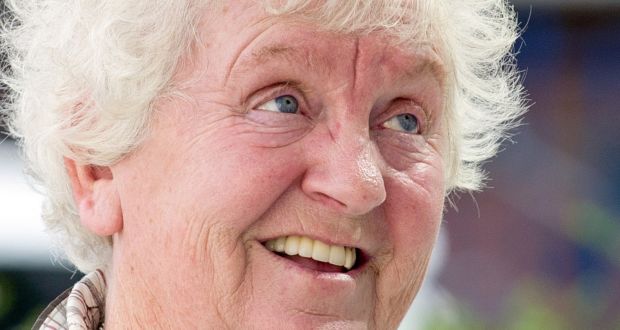
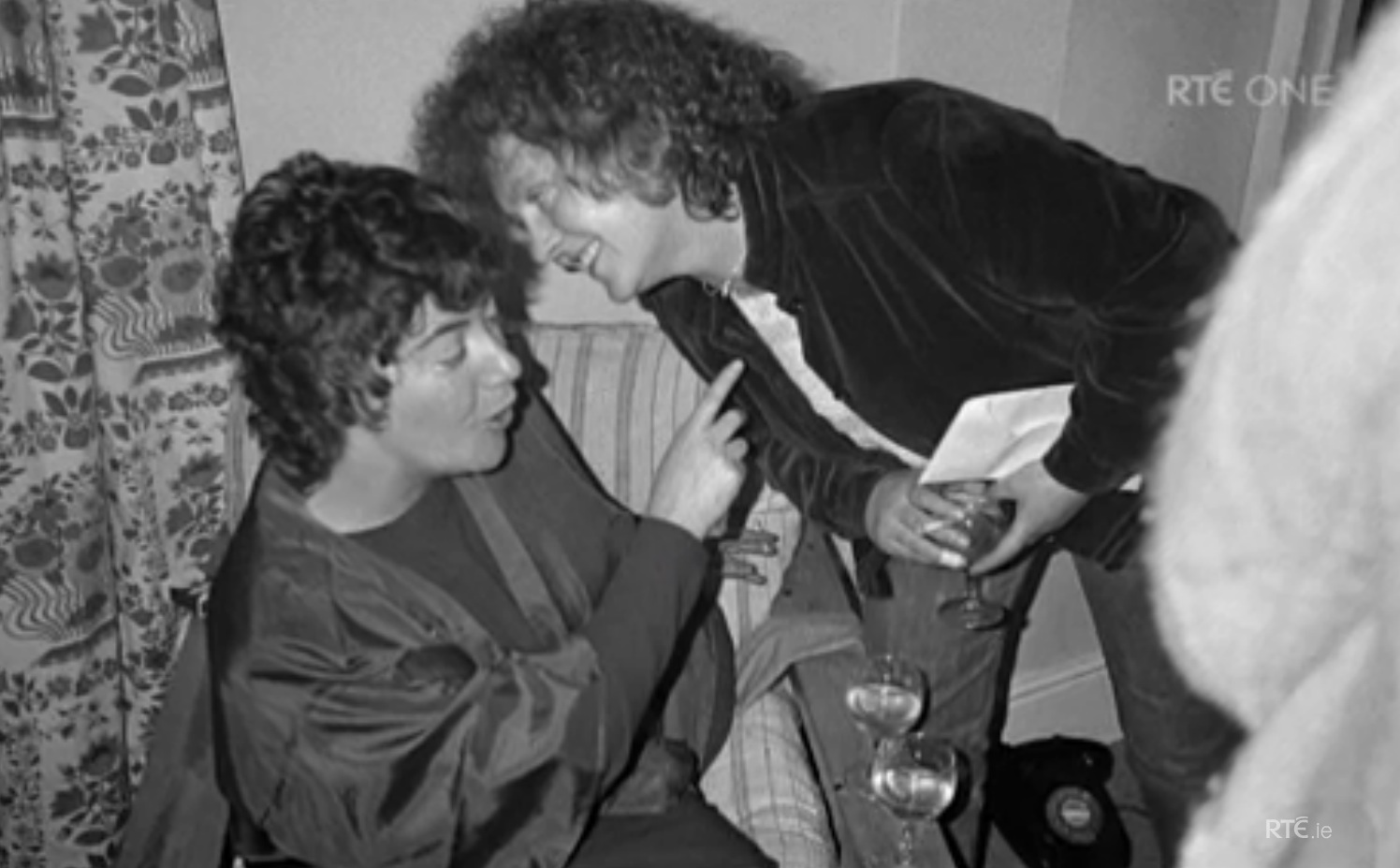
In the kitchen of her lovely old redbrick house, Nell McCafferty apologises for the lack of biscuits. As I sit down at the table and she makes tea, I get the feeling that this is the kind of kitchen where visitors are regularly treated to home baking. The house, the kitchen, the invitation to tea send me certain messages. Homemaker. Breadbaker. It is an interesting backdrop for a woman who is known as a cantankerous feminist, barricade stormer and some-time IRA defender.
Feminism and republicanism are very much in the news at the moment. After the murder of their brother, Robert McCartney, by IRA members, The McCartney sisters have dominated news about Ireland. Their demands that the killers be brought to justice have thrown traditional support for the IRA in Catholic communities in the North into question. McCafferty, who describes in her book how she was shunned in the past because of her “refusal to condemn a neighbour’s child”, has her roots in that same community. What does she make of the events? “I think it has changed everything. It is obscene what happened to those men [a number of men were beaten in the attack]. The McCartney sisters are from a Republican background, and would have supported the IRA as defenders of the community. Now that has changed – what they see, what we are all seeing is that the IRA will kill you, kill their own. It is a terrible shock that members of the IRA could conduct themselves like a murderous gang”.
But was it not well known already, what the IRA was up to? Can it really be a surprise that an army kills? McCafferty vehemently rejects this. “This is different. I am not saying I am suddenly waking up and smelling the coffee. Sure, human rights were violated, we were under siege and there was a war on – but not like this. And now the war is over, has been over for 9 years. Sinn Féin wanted the IRA to stand down. OK, there were a few difficulties with certain people, but we thought the IRA wanted the IRA to stand down. Now I don’t know. Perhaps there will be a split, which would be terrible because it could bring back the guns”.
She is critical of media who she feels have not covered the story well enough – not spelling out exactly what happened on that night in Maginnis’s pub in Belfast. She believes people need to know what happened to understand why this is a real watershed. “The community is deliberately out on the streets applauding these women. This is the hand of the community in the back of the IRA saying, ‘Go now’. Once women sanction revolution, there’s no stopping it”.


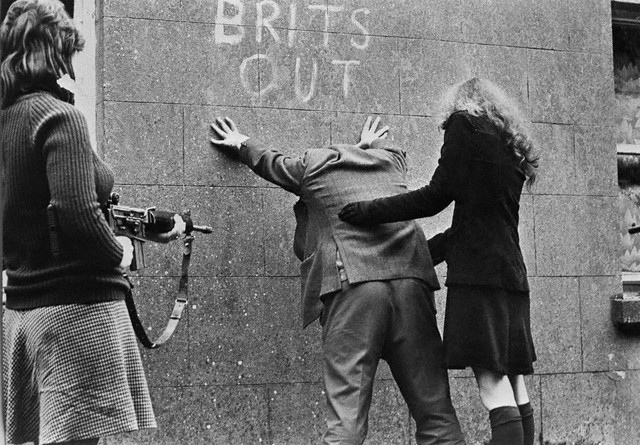
Women and rebellion is something McCafferty knows a lot about. Having grown up in Derry, she was at the centre of Northern Ireland’s civil rights movement for equal votes, homes and jobs for Catholics. McCafferty was there on Bloody Sunday in 1972, when British soldiers shot dead 14 marchers in Derry. She also campaigned on behalf of republican women in jail. She moved to Dublin in 1970, and as a journalist opened many people’s eyes to what was happening to the most vulnerable in Irish society when she wrote about the children’s courts. She soon became part of a small but vociferous group of women who started the campaign for equality and women’s rights. She went on the famous contraceptive train – a group of Irish women went to Belfast, stocked up with condoms, pills (which, she reveals in her book, were actually aspirin, but customs never knew that) and other illegal articles and brought them back to Dublin. Here they were met by police and waiting media. Yes, it is true: 30 years ago, contraceptives were still illegal in the Republic. Pints were another thing women could not have – and so the same women went in to a famous pub in Dublin’s city centre, ordered 40 brandies, waited for them to served, then ordered a pint. The barman refused, and they in turn never paid for the brandies.
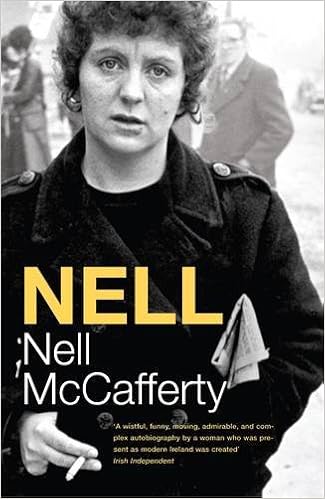
Nell McCafferty’s autobiography, Nell, published in November 2004, is full of great stories both from the civil rights, and women’s struggles. Despite dealing with deadly serious issues, McCafferty says feminism was fun. Her wit, compassion and sense of the ridiculous, used with such great effect in her journalism and campaigning, are much in evidence throughout the book.“We enjoyed the struggle, at least at the beginning. It was like shooting fish in a barrel, the obstacles to women were incredible, ludicrous, and stood out like a sore thumb. Ireland was full of men in suits who never had to deal with the likes of us before, and to see them challenged by someone as formidable as Mary Robinson – it was great. It is terrific if you are a revolutionary and you can achieve the revolution in a short time!“
Although not now actively involved with any organisation, McCafferty is still considered a prominent feminist, and regularly asked to “do gigs”. They day we met, she was due to speak later that evening on the subject “Has feminism gone too far”. She says the organisers have assumed she would be on the politically correct side, but “perhaps they should not be so sure”. She says she wonders if life has really become better for women as they deal with all the new pressures of juggling work and home, marriage breakdown, and running several families. “At first it was so simple, the obstacles so obvious. Now you are dealing with all the complicated stuff – three jobs, childcare, commuting, three children by three fathers. I do not have the answer, and I am glad I don’t have to deal with it. My excuse is always: don’t ask the prophet for a blueprint! I prophecised that we must work outside the home, but I never said how it would be done exactly. I just sketched the big picture, someone else deal with the details. I have forgiven myself for not providing the blueprint: that is not my job – someone has to look at the big picture first! I keep asking, and I really want to know, how are you going to make it work? Who is out there looking for a solution? I am bemused there is no great cry from women, and men; but I guess it is just a fallow period at the moment. Change will come. I think it takes 20 – 30 years for each generational change to really seep through. And jobs for women outside the home have only really happened in Ireland in the last ten years. But I do wonder, are you all happier now!? “
It is interesting that the role model for this feminist prophet was a traditional homemaker – her mother Lily. Central to McCafferty’s book is a fascinating and moving portrait of her mother, a truly remarkable woman who seems also to embody McCafferty’s statement about women sanctioning the revolution – as well as feeding the revolutionaries! Lily jumps off the pages and we see clearly how she inspired and supported Nell throughout her life. “My mother was one of the last of the full-time homemakers. We lived like royalty, she did everything for us. She never had her own job, and I know she would have liked to have her own money and not have to wait for my dad to hand it over. But she loved looking after us, and lots of other people too: she always had an open house where everyone was welcome. In 1968, when we were all reared, in a way she was redundant – but then civil rights happened, she became active in local politics and her house became a political salon and part-time refuge. Our house was always at the heart of the local community, and my mother was very much at the centre of it. All the neighbours came to my mother with their problems. There were a lot of things people could not talk about –but mammy would talk about it for them!”
However the one thing that could not be discussed was the fact that Nell was gay. Despite their terrific relationship, it remained a closed subject. Yet McCafferty opens her book with a declaration of her sexuality. She says she was “terrified” of her mother’s reaction. “Once the book was out there could be no ambiguity anymore.At the start, I was not sure if I could publish it while she was still alive. When I started the book, I decided to write everything down, and said to myself I could always take things out! But when it was done, – well, I felt this was the time, I had to be honest. So I took a deep breath and sent it off. I was terrified though, of how my mother and the neighbours, our street, would react. They have been through everything else – war, wife beating, rape, marriage breakdown –this was the last taboo."

Lily McCafferty died just before Christmas, soon after the book was published. McCafferty is very glad now that her mother got to see it. “Thank God I got the book out. It would have been a big ache in me if I had not got a chance to show it to her. She could not read it, she was blind at the end, but my sister Carmel read parts of it to her. She read the opening paragraph, which was enough… And mammy saw me on the Late Late Show telling parents watching with their secretly gay children to tell them they loved them.” She says Derry was the ‘acid test’ – what would the reaction be of old neighbours, her mother’s friends. The Saturday after she had been on TV, she was in Derry for her mother’s 94th birthday. And in they all came, ”with in one hand a gift for my mum and in the other my book, asking me to sign it. I knew then it was OK.”
Another interesting thing about Nell is that it is dedicated to two nuns. It was a surprise to me that someone who has been so critical of the Church has such admiration for “holy women”. “I was blessed by them; two nuns who listened to me, showed me compassion, made it possible for me to go on when I was discovering what it meant to be gay. When I confessed to a priest that I was in love with another girl, he refused me absolution. I walked away and never went back to the Church after that day. But the nuns were gentle with me and I am full of gratitude for that. I was very religious growing up. It was what kept us going: we were God’s children. Protestants might have everything else but they would not go to heaven. It was real opium for the masses – and we believed that one day we would be free! I envy people now who have faith. In the lead up to my mam’s death, I can see how it is a comfort to people. And there is a lot of good sense in the Ten Commandments: give us today our daily bread – that phrase is people demanding their right; to be free from hunger; it is a civil rights demand. The holy men have just got in the way of the message of social justice. But I still have faith in the holy women”
The book is also a very personal, very intimate portrait of its author. Several chapters describe McCafferty’s relationship with Nuala O’Faolain, who McCafferty describes as “the love of her life”. Why did she feel it important to record it in such detail – and was she not worried about being so open about something so deeply personal? Does it not make her vulnerable? “No, not at all. I think that is what you do when you tell a love story – and I could not tell the story of my life without including it. I am more worried about what I did not include – I think there was much more to say! I wish I had captured more of the joy, more about our travels, things we did together. I am surprised when people ask me this – do they not think I had a domestic life, that I just walked around carrying placards all day? My only worry about this is whether I was fair to Nuala. I am not worried about saying I love someone. To me it is one of life’s greatest achievements. “
The last few months have clearly been difficult for McCafferty. She says she has not been able to sleep at night since December 16th – the day her mother died. Having spent the last four years caring for her mother, and also writing her book, a very disciplined life has given way to what she describes as “living in the twilight zone”. “I am glad though that I can take the time to absorb it. I have not really had a chance to talk or think much about what next. Right now I have no vision, no ambition, no objective. I am a woman in waiting. I am not usually very good at metaphors, but a friend of mine, Margaret McCurtain, does not say how are you – she always says “how does your garden grow?”, What I am thinking now is, I forgot to plant bulbs, I was busy doing other things – but sure something will come up in spring. I like figuring out problems, there is an answer to everything. But right now I have not got the energy to identify the problem. But I am sure that will come, in time".