Showing posts with label concentration camps. Show all posts

Gordon Hirabayashi: Why I refused to register for Japanese evacuation

Friday, April 12, 2013

Published by Crosscut
Editor's Note: Gordon K. Hirabayashi was a student at University of Washington when the U.S. ordered the removal of Japanese-Americans in the Pacific Northwest. Hirabayashi refused curfew orders, prompting a legal battle. He lost. It wasn't until the 1980s that Hirabayshi's convictions were overturned, putting him firmly in the right on his initial refusal.
After his death in 2012, Hirabayashi’s brother, James Hirabayashi and nephew, Lane Hirabyashi, compiled his diaries and correspondence which follow his experiences as a student through time served in jail for defying U.S. orders. The book gives insight into Hayabayashi's motivations and faith during his time in jail.
“A Principled Stand: The Story of Hirabayashi v. United States" chronicling the life Gordon K. Hirabayashi was released by the University of Washington Press this month. Below is an excerpt which contains Hirabayashi’s formal refusal to comply with orders. He disseminated the refusal to chairmen of the YMCA board where he was a dorm resident:

When my family was eventually moved from Pinedaleto the more permanent War Relocation Authority [WRA] camp known as Tule Lake in Northern California, two women who had been uprooted from the Los Angeles area trudged the dusty road from the opposite end of the camp looking for my mother. When they finally located her, they said they had heard that the mother of the fellow in jail fighting for their rights was housed in that block. They had come to greet her and to say “Thank you!”
In recounting this episode, my mother wrote about what a great lift she had received from that visit. When I read her letter, I experienced a sudden removal of weight from my shoulders, which I hadn’t realized I was carrying. I knew then that nothing I could have said or done could have given her more satisfaction.
In any case, as I prepared to take my stand in Seattle, I heard about Min [Minoru] Yasui in Portland and his refusal to obey the curfew because his case was already going on. As far as the Japanese American community was concerned, in terms of the norms of the 1940s, protesting was not a frontline activity, not even a backline option. The Japanese American Citizens League (JACL) was the big thing in the Japanese community. I knew the leaders, men like Jimmy Sakamoto and Bill Hosokawa. They were working on opposite things from what I was doing, so I never consulted them.
Had Japanese American leaders known of my position while they were still in Seattle, they would have confronted me and said, “You are not even dry behind the ears. How can you take such a step that will create difficulties for the whole group? How do you know there won’t be a backlash? How do you know you are right and the rest of us are wrong?” I would have had difficulty answering their questions.
But I would have had questions for them also. How could they defend America and the Constitution by acceding to a decision made by military authorities to suspend constitutional guarantees, especially when there had been no suspension of the Constitution via martial law? In the end, I would not have changed their views, and they would not have changed mine. By personality, though, while I had independent positions on various things, I was never what you might call the kind of person who habitually protested. 

As I followed the press after the U.S. entered the war, the writing was on the wall. The first part of the evacuation process began with the Bainbridge Islanders, who, because of their proximity to naval installations, were moved in March 1942. The last district in Seattle to be evacuated was the northeast section, including the University District, where I was living. The deadline was May 12, 1942. By the end of March, the Bainbridge Island Japanese Americans were gone. At that point, I knew that I wasn’t going. I sat down and wrote a statement:

Why I Refuse to Register for Evacuation
Over and above any man-made creed or law is the natural law of life — the right of human individuals to live and to creatively express themselves. No man was born with the right to limit that law. Nor, do I believe, can anyone justifiably work himself to such a position. 
Down through the ages, we have had various individuals doing their bit to establish more securely these fundamental rights. They have tried to help society see the necessity of understanding those fundamental laws; some have succeeded to the extent of having these natural laws recorded. Many have suffered unnatural deaths as a result of their convictions. Yet, today, because of the efforts of some of these individuals, we have recorded in the laws of our nation certain rights for all men and certain additional rights for citizens. These fundamental moral rights and civil liberties are included in the Bill of Rights, U.S. Constitution and other legal records. They guarantee that these fundamental rights shall not be denied without due process of law.
The principles or the ideals are the things which give value to a person’s life. They are the qualities which give impetus and purpose toward meaningful experiences. The violation of human personality is the violation of the most sacred thing which man owns. 
This order for the mass evacuation of all persons of Japanese descent denies them the right to live. It forces thousands of energetic, law-abiding individuals to exist in a miserable psychological and a horrible physical atmosphere. This order limits to almost the full extent the creative expressions of those subjected. It kills the desire for a higher life. Hope for the future is exterminated. Human personalities are poisoned. The very qualities which are essential to a peaceful, creative community are being thrown out and abused. Over 60 percent are American citizens, yet they are denied on a wholesale scale without due process of law the civil liberties which are theirs.
If I were to register and cooperate under those circumstances, I would be giving helpless consent to the denial of practically all of the things which give me incentive to live. I must maintain my Christian principles. I consider it my duty to maintain the democratic standards for which this nation lives. Therefore, I must refuse this order for evacuation.
Let me add, however, that in refusing to register, I am well aware of the excellent qualities of the army and government personnel connected with the prosecution of this exclusion order. They are men of the finest type, and I sincerely appreciate their sympathetic and honest efforts. Nor do I intend to cast any shadow upon the Japanese and the other Nisei who have registered for evacuation. They have faced tragedy admirably. I am objecting to the principle of this order, which denies the rights of human beings, including citizens. [May 13, 1942]
I circulated a half-dozen copies to the chairman of the YMCA board; Colonel Kimmel, director of the University of Washington ROTC; and a few YMCA supporters. Dr. Fred Ring said, “I just heard about your position — that you intend to refuse to go along with this. I admire your position . . . but I’m trying to determine whether this is a courageous act or a foolhardy act.” And he was seriously reviewing for himself whether mine was an intelligent way of expressing my objections. Once I was in jail, however, both he and his wife, Mabel, both of whom were Baptist Church and Fellowship of Reconciliation members, were right there supporting me.

About the Author

Gordon K. Hirabayashi (1918-2012) was awarded the Presidential Medal of Freedom in May 2012. He was professor emeritus of sociology at the University of Alberta in Edmonton. James A. Hirabayashi (1926-2012) was professor emeritus of Asian American Studies at San Francisco State University. Lane Ryo Hirabayashiis professor of Asian American Studies and the George and Sakaye Aratani Professor of the Japanese Incarceration, Redress and Community at UCLA.

Links and Patterns

Monday, July 23, 2012


I have to admit, I love joking to people that my parents were born during The Great Depression, I married a Baby Boomer, and I AM a Generation X. Now, talk about trying to fill-in the generational gaps! Although to put another spin on this claim, my parents were born at the tail end of The Depression and had us kids in their late 30’s. My husband was born near the cut-off “Boomer” line and is only thirteen years older than me. So really, in retrospect, the “shock” appeal looses its fun and stun. Yet, there is still something to be noted about this link, this connection, between three generations. I do think people take it for granted or just simply disregard history because all too often we are concerned with the now. And I’m not the one who wishes to lament over humanity’s past. That’s not my point. The questions I’m trying to evaluate are these: How closely are we linked to history, and thus, to each other?

I remember when our boxy television set only had eleven channels and years prior to the cable box crossing the threshold of our home, one day I stopped turning the channels at an odd image. I had seen black and white reflections flicker in the glass screen before, so that wasn’t the odd part. And normally I would keep passing these boring, colorless reflections in search of cartoons. What stopped me were these men, who wore bowl-like hats, ran in fields and ditches carrying tall, thin guns. And in these fields, marred with coiled-wire fences and charred trees, were men laying in the mud, lifeless. I didn’t like what I saw. I knew the lifeless bodies meant that these men were dead.

But I continued to watch a few minutes longer. It was more than curiosity. For some odd reason, I felt a connection towards this reflection. And I began to wonder in the middle of all this action, when did they have time to go to the bathroom? Or what happened to them when they got sick because it was obvious they didn’t have any beds to rest in. I know I certainly didn’t like being sick, being stuck in bed, and not having the energy to play and having only your thoughts to keep you busy- that is if you weren’t preoccupied wishing the pains of your body would go away. At the age of six that was all I understood.

Years later I read a book about English children that were sent to America because their homes were relentlessly being bombed by foreigners. They were separated from their families so that they could remain safe. The very idea of war and separation was as foreign to me as planet Mars. But at the age of eleven that was all I understood.

Then at the age of fourteen I came across another book about a young girl searching for her real father, who was Japanese-American, only to discover he had been imprisoned in an American internment camp during WWII. I had never heard of these camps up to that point in my life. In Europe, yes, but not here. Not in America. That was it. I wanted to understand a hell of a lot more!

So in the year of 1988, (the year that the Olympics were held in South Korea, the Iran-Contra scandal swelled the media, Jesse Jackson ran for president, Sonny Bono was elected mayor of Palm Springs, and Jimmy Swagger stepped down from the pulpit thus sparring his scandal with a prostitute,) I went to the library to begin my journey.

Many of the books I had read about that subject matter were difficult for me to understand at that time since they were written at an academia level. It was immensely frustrating. And sadly, until college, I read very little as TV and movies gripped a stronger influence. But I quarried anyway. Three years later I even put together a 30 minute mini-documentary for a class project and then wrote a short story. Nine years later I expanded that story into a novel.

Why? I don’t have any Japanese ancestry in my family tree. I live in the Midwest and grew-up in a medium size town where cultural diversity is a bit underdeveloped. My reason is simple: I don’t want to continue to live in a conical world. Consciousness does not develop and mature by existing in a frozen pond, therefore after I had graduated college in 2000, my husband and I drove to Bainbridge Island, just on the tail skirt of Seattle, Washington, to pursue my journey. I already had made a couple of contacts to set up interviews; contacts I found researching on the internet.


My first interview was with a dentist, Frank, who is second generation, although in the Japanese tradition he is considered third generation, a Sansei. Frank, much to my surprise, was tremendously open about his experiences, from what he could remember since he was only two when he and his family were evacuated. He remembered the “ping-ping-ping” sounds of the train transporting them to a place where there were rumors of large mosquitoes awaiting them there to suck them dry. He remembered chasing tumble weeds down the dusty streets. And the time he became stuck in the mud, being too small to get himself out, crying until one of his uncles popped him out, leaving his boots rooted in the mud.


Frank was also candid about the Japanese-American community itself, including their own prejudices and insecurities as well as their resilience, because after all, as Mark Twain had simply put it: “There is a great deal of human nature in people.” Then, with a smile, he told me that he was an extra on the movie set Snow Falling Over Cedars during the big evacuation scene, (which you can see him standing directly behind the main character as she tearfully stands on the ferry boat.) After the interview, Frank supplied me with a long list of others who had consented with telling their stories in the past but only three out of the list were willing to speak with me. I took no offence given that I was a stranger. For instance, one told me over the phone that he had no further interests with additional interviews and, to confirm his point about his past, he revealed that he had burned his army uniform after his discharge. All I can say to that is “wow.”


So, the three who had agreed were family and a good friend of Frank’s; all of whom were incredibly gracious and humble that words fail to provide justice for their sincerity. Kay, his cousin, spoke with me with such ease that I felt like we had been friends for years and, ironically, had traveled through my home state once. Lily, his sister, cooked lunch for me and my husband in her home. Gerald, his friend, not only took us out to dinner but also bought our meals. All I can say to that is “wow.”


After my Bainbridge Island trip, I continued to keep in touch by sending out holiday cards with updates of the progression of my novel, including the endless rejection letters! They would write back, but Gerald would always call. He preferred that kind of connection instead of writing. Bad penmanship, he had claimed. I enjoyed the conversations about personal matters such as family or when I still had questions about camp life. This went on for seven years. On the seventh year when I didn’t hear from Gerald, I did start to worry a bit. I procrastinated calling him, justifying my life as being too busy to pick up the phone for a ten minute conversation. Then one Sunday afternoon I finally did. His daughter, Kathy, answered and had to tell me that he had passed after struggling with a terminal illness. I didn’t even know he was sick. I spoke with Kathy for a good while, (it was a pleasant conversation about her father’s life,) and after we hung-up, I felt a knot in my stomach. For five minutes or so the tightness made me a little nauseous while I stood in my kitchen, immobilized.


I didn’t know Gerald very well, but the time I spent interviewing him and the yearly phone calls during the holidays definitely linked a relationship. And I felt saddened. Not only for the loss of Gerald, (or Gerry as everyone on the island called him, this kind hearted man who did not let his experiences make him bitter or self-destructive,) but also for the loss of a dying generation.


The Bainbridge Island trip established an important experience. Not only did my husband and I visit one of the most breathtaking countryside in the U.S., but it was even more vital meeting those who had endured the imprisonment. To collect the photos, the interviews, the documents from the historic society and then to link these images with the physical surroundings greatly enhanced the relationship between the past and present. Because the past is full of links, it makes recognizing its patterns easier to identify with.


For instance: I met a woman, originally from Zimbabwe, (remember it was once known as Rhodesia,) but had lived in South Africa, who she and her husband had designed the landscape for Nelson Mandela’s home after he became president. My sister was friends with an English woman whose Polish grandparents knew and exchanged business with Oscar Schindler, you know, from Schindler’s List. I knew a receptionist of a local newspaper who once opened her home to a foreign exchange student from Brazil whose grandfather authorized Adolph Hitler’s German citizenship. (Keep in mind that Hitler was Austrian, not German; much like with another misconception that Napoleon was actually Italian, not French.) My writing teacher grew up in the slums of New York City and, in his quest to overcome poverty, violence and drug addition, had met and became close friends with Mario Puzo, the father of The Godfather. And then there’s my father who, in the summer of 1955, was on both the Ed Sullivan and Bob Hope shows!


The “pattern” I’m referring to is somewhat like a Mosaic window where the past and present are welded in a colorful design. The concept of time does seem to extend beyond the traditional viewpoint because it does hold a connection, this humanistic “link.” All we have to do is recognize it and understand its value.


http://seattlepi.nwsource.com/local/64017_internment27.shtml
http://idahoptv.org/productions/specials/homefront/campsandcombat/kitamoto.cfm
http://kitsapsun.com/news/2007/jun/07/gerald-nakata/
http://www.nps.gov/manz/
http://www.nps.gov/miin/

'Let's Move On': Stories of Japanese-American internment camp recovered

Wednesday, January 18, 2012


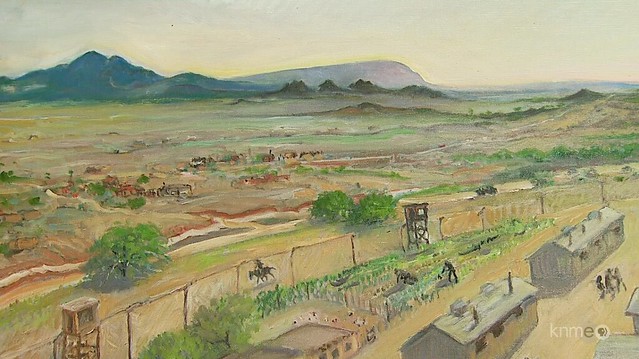
SANTA FE, N.M. — One entrepreneur ran a gambling den beneath the camp barracks. Another published a newspaper called the Santa Fe Times. Some men brewed sake. Others grew their own vegetables to trade for meat with the hospital and the state penitentiary.

During World War II, the U.S. government detained more than 100,000 people of Japanese descent in internment camps spread throughout the West. From 1942 to 1946, the Santa Fe camp held 4,500 of those men behind barbed wire at a site two miles from the Plaza in what is now the Casa Solana neighborhood. The Department of Justice and the FBI labeled them "the worst of the worst." Educated and successful leaders, they were powerful men whom officials deemed the most likely able to assist the enemy if they chose to, Simon said.

Neil Simon's DVD "Prisoners and Patriots: The Untold Story ofJapanese Internment in Santa Fe" is the first documentary to fill the void of silence surrounding the World War II incarceration of Buddhist ministers, businessmen, teachers and journalists from the West Coast, Hawaii and Latin America in New Mexico. A journalist who worked for KOB-TV in Albuquerque as well as in stints in El Paso and in Washington, D.C., Simon has based the film on 20 hours of exclusive interviews with Santa Fe survivors and their families, previously classified government documents and private photographs.

It's a story many fathers never told their own children. Some of the prisoners recalled the cruel irony of being locked up at the camp while their sons donned U.S. Army uniforms. Simon will screen the movie at the Museum of International Folk Art on Sept. 9. In the meantime, the DVD is available at http://www.kickstarter.com/projects.

Now working for the 56-country Organization for Security and Cooperation, Simon learned about the New Mexico camp while he was working as a journalist in Albuquerque but could find no information about it. Awarded a congressional fellowship in 2002, he assumed he could research the subject at the National Archives and the Library of Congress.

"When I did that, I realized there was nothing," he said in a telephone interview from Kazakhstan, where he was overseeing parliamentary elections.

Simon started scouring the Internet for camp artifacts and reunion yearbooks on eBay. He discovered a photographer had posted photographs online on Flickr, then traced her to a California Japanese calligraphy class. Two women in the class were the children of survivors.

That connection led to Bill Nishimura, who was interned in Santa Fe for being a member of the pro-Japanese group Hoshi Dan in Tule Lake, Calif., and for declining to answer the government's loyalty questionnaire. Nishimura was the only surviving Santa Fe internee to speak at the site during the 2002 dedication of the historic monument at the camp.

Simon estimates that about 20 camp veterans are still alive. He talked to five of them and their families, including the son of the camp doctor.

He fully expected to encounter bitterness and resentment when he talked to the survivors. He discovered the opposite.

"They had a good time," he said. "They played baseball. They brewed sake; they grew vegetables. They did wood carving and stone polishing. They did acting."

Although some have traced their post-camp silence to shame, Simon credits it to a traditional Japanese term called "shouganai."

"It means letting it roll off the body," he said. "It's, 'Let's move on; let's not hold a grudge.' "
"I think he must have said 10 times, 'Take it as it comes,' " Simon said. "He never was an ambitious man after his camp experience. His daughter was very sad about his whole life. But you got from him this sense of honor and a lack of bitterness."
The men didn't want to burden themselves or their families, he added.

Nishimura spoke of "playing baseball and ogling women when they rode their horses past the camp," Simon said. "One started a gambling ring under his cabin. He had a whole gambling thing going on. There was a poetry club. And they did some hiking."

At just 19, Norman Hirose was likely the youngest man in the camp. He was incarcerated with his family first at Tanforan (San Francisco) then at Topaz, Utah, after asserting "no, no" on the loyalty questionnaire asking whether he would foreswear allegiance to Japan and serve in the U.S. armed forces. The government shipped him to Santa Fe in 1946, telling him he would go back to Japan soon.

"You really got the sense that he was excited and proud," Simon said. "He looked forward to the internment experience, because it was something new."

Aside from being stripped of their civil rights and separated from their families, most of the men said they had been treated well, although Simon documented "two or three" instances of negative treatment from the camp guards.

"Some would curse at them," he said.

Some detainees retained their loyalty to Japan by wearing the Rising Sun symbol on their clothing. Members of the Hoshi Dan, a pro-Japanese movement that grew out of California, were considered troublemakers and shipped to Santa Fe.

"They did military-style exercises," Simon said. "Everyone knew if you were moved to Santa Fe — that was about as low as you could go."

A small riot erupted after a guard tossed tear gas at a prisoner and billy clubs appeared. Officials gloated about keeping the incident out of the press, he added. "A few people went to the hospital."

Camp members were allowed to send and receive mail, but much of it was censored. "There are a lot of letters," Simon said. "A lot of folks said a whole letter would be cut out. This was very routine."

Seichi "Sam" Yamakawa, who died in 2011, was shipped to Santa Fefor stating in hearings that he would not serve in the U.S. Army and planned to repatriate to Japan to care for his mother. After the war, he returned to California only to find people from Oklahoma had moved West and taken over his family farmland.

"I think he must have said 10 times, 'Take it as it comes,' " Simon said. "He never was an ambitious man after his camp experience. His daughter was very sad about his whole life. But you got from him this sense of honor and a lack of bitterness."

"I went into this project thinking every interview would be the same — denigrating the U.S. government and parallels to 9/11," he added. "And to a man, it was the opposite."

The meaning of Concentration Camp

Saturday, October 30, 2010


According to Merriam-Webster, the meaning of a Concentration Camp is "a camp where persons (as prisoners of war, political prisoners, or refugees) are detained or confined." Unfortunately the usage of these camps are without trails for people's so-called crimes. Use of the word concentration comes from the idea of concentrating a group of people who are in some way undesirable in one place, where they can be watched by those who incarcerated them. For example, in a time of insurgency, potential supporters of the insurgents may be placed where they cannot provide supplies or information.


The earliest of these camps may have been those set up in the United States for Cherokee and other Native Americans in the 1830s; however, the term originated in the reconcentrados (reconcentration camps) set up by the Spanish military in Cuba during the Ten Years' War (1868–1878) and by the United States during the Philippine–American War (1899–1902). Polish historian Władysław Konopczyński has suggested the first concentration camps were created in Poland in the 18th century, during the Bar Confederation rebellion, when the Russian Empire established three concentration camps for Polish rebel captives awaiting deportation to Siberia. The English term "concentration camp" grew in prominence during the Second Boer War (1899–1902), when they were operated by the British in South Africa. There were a total of 45 tented camps built for Boer internees and 64 for black Africans. Of the 28,000 Boer men captured as prisoners of war, 25,630 were sent overseas. The vast majority of Boers remaining in the local camps were women and children. Over 26,000 women and children were to perish in these concentration camps.


In the 20th century the arbitrary internment of civilians by the state became more common and reached a climax with Nazi concentration camps (1933–1945). As a result of this trend, the term "concentration camp" carries many of the connotations of "extermination camp" and is sometimes used synonymously. A concentration camp, however, is not necessarily a death-camp. Because of these negative connotations, the term "concentration camp", originally itself a euphemism, has been replaced by newer euphemisms such as internment camp, resettlement camp, detention facility, etc., regardless of the actual circumstances of the camp, which can vary a great deal.

So, where does that leave the understanding of the Japanese-American during WWII? “We knew we had been in concentration camps. Even President Roosevelt used the term. But by the wars end the word concentration camp had taken on a meaning of unimaginable horror. So one of the reasons we didn’t talk much about them is not that they were so bad, but they weren’t bad enough.” Quoted by documentary A Rabbit in the Moon, by Emiko Omori.
Let us not misinterpreter what these "detention centers" really represented and learn from our past's mistakes.