When I was fourteen I came across a book, called
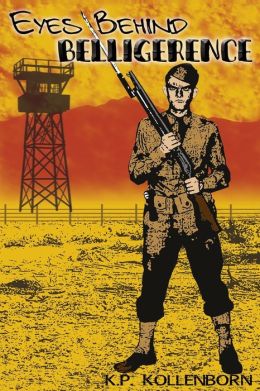
Kim/ Kimi, about a young girl searching for her real father, who was Japanese American, only to discover he had been imprisoned in an American internment camp during WWII. I had never heard of these camps up to that point in my life. In Europe, yes, even China, but not here. Not in America. I had to know and therefore went to the library to begin my journey. Three years later I put together a 30 minute mini-documentary for a class project and then wrote a short story. Nine years later I expanded that story into a novel. Why? I don’t have any Japanese ancestry in my family tree. I live in the Midwest and grew-up in a medium size town where cultural diversity is a bit underdeveloped. My reason is simple: I don’t want to continue to live in a conical world. Consciousness does not develop and mature by existing in a frozen pond, therefore after I had graduated college in 2000, my husband and I drove to Bainbridge Island, just on the tail skirt of Seattle, Washington, to pursue my journey. I already had made a couple of contacts to set up interviews; contacts I found researching on the internet.
My first interview was with a dentist,
Frank, who is a Sansei. Frank, much to my surprise, was tremendously open about his experiences, from what he could remember since he was only two when he and his family were evacuated. He remembered the “ping-ping-ping” sounds of the train transporting them to a place where there were rumors of large mosquitoes awaiting them there to suck them dry. He remembered chasing tumble weeds down the dusty streets. And the time he became stuck in the mud, being too small to get himself out, crying until one of his uncles popped him out, leaving his boots rooted in the mud.
Frank was also candid about the Japanese-American community itself, including their own prejudices and insecurities as well as their resilience, because after all, as Mark Twain had simply put it: “There is a great deal of human nature in people.” Then, with a smile, he told me that he was an extra on the movie set
Snow Falling Over Cedars during the big evacuation scene, (which you can see him standing directly behind the main character as she tearfully stands on the ferry boat.) After the interview, Frank supplied me with a long list of others who had consented with telling their stories in the past but only three out of the list were willing to speak with me. I took no offence given that I was a stranger. For instance, one told me over the phone that he had no further interests with additional interviews and, to confirm his point about his past, he revealed that he had burned his army uniform after his discharge.
So, the three who had agreed were family and a good friend of Frank’s; all of whom were incredibly gracious and humble that words fail to provide justice for their sincerity. Kay, his cousin and retired teacher, spoke with me with such ease that I felt like we had been friends for years and, ironically, had traveled through my home state once. Lily, his sister, cooked lunch for me and my husband in her home, but I won’t go into details of how we sadly struggled trying to use chop sticks as utensils. Just won’t. And then there was Gerald, his friend. Not only did he and his wife took us out to dinner but also bought our meals. (I have to admit, that was the best Thai I’ve eaten thus far!)
I chose Bainbridge Island as the setting because I wanted my characters to come from an isolated town where they felt safe and experienced minor racism. The purpose of this was to show the aggressive chains of events that would challenge their once secured lives. In keeping true to historical fact, I researched the different communities that were sent to Manzanar, many that came from Los Angles and other cities. This would provide an interesting clash in the upcoming trials and tribulations for my characters.
Two years later I even made a journey to
Manzanar, which survives as a historical marker. And to this day it persists to creep into my dreams now and again with its surreal beauty. The dry desert air and its tornado-like dust devil, even in a calm wind. The two monstrous mountain ranges that seems to make you disappear. The rectangular residue of where the barracks use to stand. But the small cemetery still exists as does the medal administration building that stands nearby the two guard posts. Since then, Manzanar has been rebuilt, to an extent, to preserve the consequences of mass hysteria and a reminder of our accountability towards humanity.

The reason I chose Manzanar out of the other ten internment camps are influenced by two special details: First- Manzanar was the most photographed camp out of all the others; the others included
Tule Lake,
Minidoka,
Heart Mountain,
Poston,
Gila River,
Topaz,
Granada,
Rohwer and
Jerome. Photographers like
Toyo Miyatake, Dorothea Lange and
Ansel Adams helped preserve the conditions of camp life and even wrote books based on their experiences. Their hard work made it a littler easier for me to visualize and interpret these imprisonment camps best to my ability. Second, although there were riots in the other camps, the one in Manzanar revealed the political clashes within their own community which then lead to the outbreak. AND it ironically it fell on the eve of Pearl Harbor’s first anniversary.
Although writing can educate as well as entertain, yet what makes art incredibly amazing, to that of paintings, photographs, and music, it transposes emotion into another form of humanity, and therefore, it is our humanity which keeps all of us striving for an improved future.