Showing posts with label women's history. Show all posts

Who was Charley Parkhurst?

Friday, January 18, 2019

By Tim Arango from The New York Times
originally published Dec. 5, 2018
Overlooked No More: Charley Parkhurst, Gold Rush Legend With a Hidden Identity
A swashbuckling, one-eyed stagecoach driver lived her life disguised as a man. After her death, the revelation that she was a woman provoked widespread astonishment.
Charley Parkhurst was a legendary driver of six-horse stagecoaches during California’s Gold Rush — the “best whip in California,” by one account.

The job was treacherous and not for the faint of heart — pulling cargos of gold over tight mountain passes and open desert, at constant peril from rattlesnakes and desperadoes — but Parkhurst had the makeup for it: “short and stocky,” a whiskey drinker, cigar smoker and tobacco chewer who wore a black eyepatch after being kicked in the left eye by a horse.

And there was one other attribute, this one carefully hidden from the outside world. When Parkhurst died in 1879 at age 67, near Watsonville, Calif., of cancer of the tongue, a doctor discovered that the famous stagecoach driver was biologically a woman. Charley, it turned out, had been short for Charlotte.

“The discoveries of the successful concealment for protracted periods of the female sex under the disguise of the masculine are not infrequent, but the case of Charley Parkhurst may fairly claim to rank as by all odds the most astonishing of them all,” The San Francisco Call wrote not long after her death, in an article that was reprinted in The New York Times under the headline “Thirty Years in Disguise.”

Charlotte Darkey Parkhurst was born in 1812 in New Hampshire. Abandoned by her parents, she was consigned to an orphanage, from which historians believe she ran away wearing boys’ clothes. She wound up in Worcester, Mass., where she got a job cleaning horse stables. She also found a mentor, Ebenezer Balch, who taught her how to handle horses.

“The story goes that while in the poor house he discovered that boys have a great advantage over girls in the battle of life, and he desired to become a boy,” The Providence Journal in Rhode Island wrote in an article after her death, as reporters on both coasts tried to piece together her life.

After working as a stagecoach driver on the East Coast for several years, Parkhurst journeyed west, like so many Americans seeking fortune and reinvention in California. She traveled by ship to Panama, traversed a short overland route, and then boarded another ship to San Francisco, where she arrived in 1850 or 1851.

In California, she quickly became known for her ability to move passengers and gold safely over important routes between gold-mining outposts and major towns like San Francisco or Sacramento. “Only a rare breed of men (and women),” wrote the historian Ed Sams in his 2014 book “The Real Mountain Charley,” “could be depended upon to ignore the gold fever of the 1850s and hold down a steady job of grueling travel over narrow one-way dirt roads that swerved around mountain curves, plummeting into deep canyons and often forded swollen, icy streams.”

Parkhurst wore “long-fingered, beaded gloves,” Sams wrote, to hide her feminine hands. She was considered one of the safest stagecoach drivers — not a daredevil, like so many of her contemporaries — and had a special rapport with the horses. She drove for Wells Fargo, at least once moving a large cargo of gold across the country.

A 1969 article about Parkhurst in the Travel section of The New York Times evoked some of the perils she faced: “Indians and grizzly bears also were a major menace. The state lines of California in the post-Gold Rush period were certainly no place for a lady, and nobody ever accused Charley of being one.”

“The only feminine trait her acquaintances could recall,” the article added, “was her fondness for children.”

Once she was kicked in the eye by a horse, which was perhaps startled by a rattlesnake; that earned her the nickname “One-Eyed Charley,” for the black patch she wore over her left eye.

Parkhurst’s story has long been shrouded in myth and thinly sourced anecdotes. (A well-worn tale has her killing a famous bandit known as Surgarfoot after he held up her stagecoach on the route between Mariposa and Stockton.)

In “Charley’s Choice,” a 2008 work of historical fiction, the writer Fern J. Hill imagines that as a child, Parkhurst told a friend of her dreams of driving a stagecoach. When the friend replied, “You can’t, you’re a girl,” young Charlotte decided then and there to live as a man.

And in another novel, “The Whip,” by Karen Kondazian (2012), Parkhurst is cast as a straight woman who wanted her freedom.

“I would have done that,” Ms. Kondazian said in a telephone interview. “I would have probably put on men’s clothes, to be free like a man.”

She added: “You can kind of use her in any way you want, because we don’t have the total facts about her.”

Some historians say that had Parkhurst lived today, she might well have identified as gay or transgender. “Being gay at that time was seen as negative,” said Mark Jarrett, a textbook publisher who included Parkhurst in a new book intended to comply with a California law requiring social studies curriculums to recognize the historical role of lesbian, gay, bisexual and transgender people.

“It was illegal, it was a crime,” he said, “so people didn’t go around professing what their real identities were. They were hidden identities.”

In the late 1860s, with the growing popularity of railroads, stagecoach driving became a dying profession. Parkhurst retired and opened a saloon for a time, and also worked as a lumberjack in Northern California. After she died, The Santa Cruz Sentinel wrote, “Her accumulations were regular and her wealth considerable at the time of her death, which took place in a lonely cabin, with no one near and her secret her own.”
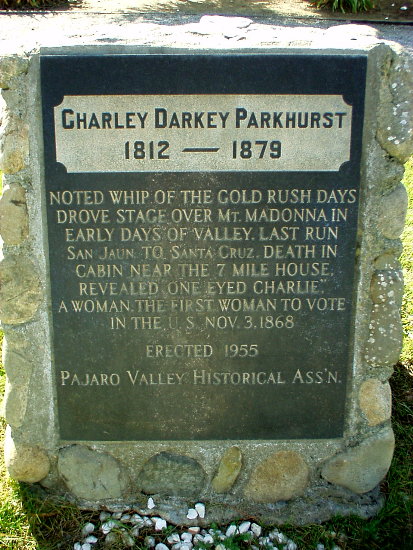
Parkhurst could claim one other distinction: An 1867 registry in Santa Cruz County lists a Charles Darkey Parkhurst from New Hampshire as having registered to vote — more than 50 years before the 19th Amendment gave women the franchise. While there is no evidence she voted in the 1868 presidential election, her gravestone in Watsonville is etched with these words: “The First Woman to Vote in the U.S.” (The claim is generally doubted by historians.)

Even in the 19th century, however, there was admiration for Parkhurst’s feat of disguise.

“The only people who have occasion to be disturbed by the career of Charley Parkhurst are the gentlemen who have so much to say about ‘woman’s sphere’ and ‘the weaker vessel,’ ” The Providence Journal wrote. “It is beyond question that one of the soberest, pleasantest, most expert drivers in this State, and one of the most celebrated of the world-famed California drivers was a woman. And is it not true that a woman had done what woman can do?”
Women Prisoners of War at Castle Thunder: Civil War

Friday, May 5, 2017

By Rebecca Beatrice Brooks

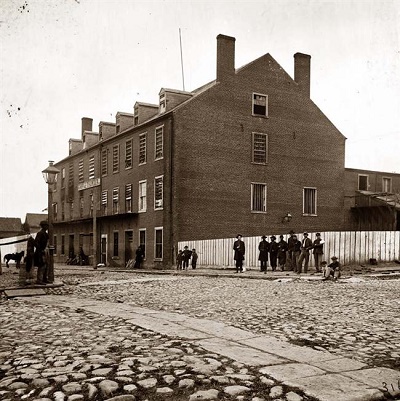
Castle Thunder at the fall of Richmond, 1865
Castle Thunder in Richmond, Virginia, was one of the few Confederate prisons that held not only male prisoners of war but women prisoners as well. Located along Tobacco row, near Libby prison, Castle Thunder held around 100 women prisoners for various crimes, such as prostitution, spying and smuggling, although most of them were political prisoners. A few of these women were also female soldiers whose true identity had been discovered. An article published in the New York Times in July of 1863, states that some of the female prisoners were also wives and children of Union soldiers who were captured after the Union defeat at the second battle of Winchester. These women and children didn’t remain long at Castle Thunder as they were quickly transferred to the United States Hotel in Washington D.C. Women and African-American prisoners were kept in a separate building at the prison while male Confederate deserters and male political prisoners were held in another.

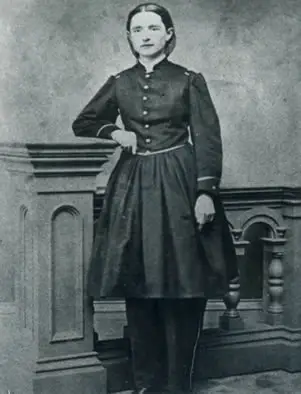
Dr. Mary Edwards Walker, 1863
Conditions at the prison were deplorable. Castle Thunder was filthy, overcrowded, disease-ridden and lacked adequate food and medical supplies for the prisoners. Executions of Confederate deserters took place in full view of the other prisoners and a notoriously brutal captain, George W. Alexander, patrolled the prison daily accompanied by his aggressive black dog, Nero, both whom taunted and terrorized the prisoners. The most famous of Castle Thunder’s women prisoners was Dr. Mary Edwards Walker. Walker was an army doctor for the 52nd Ohio Infantry who was taken prisoner after she encountered a group of Confederate soldiers at Tunnel Hill in Georgia. Due to her unconventional profession as well as her trademark military uniform, a pair of trousers worn under her skirt, a military jacket and a gypsy hat, Walker attracted a lot of attention from the press and locals in Richmond.

The Richmond Sentinel published the following account of her capture on April 22, 1864:

“The female Yankee surgeon captured by our pickets a short time since, in the neighborhood of the army of Tennessee, was received in this city yesterday evening, and sent to the Castle in charge of a detective. Her appearance on the street in full male costume, with the exception of a gipsey hat, created quite an excitement amongst the idle negroes and boys who followed and surrounded her. She gave her name as Dr. Mary E. Walker, and declared that she had been captured on neutral ground. She was dressed in black pants and black or dark talma or paletot. She was consigned to the female ward of Castle Thunder, there being no accommodations at the Libby for prisoners of her sex. We must not omit to add that she is ugly and skinny, and apparently above thirty years of age.”

Mary Bell, Confederate spy
Walker spent six months at the jail, during which she wrote numerous letters to the press describing the horrible conditions at the prison. She complained that her mattress was infested with insects, rats ran throughout the prison at night and food rations were meager and inedible. According to the book Dr Mary Edwards Walker, later in her life Walker once even complained of a guard who had fired at her while she stood in the doorway to her cell, just narrowly missing her head. On August 12th, prison officials finally released Walker in an attempt to avoid anymore negative press. For the rest of her life, Walker suffered from health problems caused by her malnutrition and exposure to disease at the prison. Other famous prisoners included two cousins, Mary and Mollie Bell. The Bells were secret soldiers who had disguised themselves as men in order to fight for the Confederacy. They fought for two years, under the command of General Jubal A. Early, and took part in a number of key battles, including the Battle of Gettysburg and the Battle of Chancellorsville, before their true identities were discovered after a fellow soldier reported them.

Upon discovery, the Bells were sent to Castle Thunder in October of 1864 and held for three weeks. With no official crime to charge them with, prison officials finally released the cousins and sent them home to Pulaski County, Virginia. Castle Thunder remained an active Confederate prison until the fall of Richmond in April of 1865. Shortly before the city fell to the Union army, the prisoners were evacuated and sent to Danville, Virginia. The Union army later took control of the prison and used it for similar purposes. After the war ended, Castle Thunder was returned to its original owners but was destroyed in a large fire in 1879.

11 surprising facts about marriage in the old days

Saturday, April 1, 2017


Biblically, a traditional marriage has been defined by “a state instituted and ordained by God for the lifelong relationship between one man as husband and one woman as wife.” However, your ancestors hoped for in a “traditional marriage” isn’t quite the roses and white picket fence that they believe it to be. Even though the definition of marriage as “an agreement between two people” has never changed, if you take a look into history it seems as though the idea of traditional marriage has.


BY 


1. People didn’t marry for love.

In “traditional marriage," love was considered a childish notion that had no place in a marriage. A conservative once predicted that marrying for love would destroy the institution. In ancient Rome it was believed to be inappropriate for husbands and wives to be in love; Seneca, the philosopher, said that there was nothing more impure than a man loving his wife like a mistress. The advice in the 1700s was to get married to someone you could tolerate—progress! But it wasn’t until the 1920s that people started marrying for love en masse, coining the term “love marriage."

2. People weren’t happy to get married.

Loving, blissful commitment wasn’t exactly synonymous with the true traditional marriage our ancient ancestors experienced. Why? Marriage was an arrangement that many were forced into. Four thousand years ago in Mesopotamia, marriage was equivalent to slavery; in the year 400 A.D. many church officials actually opposed marriage describing it as “bondage.”

3. People didn’t get married to have babies.

People got married for so many reasons! Because they were lonely, because their family needed a goat, because their parents couldn’t afford to feed them any longer, because they needed to strengthen their political position, or because a brother’s wife died and he needed a new one. Procreation was often a consequence of being married but it’s been proven that it often wasn’t the main goal, especially for families that weren't of the noble classes, who had large inheritances to think about.


4. The women didn’t have a say.

A blissful, traditional marriage is depicted as the husband and wife discussing issues and forming to decisions together for the good of their family. In a "traditional marriage,” this was not so. During American colonial times, William Blackstone stated that the “very existence of a woman is suspended during a marriage” and that she ceased to exist as a person without thought or voice. Basically, once she married, the woman’s job was to obey, cater to, and heed the word of her husband. Let's hope nobody's aiming for that in marriage these days, religious or not.

5. The woman didn’t have any rights.

In a “traditional marriage”, not only did a woman not have a say in family decisions, she didn’t have any rights either. After centuries of prejudice, finally in 1971, Ruth Bader Ginsberg fought for a woman’s rights within a marriage; this led to the abolishment of the existing law that during a dispute, males must be preferred to females. Furthermore, it was only in 1979 when head and master laws were abolished in most states, which stated that a husband could do whatever he wanted with his house, his family, and his wife and her possessions.

6. People didn’t have sex (and babies) with only their spouses.

In Biblical times, not only was polygamy not illegal, it was considered a man’s right to have multiple wives and mistresses. For example, Abraham had two wives and a concubine, Khaleb had five, Moses a mere two, but King Solomon had over 1,000 (though 300 were considered to be concubines)! Monogamy is actually a relatively new, Western invention.

7. It was hardly a bed of roses.

The loving visions of a man serving and caring for his wife just weren’t reality centuries ago. Women were seen as property and meant for specific purposes. hroughout time though, some mercy was shown to wives, as shown by Bernard of Siena in the 15th century, who instructed men to be kind and have as much compassion for their wives as they would a chicken or a pig. Talk about a low bar. Since a wife was considered her husband’s possession, he could do what he saw fit with her. This often involved “keeping her in line” through physical means. In his Corpus Jurius, Emperor Justinian suggested that it may not be right to beat your wife, but if you happened to see a reason to do it, you would just have to pay her afterwards. No biggie, right? Thankfully, by the late 1800s, this practice became more outdated; South Carolina was the first state to disallow the beating of wives. In 1920, it was outlawed nationwide. Now if only those crimes would be properly prosecuted and women were rightfully protected from their abusers.

8. It wasn’t always an agreement between two people in love.

It was only in the 13th century that Pope Alexander IV changed the laws and made marriage a sacrament between two people by taking it out of the hands of parents and putting it into the hands of the two participating (and—mostly—willing) parties. Before this, families viewed marriage as a bargaining tool to get what they needed, disregarding the feelings or desires of the individuals who were going to be married. In 500 A.D., Emperor Justinian passed a law allowing fathers to give away their daughters as young as 7 years old, thereby ensuring the family that their needs would be met early on. Arranged marriages weren’t the only third-party agreements that were made, sadly. Many women women found themselves in unique instances in which it would be required for them to be married. If a woman was raped, she would often have to marry her rapist; if her sister’s husband was left a widow, she would have to marry her late sister’s husband. The illusion of choice is hardly new for women.


9. Women didn’t necessarily choose to be intimate with their husbands.

In a traditional marriage, it could rightly be assumed that a wife would have the choice to be intimate with her husband. Not so! In 1736, Jurist Sir Mathew Hale declared that a wife couldn’t be raped, because in marriage, a woman gave up all rights to her body. Her husband could do whatever he wanted with it. Shockingly, as recent as 1993, the last states finally passed laws disallowing a man to force himself on his wife. Of course, it still happens all the time, and it's quite hard to prosecute.

10. You weren’t allowed to hold hands and show you loved each other.

In your mom’s view of traditional marriage, hugging and holding hands would be acceptable public displays of affection. However, in true traditional times, these were considered vile and severely frowned upon. In fact, Plutar called it disgraceful when a Roman senator was caught kissing his wife in public—it was such a scandal that the senator was forced to back down from his position.

11. People didn’t stay together forever.

Although the church tried really hard to keep people together by making it truly hard to divorce, people have been getting out of their unhappy arrangements for hundreds of years. In early Mesopotamia, Hammurabi's code gave husbands alternate options by stating instances in which they could get a refund on their spouse if they were unhappy. Both the Greeks and the Romans allowed divorce as well. Thanks to Henry VIII breaking from the Catholic church and founding his own church, just to marry Anne Boleyn, the people of Britain were forced to be okay with it. That rule often only applied to him and his (six!) marriages, though—convenient, huh?

Morning Olympian December 1908
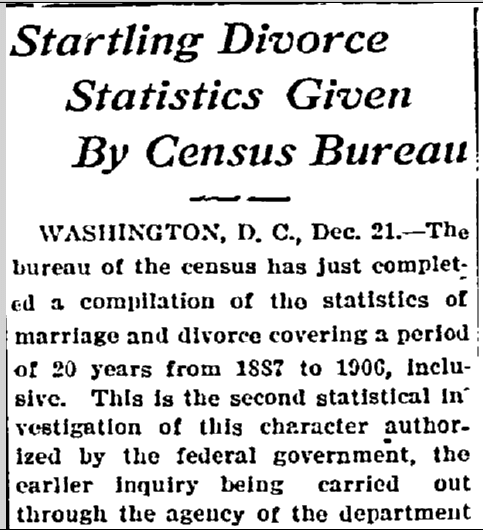
By the 1800s, divorce was so common in the U.S. that the government opened an investigation into the matter and by the early 1900s, society was sure that marriage would soon be obsolete. Though the divorce rate increased throughout the 20th century, it's started to decline, with 2016 having the lowest American divorces on record since 1980.

15 Badass Historical Women To Name Your Daughters After

Thursday, June 9, 2016

1. Sor Juana Inés de la Cruz

Sor Juana Inés de la Cruz
Listen carefully to your pregnant belly: Can you hear the romantic sighs of a celebrated poet? Then name your daughter Juana or Inés for the 17th-century poet Sor Juana Inés de la Cruz, who lived in Mexico City and wrote many kinds of poetry, including somewhat raunchy love poems.
As a child, Juana taught herself a wide range of subjects using her grandfather’s library, and continued her rigorous programme of self-education into adulthood. She eventually joined a convent in order to be left alone with her studies and her ~scandalous~ poetry. She came to be “one of the world’s most daring erotic writers” of her time and ruffled a few feathers in the Catholic church for that reason.
Just think of the feathers your baby Juana Inés will ruffle.

2. The Mirabal sisters

The Mirabal sisters
Does your baby possess uncommon courage? Does your baby fill your uterus with equal parts bravery and righteousness? Then name your daughter for Patria,Minerva, or María Teresa Mirabal – Dominican sisters who boldly opposed the dictatorship of Rafael Trujillo in the 1950s.
The three sisters, along with their husbands, participated in constant underground political actions against Trujillo’s regime, and came to be regarded as symbols of resistance and feminist icons known as the “Butterflies”. Even multiple stints in prison weren’t enough to stop their activism. When Trujillo’s government assassinated the sisters in 1960, it sparked a massive public outrage, which was among the catalysts leading to Trujillo’s own assassination just six months later.
Nowadays the Mirabal sisters are commemorated every 25 November by the United Nations, which declared an International Day for the Elimination of Violence Against Women in their honour.

3. Raden Ajeng Kartini

Raden Ajeng Kartini
Do you suspect your future daughter to be a famous writer and activist? Of course you do. So name her Raden or Kartini for Raden Ajeng Kartini (1879-1904), who advocated for women’s emancipation and education, and wrote about the need for the improvement of public health and the protection of traditional arts on the island of Java. She also wrote passionately against Dutch colonial rule of Indonesia.
Today she is known in Indonesia as the country’s “first feminist”, and 21 April is celebrated as Kartini Day. So, try to give birth to your baby on 21 April.
(An update from our Indonesian readers: “Raden” is actually an honourific title like “Duchess” or “Sir”. Her given name was “Kartini” – the “Raden” just means she’s ~fancy~.)

4. Hildegard von Bingen

Name your daughter Hildegard for Hildegard von Bingen. (Or Hilda, if you must. Or even Sybil, as she was also known as “Sybil of the Rhine”.) Old Hildy, you see, was an adviser to kings and popes and more. She was a composer and a writer and a mystic and a poet and about 100 other things. She also wrote important scientific and medical treatises because why the fuck not?
Is your future daughter a mystic and a polymath? Then let’s hear it for Baby Hilds.

5. Ida B. Wells-Barnett

Ida B. Wells-Barnett
R. Gates/Hulton Archive / Getty Images
You couldn’t pick a better name for a baby girl than Ida, if your baby girl is the kind of baby girl who fights tirelessly for justice, i.e. an absolute baby badass.
Ida B. Wells-Barnett was a brilliant American journalist, suffragist, and anti-lynching campaigner who lived from 1862-1931. When three of her friends were lynched in 1892, she investigated the murders in her newspaper, The Free Speech. In response to her work, the newspaper offices were destroyed by a mob. She moved to Chicago where she continued to write on the law and history of lynching, worked with multiple organisations for the advancement of African-American women, and marched in Washington, DC, in 1913 for universal suffrage.
Along with fellow suffragist Jane Addams, she “successfully blocked the establishment of segregated schools in Chicago”. Later, she was a co-founder of the NAACP, and in 1930, she ran for a position on the Illinois State Legislature. Just think what YOUR Ida will do.

6. Artemisia Gentileschi

commons.wikimedia.org / Creative Commons
Look closely at your ultrasound: Is your baby in possession of a fine artistic mind? Then name her Artemisia.
Artemisia Gentileschi was “one of the most famous and skilled painters of the Baroque era” who achieved great artistic acclaim at a time when women were not allowed to attend the artistic academies. Her father, also an artist, had encouraged her artistic training as a child. At age 18, Artemisia was raped by a colleague of her father’s, and went through a brutal trial in which she was tortured to “confirm” her story. Her rapist was convicted, but never served out his sentence.
After the trial, Artemisia painted one of her most famous works, Judith Slaying Holofernes, pictured above on the right, which some see as a “revenge” for her trial. So, name your daughter for this ridiculously gifted master of painting who achieved great renown against all odds. And anyway, Artemisia is a ridiculously beautiful name.

7. Nancy Wake

Keystone / Getty Images
commons.wikimedia.org(1945).jpg / Creative Commons
Nancy Wake was a spy, a journalist, and a hero of the French Resistance during World War II. Would you like your baby to be exceedingly glamorous? Then name herNancy.
Born in New Zealand, Nancy ended up settling in Paris, where she worked as a journalist and passed her time in the enjoyment of “a good drink” and handsome French men. When war broke out, she joined the Resistance and saved the lives of “hundreds of Allied soldiers and downed airmen between 1940 and 1943 by escorting them through occupied France to safety in Spain”, and later joined the British Special Operations Executive as a spy.
One time, Nancy got her parachute stuck in a tree. A nearby Frenchman said he wished all trees could bear such “beautiful fruit”, to which Nancy responded, “Don’t give me that French shit.”
Just think, these could be your baby girl’s first words.

8. Tomoe Gozen

Tomoe Gozen
Tomoe Gozen, seen here destroying an oafish, unworthy enemy, was a legendary samurai warrior in 12th-century Japan. She’s described in The Tale of the Heiki like this:
“She was…a remarkably strong archer, and as a swordswoman she was a warrior worth a thousand, ready to confront a demon or god, mounted or on foot. She handled unbroken horses with superb skill; she rode unscathed down perilous descents….She performed more deeds of valor than any of [her commander’s] other warriors.”
What more could you want for your baby than to achieve such mythical heights of badassery? Name her Tomoe.

9. Yaa Asantewaa

Is your daughter liable to be a brave and tireless leader? Yes? Then name her for Yaa after Yaa Asantewaa, who was a leading figure in a war against British colonialists from 1900-1901 in what is today Ghana. The war had broken out when a colonial governor demanded he be given the Golden Stool, a sacred symbol to the Asante, apparently because he was a whiny asshole. Unfortunately for the governor, there was a certain Warrior Queen (who also happened to be a 60-year-old grandmother) who was not having it.
Nowadays Yaa Asantewaa is celebrated in Ghana and elsewhere as “an epitome of African womanhood and resistance to European colonialism”. A great name for a powerful baby, no? 

10. Madam CJ Walker

Do you want your baby girl to grow up to be fabulously wealthy? And also a trailblazing businesswoman and a great philanthropist? But, like, a fabulously wealthybusinesswoman and philanthropist? Then name her after Madam CJ Walker, born Sarah Breedlove in 1867 – America’s first self-made female millionaire, who made her fortune creating a line of haircare products for African-American women.
Yes, money can’t buy everything – but it can buy you a convertible like the one above. Just look at her driving her friends around town. Look at their fabulous hats.That could be your daughter – little baby Maddy, perhaps.

11. Rosa Luxemburg

Place a hand upon your pregnant belly, and feel for kicking. Are those the kicks of a future leftist revolutionary? Of a little girl who longs for the overthrow of capitalism? Whose dearest wish is a socialism that upholds its democratic ideals?
If yes, then name your daughter Rosa, for Rosa Luxemburg. She was a brilliant Polish-German Jewish revolutionary and political theorist who developed and advocated for “a humanitarian theory of Marxism, stressing democracy and revolutionary mass action to achieve international socialism”. Even when imprisoned, she managed to smuggle out her articles and pamphlets. She also worked “to persuade her women friends to take an independent role in politics, and to free themselves from the domination of their husbands”.
Name your baby Rosa, and watch her grow to overthrow the bourgeoisie.

12. Ã†thelflæd, Lady of the Mercians

There are many good reasons to name your daughter for the Anglo-Saxon Warrior Queen Æthelflæd, Lady of the Mercians, daughter of Alfred the Great – but here are the two most important reasons:
1. Your daughter will be named for a warrior queen who, after her husband died, took over to rule from 911 to 918 AD, during which time she fended off Vikings and proved herself a talented ruler respected throughout the land.
2. Your daughter will walk through life with the satisfaction of having not one, but twoof those fun little a and e combination letters in her name.
Name your daughter Ã†thelflæd (or maybe just…Ethel) and she will never surrender to any man – especially not a Viking.

13. Qutulun

Qutulun
OK guys, we need to talk about Qutulun.
Qutulun was a 13th-14th-century Mongol princess who “swore that she would only marry a man who could best her in a wrestling match” and “demanded a hundred horses from any contestant who failed”. Needless to say, she amassed a lot of horses in her lifetime. The painting above shows her with her skirts hitched up, wrestling a gentleman caller, horses watching their future owner kick some suitor ass.
Is your daughter a wrestler princess? Yes, of course she is. Name her Qutulun.

14. Nzinga Mbandi

Nzinga Mbandi (1583–1663)
Via mw.pro.br
Nzinga Mbandi, the Queen of Ndongo and Matamba (modern day Angola), was a straight-up boss bitch. She took power when her brother Ngola Mbandi died in 1624, and gained international acclaim for her brilliance in diplomacy, military tactics, and giving zero fucks. Her skill in warfare, espionage, trade, alliance-building, and religious matters helped her hold off Portuguese colonialism for the duration of her life.
Nzinga, you literal queen.

15. Murasaki Shikibu 

Murasaki Shikibu (973–1025...ish)
Murasaki Shikibu was a lady-in-waiting in Japan’s imperial court during the Heian period, and wrote what is believed to be the first novel in human history: The Tale of Genji.
Her father apparently praised her intelligence, but lamented that she was “born a woman”. In her diary, she records that she learned Chinese by listening through the door to the lessons her father gave her brother, because women were not meant to learn Chinese.