Showing posts with label fun facts. Show all posts

History Behind Friday the 13th

Friday, July 13, 2018


Long considered a harbinger of bad luck, Friday the 13th has inspired a late 19th-century secret society, an early 20th-century novel, a horror film franchise and not one but two unwieldy terms—paraskavedekatriaphobia and friggatriskaidekaphobia—that describe fear of this supposedly unlucky day.

THE FEAR OF 13

Just like walking under a ladder, crossing paths with a black cat or breaking a mirror, many people hold fast to the belief that Friday the 13th brings bad luck. Though it’s uncertain exactly when this particular tradition began, negative superstitions have swirled around the number 13 for centuries.

While Western cultures have historically associated the number 12 with completeness (there are 12 days of Christmas, 12 months and zodiac signs, 12 labors of Hercules, 12 gods of Olympus and 12 tribes of Israel, just to name a few examples), its successor 13 has a long history as a sign of bad luck.

The ancient Code of Hammurabi, for example, reportedly omitted a 13th law from its list of legal rules. Though this was probably a clerical error, superstitious people sometimes point to this as proof of 13’s longstanding negative associations.

Fear of the number 13 has even earned a psychological term: triskaidekaphobia.

WHY IS FRIDAY THE 13TH UNLUCKY?

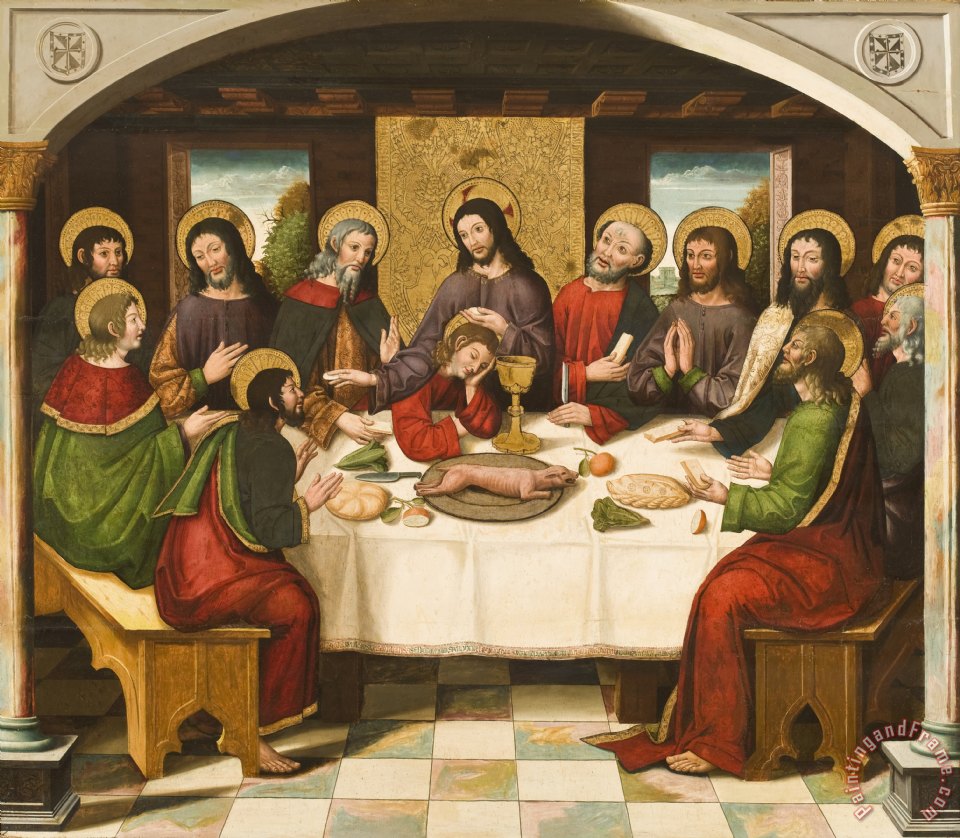
According to biblical tradition, 13 guests attended the Last Supper, held on Maundy Thursday, including Jesus and his 12 apostles (one of whom, Judas, betrayed him). The next day, of course, was Good Friday, the day of Jesus’ crucifixion.

The seating arrangement at the Last Supper is believed to have given rise to a longstanding Christian superstition that having 13 guests at a table was a bad omen—specifically, that it was courting death.

Though Friday’s negative associations are weaker, some have suggested they also have roots in Christian tradition: Just as Jesus was crucified on a Friday, Friday was also said to be the day Eve gave Adam the fateful apple from the Tree of Knowledge, as well as the day Cain killed his brother, Abel.

THE THIRTEEN CLUB

In the late-19th century, a New Yorker named Captain William Fowler (1827-1897) sought to remove the enduring stigma surrounding the number 13—and particularly the unwritten rule about not having 13 guests at a dinner table—by founding an exclusive society called the Thirteen Club.

The group dined regularly on the 13th day of the month in room 13 of the Knickerbocker Cottage, a popular watering hole Fowler owned from 1863 to 1883. Before sitting down for a 13-course dinner, members would pass beneath a ladder and a banner reading “Morituri te Salutamus,” Latin for “Those of us who are about to die salute you.”

Four former U.S. presidents (Chester A. Arthur, Grover Cleveland, Benjamin Harrison and Theodore Roosevelt) would join the Thirteen Club’s ranks at one time or another.

FRIDAY THE 13TH IN POP CULTURE

An important milestone in the history of the Friday the 13th legend in particular (not just the number 13) occurred in 1907, with the publication of the novel Friday, the Thirteenth written by Thomas William Lawson.

The book told the story of a New York City stockbroker who plays on superstitions about the date to create chaos on Wall Street, and make a killing on the market.

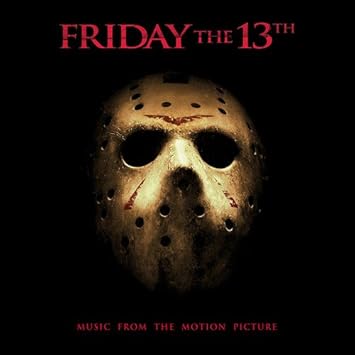
The horror movie Friday the 13th, released in 1980, introduced the world to a hockey mask-wearing killer named Jason, and is perhaps the best-known example of the famous superstition in pop culture history. The movie spawned multiple sequels, as well as comic books, novellas, video games, related merchandise and countless terrifying Halloween costumes.

WHAT BAD THINGS HAPPENED ON FRIDAY 13TH?

On Friday, October 13, 1307, officers of King Philip IV of France arrested hundreds of the Knights Templar, a powerful religious and military order formed in the 12th century for the defense of the Holy Land.

Imprisoned on charges of various illegal behaviors (but really because the king wanted access to their financial resources), many Templars were later executed. Some cite the link with the Templars as the origin of the Friday the 13th superstition, but like many legends involving the Templars and their history, the truth remains murky.

In more recent times, a number of traumatic events have occurred on Friday the 13th, including:

1.) the German bombing of Buckingham Palace (September 1940)
2.) the murder of Kitty Genovese in Queens, New York (March 1964)
3.) a cyclone that killed more than 300,000 people in Bangladesh (November 1970)
4.) the disappearance of a Chilean Air Force plane in the Andes (October 1972)
5.) the death of rapper Tupac Shakur (September 1996)
6.) the crash of the Costa Concordia cruise ship off the coast of Italy, which killed 30 people (January 2012)

Reprinted: history.com
SOURCES
“The Origins of Unlucky Friday the 13th,” Live Science.
“Friday the 13th: why is it unlucky and other facts about the worst day in the calendar,” The Telegraph.
“13 Freaky Things That Happened on Friday the 13th,” Live Science.
“Here’s Why Friday the 13th is Considered Unlucky,” Time.
“Friggatriskaidekaphobes Need Not Apply,” New-York Historical Society.

Where The Bleep Did That Curse Word Come From?

Saturday, March 10, 2018

We all have our favorite curse words to use when we're feeling angry, frustrated, upset, excited, surprised. Curse words provide a lot when it comes to expressing emotion. But, where did those filthy (yet cathartic) expressions come from?  Well, we took a deep look into some of the most common swears around. Warning: vulgar language ahead...


sh*& 
The word sh*& has been around since the early 1500s, and it is used mainly to describe an "obnoxious person." The word stems from the Middle Dutch schiten and the Middle English shiten (meaning "to defecate").  In the early 1920s, people began to use this curse word when describing something they don't care about (not giving a sh*&). Then, in the 60s, it was used to refer to someone who was drunk or sh*&faced. And, these days people use it to describe countries and locations they find unappealing (sh*&hole, anyone?)

A$$h*&#
This curse word (meaning "something bad" or "a mean person") dates all the way back to the 1300s, originating from the Middle English word, arshole. Back then, it was mainly used to describe someone's rear. Fast forward to the 1930s, when the word became more commonly used in reference to a "contemptible person." Today, we tend to keep up with this usage, showcasing our extreme distaste for someone by calling them . . . this term. (And, don't forget the hole part of the word when you are going for this meaning, because otherwise you're just calling that person a donkey.)

The F word
There are a lot of theories behind the origins of the swear word, f*&# (meaning "to have sex" or "to meddle"). It is believed that it originated from the Middle Dutch fokken, meaning "to thrust, copulate with." However, the truth behind the word still remains unknown because it was banned by the dictionary at the time it originated. What we do know is the word was first seen written in 1495–1505. In the second edition of the Oxford English Dictionary it appeared as fukkit and was later seen written by the poet Sir David Lyndesay as we know it today. In the 1900s, it grew into a word used to describe a very bad mistake and to tell someone to leave you alone.

B!#ch
While the word b!#ch (or a "lewd woman" or "female dog") is a rather common term these days (and can be used in both positive and negative ways), back in the 1800s, it was considered more offensive than the word whore.  B!#ch actually dates back to before the year 1000 though. (It could be featured as one of our oldest words!) It originates from the Middle English word bicche. But, it wasn't written until the 1400s when it was first seen in a play to describe a woman.

G#dd@mn
This swear word (which is normally used to express disgust) can be offensive to those with religious backgrounds (since it's seen as saying the Lord's name in vain). Stemmed from late Middle English, this word came about in the 1400s and became more popular as time went on. The word d@mn itself originates from damnare, a Latin word meaning "to condemn."  Fun fact: During the Hundred Years War, the French were said to refer to the English soldiers as "les goddems" because of their excessive use of profanities.

M%therf*c%er
According to Slate, the phrase m%therf*c%er (referring to someone who or something that is despicable) first came about in the "late 19th and early 20th centuries" and was originally documented during a "Texas Court of Appeals’ account." It was here that a witness referred to a defendant as a “G!d d@mned m#ther-f—ing, b@st@#%ly son-of-a-b—h.” Wow.  Then in World War II, the phrase became a more popular way to say someone or something is irritating or ruthless.  But, as the 1950s rolled around, the word "m%therf*c%er" took a turn for the good if you can believe it. It became used in a more favorable way to describe someone you're close with. For example, "I love him madly, he’s my m—erf—ng man," which was a line from the 1954 poetry book, The Life.

He!!
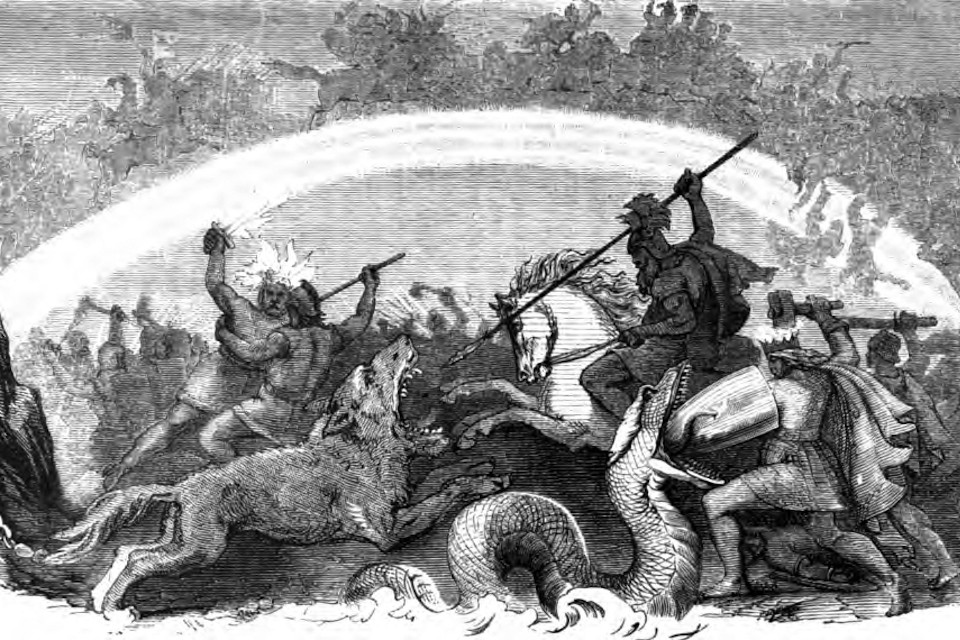
We've all heard (or used) the phrase, go to he!! at least once or twice in our lifetime. But, where does this curse word come from? Sure, we know it has something to do with heaven and the other place, but did you know it stems from the Gothic halja, which translates to the "underworld"?  The term came about sometime before 900 and could also possibly be related to Old Norse hel, which is found in Norse mythology (North Germanic people with ties to Norse paganism) and is the name of the ruler of the "evil dead." 

Pi$$
The word pi$$ might not be as offensive as some of the other curse words on this list, but it's still kind of foul. It can refer to anything from using the restroom to being exceedingly angry. And, the United Kingdom uses it to reference someone who has had one too many cocktails. The word came about somewhere between 1250–1300, originating from the Old French word pissier. In World War II, it was used to describe someone who was performing badly: pi$$-poor. Later, in 1947, the word was more commonly used to reference someone who was angry or irritated.

B@st@rd
When formally used, the word b@st@rd simply means a child who is "born out of wedlock." However, when using it as a curse word, it refers to an "unpleasant or despicable person."  It's been said that the word originated somewhere between 1250–1300 and is possibly from Old French. In the late 16th century, the use of the word became prevalent when describing a "brat, or small child" and later became a more crude term in the 1800s. 

Cr@p
The word cr@p (meaning "to talk nonsense" or "excrement") is kind of like the less distasteful way to say s#*t. Nonetheless, the word is still considered a crude curse word.  The word comes from the Middle Dutch word, krappe ("to cut off, pluck off"). Then, in the 15th century, it became a word you'd use more frequently to describe someone or something that is considered "nonsense."

Ready for some great fake swear words  on Screen you Fracking Smeghead?

Orson Scott Card cautioned against using invented swears in fiction because the fake “oaths” risked making the story silly. Fair enough. But, frak it, sometimes cussing is the only way to let it out. On-screen rules occasionally prohibit or limit profanity. So, screenwriters get creative. Even Fantastic Mr. Fox had to release some heat (“This is going to be a total cluster-cuss,” “You scared the cuss out of us”).  Using cuss as a cuss is cute, but pretty vanilla. For real kapow, here are some of the most creative fake swears seen on screen.


"Blurgh, you jagweed"
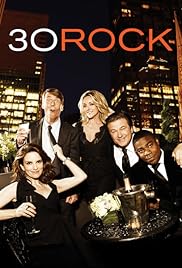
Liz Lemon first uttered “Blurgh!” in a 2007 episode of 30 Rock. It was so good, so compelling a swear that she used it three other times in the episode. It’s been immortalized ever since as a word expressing “revulsion, deflation, and disgust.” Tina Fey, who plays Ms. Lemon and who is the show’s creator, explained to GOOD Magazine that Blurgh was one of the invented swears the writers came up with while trying to circumvent the no-swear policy of network television. Jagweed, another zesty example of lewd-Lemon lexicon, is synonymous with “douchebag.” The fake cuss is a funny corruption of jerk off and jack off (you know, relating to the masturbatory undertaking).


“You fusking cloff-prunker”
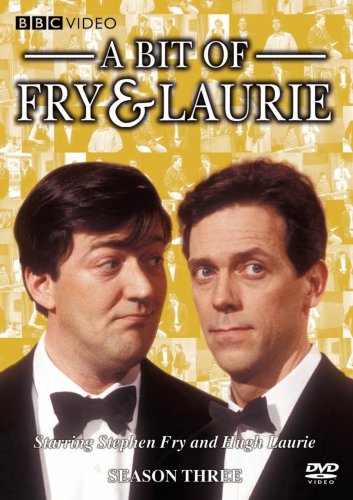
In the early 1990s, the British comedy sketch show A Bit of Fry & Laurie was a platform for Stephen Fry and Hugh Laurie to engage in hilarious bouts of wordplay. Aside from “The Language Conversation” (an episode focusing on the flexibility and arbitrariness of language), the most inventive displays of lexical wizardry were the meaningless but nevertheless obscene-sounding tell-offs: “You fusking cloff-prunker” and “Skank off, you cloffing cuck, you're all a load of shote-bag fuskers, so prunk that up your prime-ministering pim-hole."  When asked to explain what cloff-prunker means, Stephen Fry explains it’s a practice whereby “one person frangilates another’s slimp . . . and smuctat[es] them avially.” Very clear.

"Frak!"
Frak is one of the most well-known fake swears in fiction. Its appearances off the mothership Battlestar Galactica, in entertainment as divergent as Gossip Girl and the Dilbert comic strip, demonstrate frak’s immense appeal.  A futuristic stand-in for the f-word, frak first appeared in the 1978 series Battlestar Galactica. Originally spelled “frack,” the word was revamped for the 2010 revival of the series so that it reflected its true “four-letter-word” nature. Though not an intention of the producers, the respelling now differentiates the fictional swear from the practice of fracking . . . frak fracking!

"Frell!"
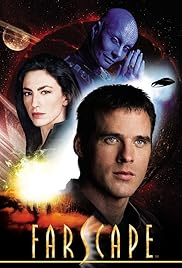
Farscape’s frell is another example of how writing teams imaginatively side-step the boundaries of what can be said on TV. According to a Farscape fan site, frell is used by Sebaceans, bipedal beings that look uncannily like humans (and can be played by them on the show, to the producers’ relief). Frell replaces the “coarse Anglo-Saxon monosyllable indicating sexual intercourse,” i.e., our old favorite: the f-word.


"Gorram!"
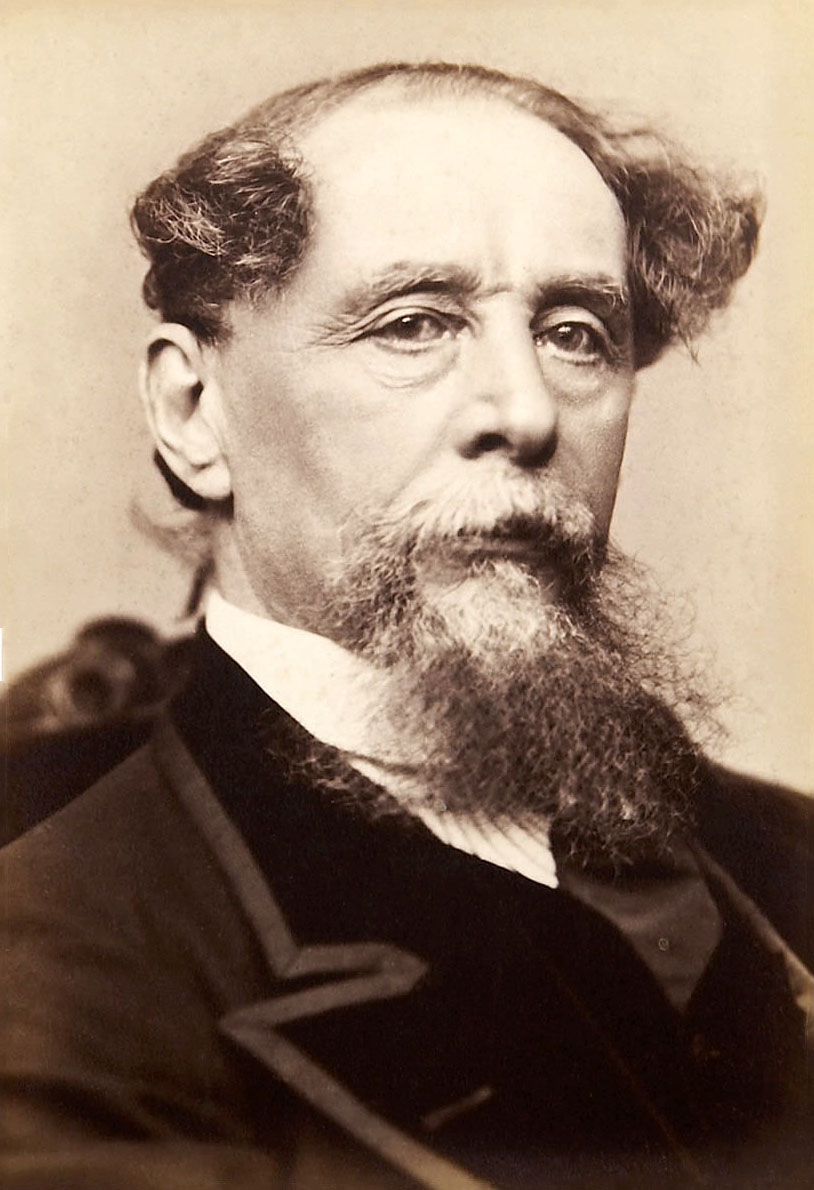
In 2002, Joss Whedon combined Western and sci-fi genres in Firefly, set in the year 2517. The language of the show is a mix of English and Chinese, reflecting Whedon’s visionary world in which the U.S. and China are the two most powerful cultures on the planet. Gorram is a substitute for God damn, and may be a “Chinglish” pronunciation of the swear according to Mentalfloss.com. Some fans question if gorram is actually a Chinese word, or somehow related to similar sounding words meaning “testicles,” “rotten,” and “f-d up” in various Chinese dialects. Others say there is no connection to Chinese.  However, Charles Dickens coined gormed in the 1800s, possibly as a mild form of “gosh darned” (and therefore of “God damned”) so this one may be older than BrownCoats know.    

“What the cabbage?”
The leap from adult sci-fi genres to a child’s fantasy adventure cartoon is not insignificant. Especially considering this slideshow is about invented cuss words. Adventure Time appeals to both kids and parents through the interactions of the protagonists, Finn and Jake, with magical characters in the Land of Ooo.  Along the way English words conjuring (for some) utter doom and dismay—like lump, cabbage, and math—are cheekily used in especially emotional dialogue: “I lumping hate them!,” “What the cabbage?,” and “I wanna go to sleep and you’re creeping me the math out!” While not coined from scratch, these cusses are certainly creative.


"Why, you stuck up, half-witted, scruffy-looking, nerfherder! "
Hop aboard the Millennium Falcon to venture back into the universe of fake swears. Star Wars is rife with inventive curse words, from f-bomb alternatives (farkled and krong), insults (laser brain and the Huttese E chu ta), to general expletives like vape and varp.  In The Empire Strikes Back, Princess Leia insults Han Solo as a nerfherder, someone who—as anyone from Alderaan would know—herds nerfs or “foul-smelling furry quadrupeds bred for meat across the galaxies.” Nerfherders had a bad reputation for being dirty and smelling like nerfs.

“Shazbot!”
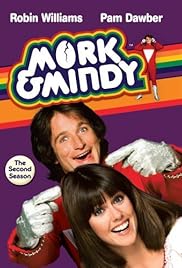
Coincidentally, while the human survivors on Battlestar Galactica were yelling “Frack you!” to the Ceylons, Mork (in Mork & Mindy) was exclaiming “Shazbot!” Robin Williams, the actor portraying Mork, might have invented the Orkan profanity in a moment of ad-libbed genius. Shazbot evokes the smelly “shiz” of a robot, and it was comfortably used in place of the four-letter word for the smelly droppings of a human.


"Smeggy, smegging smegger!”
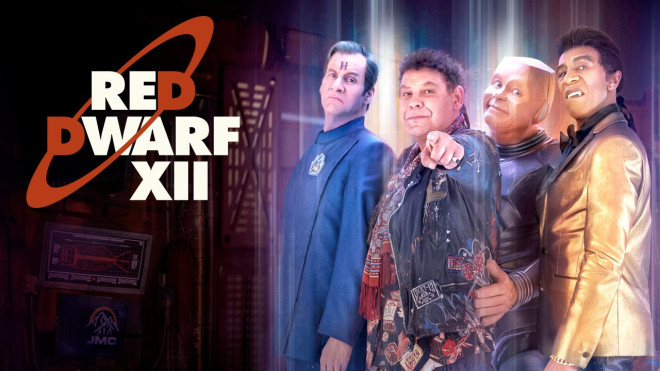
“. . . smeg off . . . you annoyingly little smeggy, smegging smegger!” proclaims a character in the British sci-fi comedy Red Dwarf. Based on this insult, in which smeg so flexibly morphs into any part of speech, it seems smeg can be used in place of at least a couple choice curse words. Adding head is a nice option if going for a version of shizhead (we have to euphemize; we know you understand).  The Red Dwarf screenwriters claim no association, but this coined obscenity has a fairly disgusting real cousin in English (and in physical anatomy): smegma is the “thick, cheeselike secretion” that collects beneath and around male and female netherparts. That’s smegging gross.

“Where the smurf are we?”
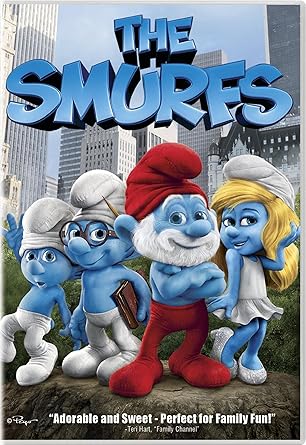
To help you move on from that last smegging visual, we’ll turn to The Smurfs. The little blue mushroom-dwellers use the word smurf to mean just about anything: “Our village has been smurfed by a smurf that smurfs smurf.” “When you smurf that smurf, you smurf off a whole series of smurfed smurfections . . . .”  Only Smurfs truly understand what one Smurf-speaking Smurf is smurfing. Smurf comes close to a minced oath for God in Papa Smurf’s cries of “Great smurfs!” and “Name of a smurf!” In the 2011 movie, there was no smurf about it: Smurf became a smurf-word: “Where the smurf are we?”

Resource: Dictionary.com

8 Things You May Not Know About American Money

Tuesday, September 12, 2017

On February 25, 1863, President Abraham Lincoln signed the National Banking Act (originally known as the National Currency Act), which for the first time in American history established the federal dollar as the sole currency of the United States. On the law’s 150th anniversary, explore eight surprising facts about American money.


TIMELIME OF AMERICAN BILLS:
https://www.uscurrency.gov/content/history-american-currency


1. The Constitution only authorized the federal government to issue coins, not paper money.

Article One of the Constitution granted the federal government the sole power “to coin money” and “regulate the value thereof.” However, it said nothing about paper money. This was largely because the founding fathers had seen the bills issued by the Continental Congress to finance the American Revolution—called “continentals”—become virtually worthless by the end of the war. The implosion of the continental eroded faith in paper currency to such an extent that the Constitutional Convention delegates decided to remain silent on the issue.


2. Prior to the Civil War, banks printed paper money.

For America’s first 70 years, private entities, and not the federal government, issued paper money. Notes printed by state-chartered banks, which could be exchanged for gold and silver, were the most common form of paper currency in circulation. From the founding of the United States to the passage of the National Banking Act, some 8,000 different entities issued currency, which created an unwieldy money supply and facilitated rampant counterfeiting. By establishing a single national currency, the National Banking Act eliminated the overwhelming variety of paper money circulating throughout the country and created a system of banks chartered by the federal government rather than by the states. The law also assisted the federal government in financing the Civil War.


3. Foreign coins were once acceptable legal tender in the United States.

Before gold and silver were discovered in the West in the mid-1800s, the United States lacked a sufficient quantity of precious metals for minting coins. Thus, a 1793 law permitted Spanish dollars and other foreign coins to be part of the American monetary system. Foreign coins were not banned as legal tender until 1857.


4. The highest-denomination note ever printed was worth $100,000.
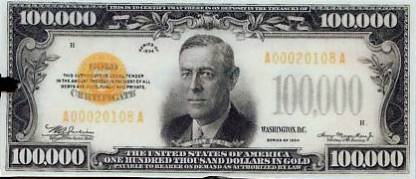
The largest bill ever produced by the U.S. Bureau of Engraving and Printing was the $100,000 gold certificate. The currency notes were printed between December 18, 1934, and January 9, 1935, with the portrait of President Woodrow Wilson on the front. Don’t ask your bank teller for a $100,000 bill, though. The notes were never circulated to the public and were used solely for transactions among Federal Reserve banks.


5. You won’t find a president on the highest-denomination bill ever issued to the public.
The $10,000 bill is the highest denomination ever circulated by the federal government. In spite of its value, it is adorned not with a portrait of a president but with that of Salmon P. Chase, treasury secretary at the time of the passage of the National Banking Act. Chase later served as chief justice of the Supreme Court. The federal government stopped producing the $10,000 bill in 1969 along with these other high-end denominations: $5,000 (fronted by James Madison), $1,000 (fronted by Grover Cleveland) and $500 (fronted by William McKinley). (Although rare to find in your wallet, $2 bills are still printed periodically.)


6. Two American presidents appeared on Confederate dollars.

The Confederacy issued paper money worth approximately $1 billion during the Civil War—more than twice the amount circulated by the United States. While it’s not surprising that Confederate President Jefferson Davis and depictions of slaves at work in fields appeared on some dollar bills, so too did two Southern slave-holding presidents whom Confederates claimed as their own: George Washington (on a $50 and $100 bill) and Andrew Jackson (on a $1,000 bill).


7. Your house may literally have been built with old money.
When dollar bills are taken out of circulation or become worn, they are shredded by Federal Reserve banks. In some cases, the federal government has sold the shredded currency to companies that can recycle it and use it for the production of building materials such as roofing shingles or insulation. (The Bureau of Engraving and Printing also sells small souvenir bags of shredded currency that was destroyed during the printing process.)


8. The $10 bill has the shortest lifespan of any denomination.

According to the Federal Reserve, the estimated lifespan of a $10 bill is 3.6 years. The estimated lifespans of a $5 and $1 bill are 3.8 years and 4.8 years, respectively. The highest estimated lifespan is for a $100 bill at nearly 18 years. The federal government reports that approximately 4,000 double folds (forward, then backward) are required to tear a note.

resource: http://www.history.com

11 surprising facts about marriage in the old days

Saturday, April 1, 2017


Biblically, a traditional marriage has been defined by “a state instituted and ordained by God for the lifelong relationship between one man as husband and one woman as wife.” However, your ancestors hoped for in a “traditional marriage” isn’t quite the roses and white picket fence that they believe it to be. Even though the definition of marriage as “an agreement between two people” has never changed, if you take a look into history it seems as though the idea of traditional marriage has.


BY 


1. People didn’t marry for love.

In “traditional marriage," love was considered a childish notion that had no place in a marriage. A conservative once predicted that marrying for love would destroy the institution. In ancient Rome it was believed to be inappropriate for husbands and wives to be in love; Seneca, the philosopher, said that there was nothing more impure than a man loving his wife like a mistress. The advice in the 1700s was to get married to someone you could tolerate—progress! But it wasn’t until the 1920s that people started marrying for love en masse, coining the term “love marriage."

2. People weren’t happy to get married.

Loving, blissful commitment wasn’t exactly synonymous with the true traditional marriage our ancient ancestors experienced. Why? Marriage was an arrangement that many were forced into. Four thousand years ago in Mesopotamia, marriage was equivalent to slavery; in the year 400 A.D. many church officials actually opposed marriage describing it as “bondage.”

3. People didn’t get married to have babies.

People got married for so many reasons! Because they were lonely, because their family needed a goat, because their parents couldn’t afford to feed them any longer, because they needed to strengthen their political position, or because a brother’s wife died and he needed a new one. Procreation was often a consequence of being married but it’s been proven that it often wasn’t the main goal, especially for families that weren't of the noble classes, who had large inheritances to think about.


4. The women didn’t have a say.

A blissful, traditional marriage is depicted as the husband and wife discussing issues and forming to decisions together for the good of their family. In a "traditional marriage,” this was not so. During American colonial times, William Blackstone stated that the “very existence of a woman is suspended during a marriage” and that she ceased to exist as a person without thought or voice. Basically, once she married, the woman’s job was to obey, cater to, and heed the word of her husband. Let's hope nobody's aiming for that in marriage these days, religious or not.

5. The woman didn’t have any rights.

In a “traditional marriage”, not only did a woman not have a say in family decisions, she didn’t have any rights either. After centuries of prejudice, finally in 1971, Ruth Bader Ginsberg fought for a woman’s rights within a marriage; this led to the abolishment of the existing law that during a dispute, males must be preferred to females. Furthermore, it was only in 1979 when head and master laws were abolished in most states, which stated that a husband could do whatever he wanted with his house, his family, and his wife and her possessions.

6. People didn’t have sex (and babies) with only their spouses.

In Biblical times, not only was polygamy not illegal, it was considered a man’s right to have multiple wives and mistresses. For example, Abraham had two wives and a concubine, Khaleb had five, Moses a mere two, but King Solomon had over 1,000 (though 300 were considered to be concubines)! Monogamy is actually a relatively new, Western invention.

7. It was hardly a bed of roses.

The loving visions of a man serving and caring for his wife just weren’t reality centuries ago. Women were seen as property and meant for specific purposes. hroughout time though, some mercy was shown to wives, as shown by Bernard of Siena in the 15th century, who instructed men to be kind and have as much compassion for their wives as they would a chicken or a pig. Talk about a low bar. Since a wife was considered her husband’s possession, he could do what he saw fit with her. This often involved “keeping her in line” through physical means. In his Corpus Jurius, Emperor Justinian suggested that it may not be right to beat your wife, but if you happened to see a reason to do it, you would just have to pay her afterwards. No biggie, right? Thankfully, by the late 1800s, this practice became more outdated; South Carolina was the first state to disallow the beating of wives. In 1920, it was outlawed nationwide. Now if only those crimes would be properly prosecuted and women were rightfully protected from their abusers.

8. It wasn’t always an agreement between two people in love.

It was only in the 13th century that Pope Alexander IV changed the laws and made marriage a sacrament between two people by taking it out of the hands of parents and putting it into the hands of the two participating (and—mostly—willing) parties. Before this, families viewed marriage as a bargaining tool to get what they needed, disregarding the feelings or desires of the individuals who were going to be married. In 500 A.D., Emperor Justinian passed a law allowing fathers to give away their daughters as young as 7 years old, thereby ensuring the family that their needs would be met early on. Arranged marriages weren’t the only third-party agreements that were made, sadly. Many women women found themselves in unique instances in which it would be required for them to be married. If a woman was raped, she would often have to marry her rapist; if her sister’s husband was left a widow, she would have to marry her late sister’s husband. The illusion of choice is hardly new for women.


9. Women didn’t necessarily choose to be intimate with their husbands.

In a traditional marriage, it could rightly be assumed that a wife would have the choice to be intimate with her husband. Not so! In 1736, Jurist Sir Mathew Hale declared that a wife couldn’t be raped, because in marriage, a woman gave up all rights to her body. Her husband could do whatever he wanted with it. Shockingly, as recent as 1993, the last states finally passed laws disallowing a man to force himself on his wife. Of course, it still happens all the time, and it's quite hard to prosecute.

10. You weren’t allowed to hold hands and show you loved each other.

In your mom’s view of traditional marriage, hugging and holding hands would be acceptable public displays of affection. However, in true traditional times, these were considered vile and severely frowned upon. In fact, Plutar called it disgraceful when a Roman senator was caught kissing his wife in public—it was such a scandal that the senator was forced to back down from his position.

11. People didn’t stay together forever.

Although the church tried really hard to keep people together by making it truly hard to divorce, people have been getting out of their unhappy arrangements for hundreds of years. In early Mesopotamia, Hammurabi's code gave husbands alternate options by stating instances in which they could get a refund on their spouse if they were unhappy. Both the Greeks and the Romans allowed divorce as well. Thanks to Henry VIII breaking from the Catholic church and founding his own church, just to marry Anne Boleyn, the people of Britain were forced to be okay with it. That rule often only applied to him and his (six!) marriages, though—convenient, huh?

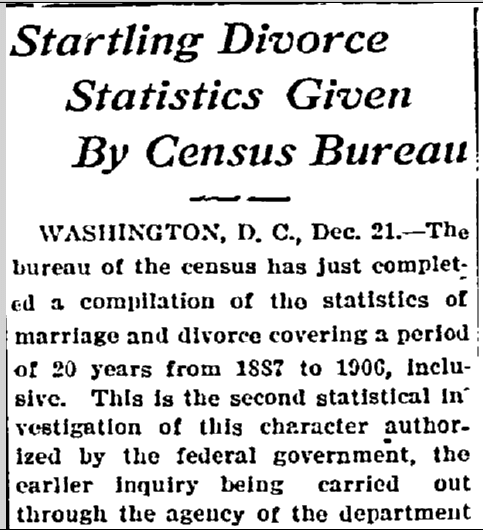
Morning Olympian December 1908
By the 1800s, divorce was so common in the U.S. that the government opened an investigation into the matter and by the early 1900s, society was sure that marriage would soon be obsolete. Though the divorce rate increased throughout the 20th century, it's started to decline, with 2016 having the lowest American divorces on record since 1980.

20 Freaky Historical Facts: So very Halloweenish!

Sunday, October 2, 2016

1.) Some chapels buried thousands of bodies in their floorboards. Instead of a separate cemetery, bodies used to be buried in churchyards, which in the olden days was profitable for churches. Since there was a finite amount of space in the yard, some churches buried corpses under their floors - one London chapel had 12,000 bodies in it.

2.) The Spanish Donkey was one of the worst tortures ever. During the Spanish Inquisition, this device would be used for torture and eventual death. The person would be placed on a triangular log and weights attached to their feet. They would be pulled downward by the weights as the sharp edge of the log slowly sliced them in half.

3.) 17th century rich people ate human flesh. They thought that consuming flesh, drinking human blood, and even rubbing human fat on the outside of the skin could cure any number of diseases.

4.) Human skulls were used by ancient civilizations as cups. Many ancient cultures hollowed out the skulls of their slain enemies and made them into drinking cups, with the earliest ones dating to about 14,000 years ago in what is now England.

5.) The Victorians made "memorial jewelry" - out of parts of their dead loved ones. To remember their lost family and friends, some Victorians had jewelry made out of parts of their loved ones' bodies, including teeth, hair, and bone. This brooch was made with a pretty knot made of hair.

6.) If someone died abroad in the Middle Ages, they might have been boiled so that their bones could be shipped home. Before modern embalming, it was difficult (and smelly) to transport a body back home if someone died far away. In the Middle Ages, some people chose to have their corpse cut into pieces and boiled. That way, the rotting flesh could be buried in the place the person passed on, but their bones could be easily shipped back to their ancestral burial ground.

7.) It was popular in France for royal women to give birth in front of a crowd. Marie Antoinette had such a large audience that she was almost crushed by the throng of people who tried to fit into her room at Versailles when she was giving birth.

8.) Dentures used to be made of the teeth of fallen soldiers. The teeth would be removed from the bodies, then placed in artificial gums for use by living people.

9.) In England, suicide victims were buried at crossroads to keep them from haunting towns. People in medieval England thought that burying people who'd committed suicide - which was a very serious crime - at a crossroads would confuse the restless soul and prevent them from coming "home" in spirit form.

10.) A guy wrote a book about a ship called the Titan crashing into an iceberg - fourteen years BEFORE the Titanic sank. Morgan Robertson's 1898 book tells the story of a British ship called the Titan, which was deemed to be unsinkable, that hit an iceberg and sank, killing many of the passengers because there weren't enough lifeboats. In 1912, the Titanic sank in almost the same manner.

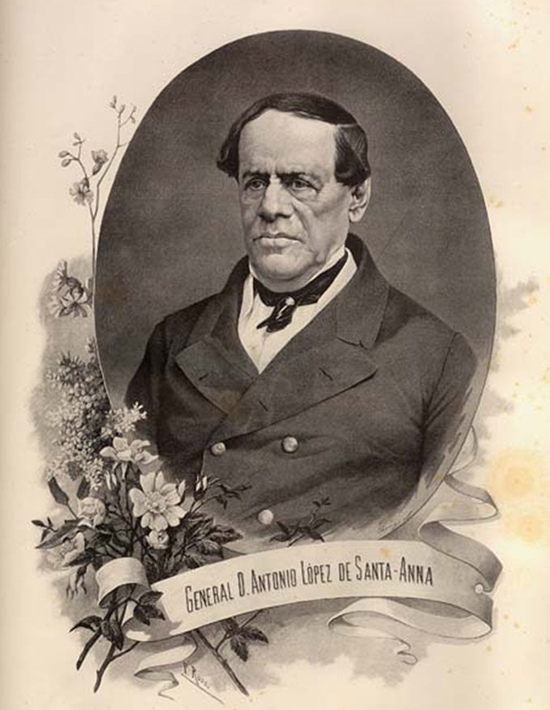
11.) General Antonio Lopez de Santa Anna ordered a full military funeral in 1838...for his leg. The Mexican leader lost his left leg when it was hit by a cannon, and had a funeral - with full military honors - for it when it was buried.

12.) Hungarian countess Elizabeth Bathory is considered the most prolific female serial killer in history. Four hundred years ago today, in August 1614, the notorious 54-year-old royal died under house arrest in ÄŒachtice Castle in modern-day Slovakia, having been implicated in as many as 650 deaths — mostly peasant girls and servants. Elizabeth was prone to fits of rage and seizures, and it appears that mental illness — possibly the result of years of inbreeding — was common in her extended family. The torture and murder was done largely for Báthory’s pleasure, and some scholars believe she was a sexual sadist in addition to a psychopath. Báthory and her accomplices terrorized the surrounding countryside for years with impunity. And it was not until her bloodlust crept up the social ladder, and the daughters of nobles went missing, that her fellow royals started to pay attention to the dark rumors surrounding the countess. Just after Christmas in 1610, Báthory’s castle was raided by the local authorities, who were horrified to discover dead and dying maidens strewn across the courtyard and basement. The countess’s collaborators were imprisoned, put on trial, and themselves tortured and executed. Báthory herself was never tried or convicted — perhaps to spare her family the embarrassment — but she was placed under house arrest in a tower room within ÄŒachtice Castle where she died less than four years later.

13.) Sultan Ibrahim I of the Ottoman Empire once drowned 280 of his concubines. The reason? One of them had slept with another man.

14.) The first major syphilis outbreak made people look like gross zombies. In 1494, Florence, Italy had a big syphilis outbreak, and before antibiotics, you just sort of had to...deal. With syphilis, that meant that parts of your face would literally be falling off, and you'd just have sores all over your body.

15.) When Mount Vesuvius went off, it actually exploded people's heads. The city of Herculaneum was hit not by magma or ash when Vesuvius went off, but by a superheated cloud of gas with temperatures up to 1000 degrees Fahrenheit. This meant that people's heads got really hot, really fast. Since the liquid in your head has nowhere to go because of your skull...their heads legit exploded.

16.) The first recorded serial killer in history was a woman. Nowadays, most of the major serial killers (that we know about, anyway) are men. But back in Roman times, there was a serial killer named Locusta who liked poisoning people. A lot. Fortunately for her, Emperor Nero sometimes needed people killed, so instead of punishing her for being a murderer, he pardoned her and asked her to help him out.

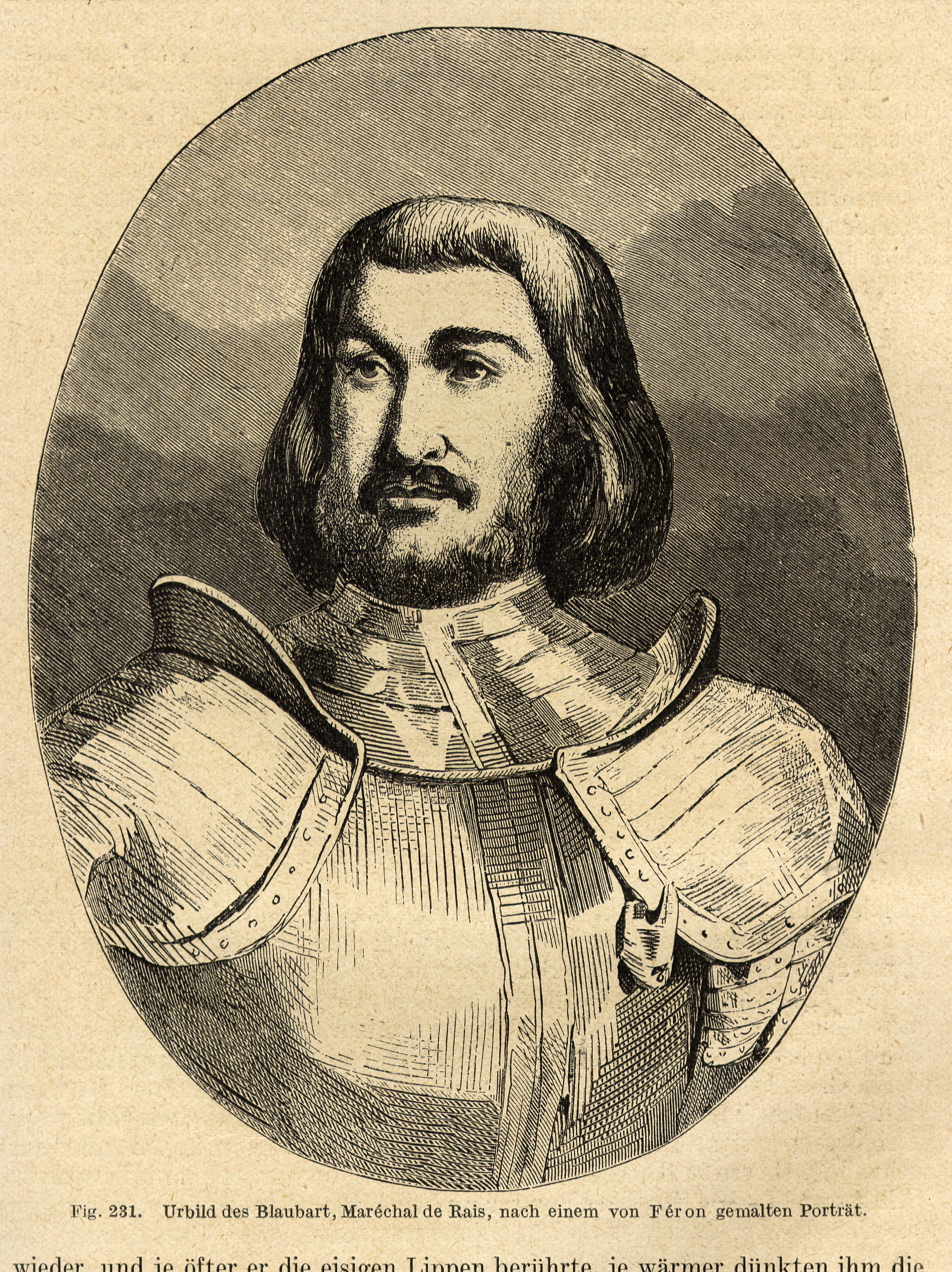
17.) One of Joan of Arc's most ardent supporters was a serial child killer. Joan of Arc was amazing, obviously, but she had help in the French Army, including Gilles de Rais, a knight. He fought bravely for France... and also killed anywhere between 80 and 800 children in horrifyingly brutal ways.

18.) James Smithson, the founder of the Smithsonian Institution, is buried there. Employees have said they've seen Smithson's ghost wandering the halls of the famed Washington, D.C. museum, to the point where in 1973, the institute did a study of Smithson's casket and remains to make sure everything was a-OK.

19.) In 1892, two soldiers stationed at the fort that used to occupy Liberty Island tried to dig up some treasure they'd heard was buried nearby. When they got to the box, a demon appeared to them, most likely the spirit of Captain Kidd, a pirate who liked to bury his treasure there.Liberty Island used to be a haven for pirates... and might be haunted by one.

20.) The Romanians believed redheads with blue eyes were vampires. Redheads were believed to be a specific kind of vampire called strigoi, who were able to send their spirits out at night to meet other strigoi.

Breakdown of the Generations with the last 100 years

Wednesday, August 31, 2016


Generations table

The following table summarizes what you need to know about Western generations so you can track your own in time.
GenerationBirths fromBirths untilComing of age
The G.I. Generation – Greatest Generation190019241918 - 1929
The Silent Generation – Lucky Few192519451943 - 1962
The Baby Boom Generation – Baby Boomers194619651963 - 1972
Generation X – Latchkey Kids196619791988 - 1994
Generation Y – Millennials198019942098 - 2006
Generation Z – Gen Next199520162007 - 2020
Most of these primary generations still have a role in today’s market place, but the recent research has shown that Millennials have overtaken Baby Boomers as largest generation in the US.

What generation am I?

The generation calculator tool provides you with descriptions for all the established generations starting with 1900 and right until present:

G.I. Generation (1900-1924)

442nd Nisei Regiment
■ Also known as the Greatest Generation, includes the veterans who fought in World War II.
■ Lived through two World Wars, the Great Depression and many other advances.
■ They are conservative savers, hard-working , with a high sense of moral obligation, patriotism and respect for authority.
■ Two overlapping groups consistent with the Depression Era (born between 1912-1921) and the World War II cohort (born between 1920-1924 to fight in 1939-1945).

Silent Generation (1925-1945)
Soc Hop

■ Born between the two World Wars, many of them who were too young to join the service in the World War II.
■ Also known as the “Post War Cohort” or the “Lucky Few”.
■ Lived through the post war economic boom but also through tensions and approaching wars.
■ Conservative, rational savers, hard-working, patriotic members that fight for security and stability.


Baby Boom Generation (1946-1965)

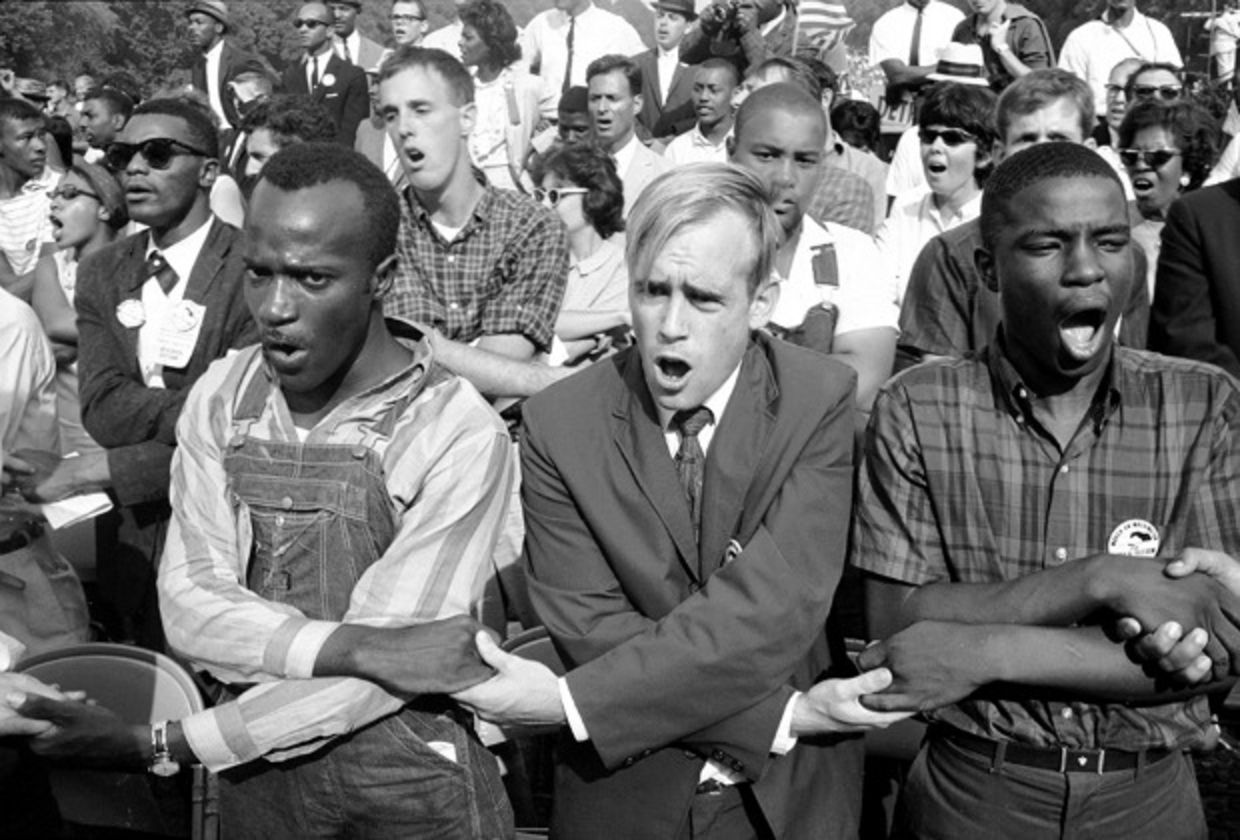
Civil Rights
■ Born after the World War II, their parents belonging to the G.I. Generation.
■ A 14 year increase in birth rate worldwide.
■ Focused on the civil rights movement and cultural development.
■ Lived through the Vietnam War, MLK, the Kennedy assassination, the Nixon resignation.
■ They came of age in the ‘60s with the hippie movement, Woodstock and college rages.
■ Boomers I or The Baby Boomers (1946-1954) and Boomers 2 or the Jones Generation (1955-1965).
■ Many of the Baby boomers embraced a more conservative behavior and eventually gave birth to Generations X and Y.


Generation X (1966-1979)
Popular American TV shows

■ Also known as the Gen X is the first generation to follow the Baby boomers.
■ This is also the first generation to be named and defined by marketers.
■ Many of its members are aware of their generational title.
■ Came of age in the '80s and '90s with the Reagan era, Challenger explosion, fall of Berlin Wall, Persian Gulf War, economic recession.
■ The all-knowing spoiled kids of the Baby Boomers yet with fewer ambitions and less driven to change the world.
■ The generation X kids are called the “latchkey” kids, exposed to daycare and family instability and this has probably shaped how they regard their family life and how the next generation, Y, is being educated. - The best educated with 29% obtaining a bachelor’s degree or higher (6% higher than the previous generation).


Generation Y (1980-1994)

■ Also known as the Echo Boomers or Millennials.
■ The demographic cohort of individuals, primarily children of the Baby boomers.
■ This generation grew up with many world-changing events including the rise of mass communication, technological advance.
■ All knowing as the former Gen X they have what it takes but are also willing to do something about it.
■ This generation benefits from all science advances and better education and has the ambition and desire to change the world.
■ They have been exposed and seen so much that are now immune to traditional ways from marketing to sociology.


Generation Z (1995-    )

■ The term generically used to describe the cohort of people born around 2000.
■ Also known as iGeneration, Gen Tech, Gen Wii, Net Gen, Gen Next, Post Gen.
■ This is a generation living in a society where everything is possible and the main communication channel is the internet.
■ A volatile environment of terror threats, possible nuclear or biological attacks.
■ Family stability and moral values put aside, heightened sense of self.
■ Education is now focusing on developing practical skills and enriching creativity..
This generation calculator is a tool designed to help you find quickly what generation you are and which are the characteristics of your up bringing.
The algorithm behind it is simple and takes account only of the year you were born in and the sociologic and marketing studies in the area.
Apart from the particularities of a specific demographic cohort someone is born under, there are other interesting facts that can be found considering the age and birthday. 
RESOURCE: http://www.thecalculator.co