Showing posts with label Japanese-American history. Show all posts

Unlikely World War II Soldiers Awarded Nation’s Highest Honor

Sunday, November 11, 2018

Nearly 70 years after the Japanese attack on Pearl Harbor and the United States’ entry into World War II, Japanese-American soldiers receive the country’s highest civilian honor.
by BARBARA MARANZANI

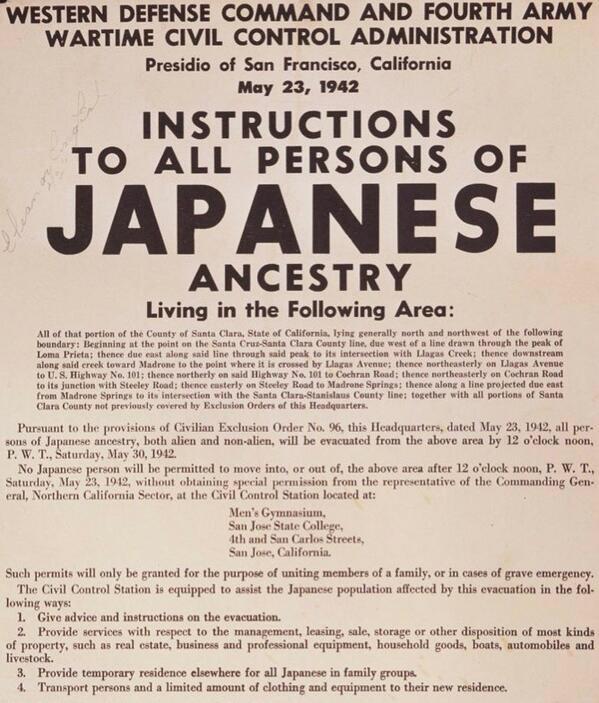
Almost immediately after the December 7, 1941, attack on the U.S. naval base at Pearl Harbor, the loyalty of all those of Japanese descent living in America, regardless of their citizenship status, was called into question. In February 1942, President Franklin D. Roosevelt signed Executive Order 9066, which authorized the War Department to establish military zones in much of the western United States. Under this order, residents with “Foreign Enemy Ancestry” could be placed under surveillance, detained and even relocated by military fiat. Few Americans of European ancestry were detained under this order, which was primarily directed at those of Japanese descent. Eventually, more than 110,000 Japanese and Japanese Americans living on the U.S. mainland were forcibly removed and interned in 10 relocation centers. There, the detainees were subjected to harsh conditions that included overcrowding, water shortages, sub-standard housing and exposure to extreme weather.
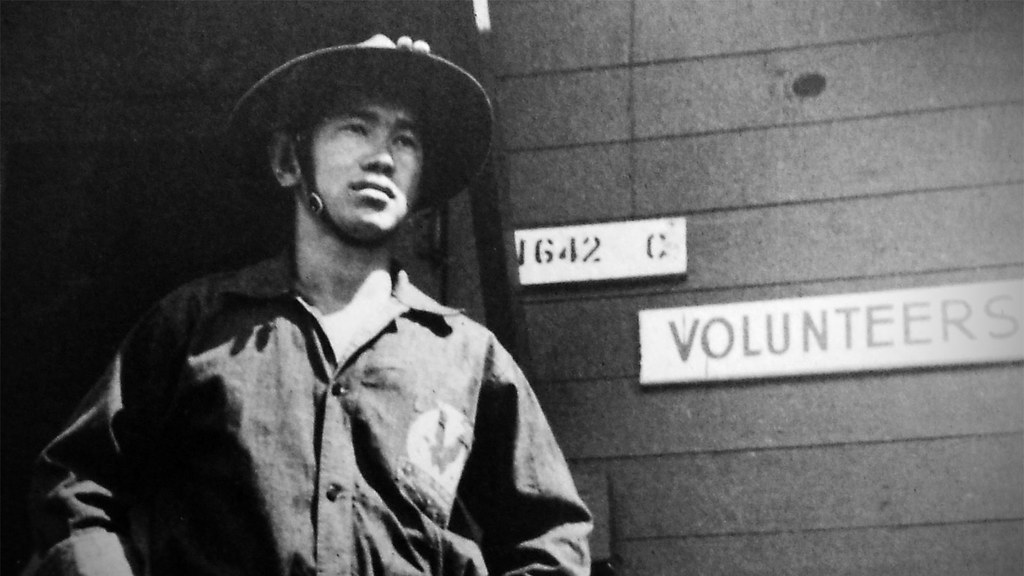
In Hawaii, where ethnic Japanese accounted for more than one-third of the islands’ population, first-generation Japanese and Nisei faced similar suspicions. Although few in Hawaii were relocated, their freedoms were severely curtailed. Many military advisors expressed their concerns over the loyalty of Japanese residents serving in the armed forces, and efforts were soon underway to remove those who had served prior to Pearl Harbor. Members of the Hawaii National Guard were temporarily disarmed, and local ROTC students and cadets were dismissed from service. Determined to prove their loyalty to the United States and come to the defense of their fellow Hawaiians, these former servicemen formed a civilian aide group, the “Varsity Victory Volunteers” or VVV, which provided the physical labor needed for the massive construction of U.S. military bases in the Pacific.

Impressed with the VVV’s determination–and swayed by vocal protests over treatment of the Nisei soldiers–the War Department reversed course, announcing the formation of an all-Nisei combat unit, the 100th Infantry Battalion. After nearly a year of training on the U.S. mainland, the 100th was deployed to North Africa in September 1943, where it participated in the attacks on Monte Cassino, the breakout from Anzio and the final Allied Offensive push from Rome to the Arno River. In August of that year, the 100th was reorganized and became part of the 442nd Regimental Combat Team (RCT), another Japanese-American unit, under which it would serve for the rest of the war.
Formed just six months after the 100th, the 442nd RCT included additional soldiers from Hawaii, but was primarily comprised of volunteers from the internment camps and Japanese Americans who had served in the U.S. Army prior to the war. In June 1944, they too were deployed to Europe, where they fought in eight major campaigns in France, Italy and Germany. In October of that year, they played a key role in the bloody rescue of the “Lost Battalion,” an Allied unit that had been trapped and surrounded by Axis forces in the Vosges forest in France. In April 1945, the men of the 442nd–many of whom had family members living in U.S. internment camps–were among the first Allied troops to participate in the liberation of the Nazi concentration camp at Dachau, a sobering experience that would haunt many of them for decades. Eventually, more than 13,000 soldiers would serve in the regiment, with more than 700 members killed or missing in action.

The 442nd became the most decorated unit of its size in U.S. military history. In less than two years of combat, the unit earned more than 18,000 awards, including 9,486 Purple Hearts, 4,000 Bronze Stars and 21 Medals of Honor. Upon their return to the United States, they were praised by President Harry Truman for their brave stand both home and abroad, and were even the subject of a 1951 film, “Go for Broke”; the film’s title was derived from the unit’s official slogan. Many members of the 442nd went on to distinguished careers in science, academia and government, including nine-term U.S. Senator Daniel Inouye from Hawaii, who lost an arm due to World War II combat injuries and was among those attending Wednesday’s event.

Also honored at the ceremony were the more than 6,000 Japanese Americans who served in the Military Intelligence Service, or MIS, during the war. These members, many of whom were recruited directly from internment camps, provided translation and interrogation assistance to the war effort. The MIS is perhaps best known for the crucial role it played in deciphering a captured set of Japanese military documents, known as the “Z Plan,” which outlined plans for a final, large-scale counterattack on Allied forces in 1944. The discovery of the Z Plan has been hailed as one of the most important military intelligence successes of World War II.

Tōyō Miyatake

Saturday, June 4, 2016

Tōyō Miyatake (宮武東洋, Miyatake Tōyō; 1895–1979) was a Japanese American photographer, best known for his photographs documenting the Japanese American people and the Japanese American internment at Manzanar during World War II.  He was born in Kagawa, Shikoku in Japan in 1895. In 1909 he migrated to the United States to join his father. He settled in the Little Tokyo section of Los Angeles, California.
With an interest in arts — most notably photography, which he studied under Harry K. Shigeta— Miyatake began associating with the local arts community. In 1923 he bought his photo studio. Miyatake encouraged fellow photographer Edward Weston to exhibit his work and Miyatake is credited as giving Weston his first gallery showing. At the time Miyatake met his future wife, his brother was courting her. He began spending time with Hiro under the guise that he was using her as a model. His brother was crushed; it is said that he "died of a broken heart" at an early age.
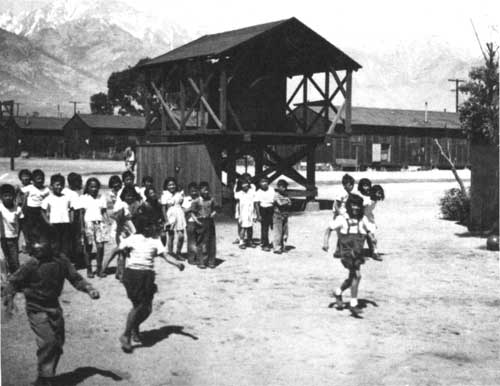
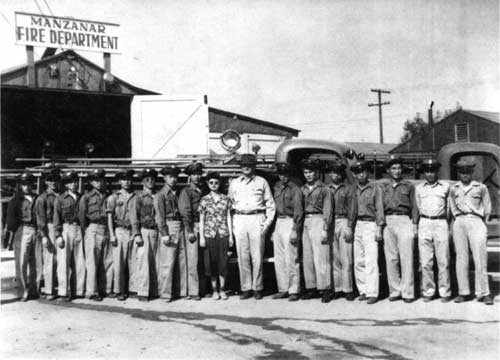
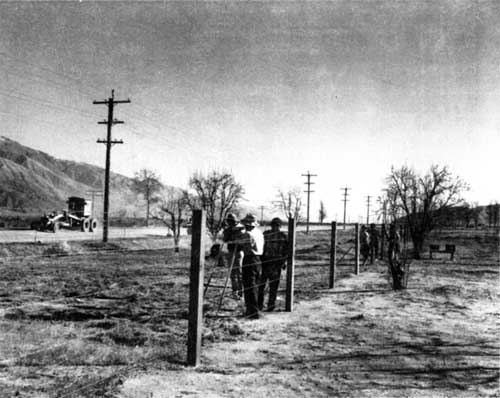
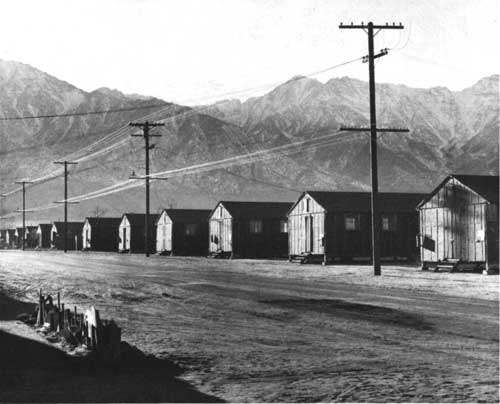
Before World War II, Miyatake's photography won awards as he photographed various personalities. During World War II Miyatake was interned at Manzanar relocation camp in the Owens Valley. He smuggled a camera lens into the camp and constructed a camera body from wood. The pictures he secretly took at the camp are among the relatively few that show the plight of the U.S. citizen inmates.
After the war, the family returned to Los Angeles, where their home had been entrusted to some of their white friends during the internment. Unlike many families who lost their homes, the Miyatakes were able to resume their life and provide shelter to a few less fortunate internees and their families. In post-war Little Tokyo, many residents were unable to afford Miyatake's services and some opted instead to barter goods to have him photograph weddings and portraits. With his wife Hiro running the front office, she once negotiated his services for a Steinway piano and another time, she negotiated for a litter of poodles.
He remained active in the studio throughout this period. In the early morning, Miyatake could be seen walking around Monterey Highlands Elementary School for exercise. The last image he captured on film was taken at this park. The film was discovered and processed after his death. Before his death in 1979, Miyatake and Ansel Adams produced a book, Two Views of Manzanar, a compilation of their photographs during the internment.
Miyatake's cremated remains are buried at Evergreen Cemetery in Boyle Heights; a portion of his remains are stored in the Koyasan Buddhist Temple in Little Tokyo.
Photos by Miyatake:


Gordon Hirabayashi: Why I refused to register for Japanese evacuation

Friday, April 12, 2013

Published by Crosscut
Editor's Note: Gordon K. Hirabayashi was a student at University of Washington when the U.S. ordered the removal of Japanese-Americans in the Pacific Northwest. Hirabayashi refused curfew orders, prompting a legal battle. He lost. It wasn't until the 1980s that Hirabayshi's convictions were overturned, putting him firmly in the right on his initial refusal.
After his death in 2012, Hirabayashi’s brother, James Hirabayashi and nephew, Lane Hirabyashi, compiled his diaries and correspondence which follow his experiences as a student through time served in jail for defying U.S. orders. The book gives insight into Hayabayashi's motivations and faith during his time in jail.
“A Principled Stand: The Story of Hirabayashi v. United States" chronicling the life Gordon K. Hirabayashi was released by the University of Washington Press this month. Below is an excerpt which contains Hirabayashi’s formal refusal to comply with orders. He disseminated the refusal to chairmen of the YMCA board where he was a dorm resident:

When my family was eventually moved from Pinedaleto the more permanent War Relocation Authority [WRA] camp known as Tule Lake in Northern California, two women who had been uprooted from the Los Angeles area trudged the dusty road from the opposite end of the camp looking for my mother. When they finally located her, they said they had heard that the mother of the fellow in jail fighting for their rights was housed in that block. They had come to greet her and to say “Thank you!”
In recounting this episode, my mother wrote about what a great lift she had received from that visit. When I read her letter, I experienced a sudden removal of weight from my shoulders, which I hadn’t realized I was carrying. I knew then that nothing I could have said or done could have given her more satisfaction.
In any case, as I prepared to take my stand in Seattle, I heard about Min [Minoru] Yasui in Portland and his refusal to obey the curfew because his case was already going on. As far as the Japanese American community was concerned, in terms of the norms of the 1940s, protesting was not a frontline activity, not even a backline option. The Japanese American Citizens League (JACL) was the big thing in the Japanese community. I knew the leaders, men like Jimmy Sakamoto and Bill Hosokawa. They were working on opposite things from what I was doing, so I never consulted them.
Had Japanese American leaders known of my position while they were still in Seattle, they would have confronted me and said, “You are not even dry behind the ears. How can you take such a step that will create difficulties for the whole group? How do you know there won’t be a backlash? How do you know you are right and the rest of us are wrong?” I would have had difficulty answering their questions.
But I would have had questions for them also. How could they defend America and the Constitution by acceding to a decision made by military authorities to suspend constitutional guarantees, especially when there had been no suspension of the Constitution via martial law? In the end, I would not have changed their views, and they would not have changed mine. By personality, though, while I had independent positions on various things, I was never what you might call the kind of person who habitually protested. 

As I followed the press after the U.S. entered the war, the writing was on the wall. The first part of the evacuation process began with the Bainbridge Islanders, who, because of their proximity to naval installations, were moved in March 1942. The last district in Seattle to be evacuated was the northeast section, including the University District, where I was living. The deadline was May 12, 1942. By the end of March, the Bainbridge Island Japanese Americans were gone. At that point, I knew that I wasn’t going. I sat down and wrote a statement:

Why I Refuse to Register for Evacuation
Over and above any man-made creed or law is the natural law of life — the right of human individuals to live and to creatively express themselves. No man was born with the right to limit that law. Nor, do I believe, can anyone justifiably work himself to such a position. 
Down through the ages, we have had various individuals doing their bit to establish more securely these fundamental rights. They have tried to help society see the necessity of understanding those fundamental laws; some have succeeded to the extent of having these natural laws recorded. Many have suffered unnatural deaths as a result of their convictions. Yet, today, because of the efforts of some of these individuals, we have recorded in the laws of our nation certain rights for all men and certain additional rights for citizens. These fundamental moral rights and civil liberties are included in the Bill of Rights, U.S. Constitution and other legal records. They guarantee that these fundamental rights shall not be denied without due process of law.
The principles or the ideals are the things which give value to a person’s life. They are the qualities which give impetus and purpose toward meaningful experiences. The violation of human personality is the violation of the most sacred thing which man owns. 
This order for the mass evacuation of all persons of Japanese descent denies them the right to live. It forces thousands of energetic, law-abiding individuals to exist in a miserable psychological and a horrible physical atmosphere. This order limits to almost the full extent the creative expressions of those subjected. It kills the desire for a higher life. Hope for the future is exterminated. Human personalities are poisoned. The very qualities which are essential to a peaceful, creative community are being thrown out and abused. Over 60 percent are American citizens, yet they are denied on a wholesale scale without due process of law the civil liberties which are theirs.
If I were to register and cooperate under those circumstances, I would be giving helpless consent to the denial of practically all of the things which give me incentive to live. I must maintain my Christian principles. I consider it my duty to maintain the democratic standards for which this nation lives. Therefore, I must refuse this order for evacuation.
Let me add, however, that in refusing to register, I am well aware of the excellent qualities of the army and government personnel connected with the prosecution of this exclusion order. They are men of the finest type, and I sincerely appreciate their sympathetic and honest efforts. Nor do I intend to cast any shadow upon the Japanese and the other Nisei who have registered for evacuation. They have faced tragedy admirably. I am objecting to the principle of this order, which denies the rights of human beings, including citizens. [May 13, 1942]
I circulated a half-dozen copies to the chairman of the YMCA board; Colonel Kimmel, director of the University of Washington ROTC; and a few YMCA supporters. Dr. Fred Ring said, “I just heard about your position — that you intend to refuse to go along with this. I admire your position . . . but I’m trying to determine whether this is a courageous act or a foolhardy act.” And he was seriously reviewing for himself whether mine was an intelligent way of expressing my objections. Once I was in jail, however, both he and his wife, Mabel, both of whom were Baptist Church and Fellowship of Reconciliation members, were right there supporting me.

About the Author

Gordon K. Hirabayashi (1918-2012) was awarded the Presidential Medal of Freedom in May 2012. He was professor emeritus of sociology at the University of Alberta in Edmonton. James A. Hirabayashi (1926-2012) was professor emeritus of Asian American Studies at San Francisco State University. Lane Ryo Hirabayashiis professor of Asian American Studies and the George and Sakaye Aratani Professor of the Japanese Incarceration, Redress and Community at UCLA.

'Let's Move On': Stories of Japanese-American internment camp recovered

Wednesday, January 18, 2012


SANTA FE, N.M. — One entrepreneur ran a gambling den beneath the camp barracks. Another published a newspaper called the Santa Fe Times. Some men brewed sake. Others grew their own vegetables to trade for meat with the hospital and the state penitentiary.

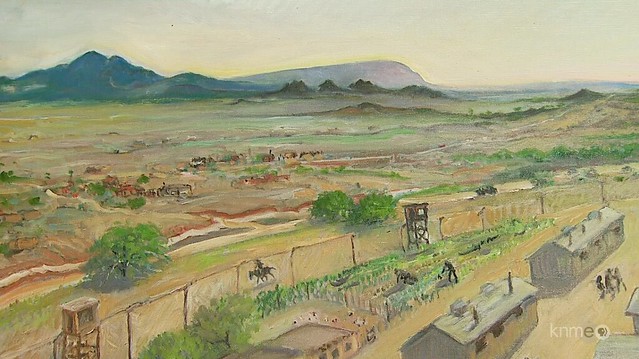
During World War II, the U.S. government detained more than 100,000 people of Japanese descent in internment camps spread throughout the West. From 1942 to 1946, the Santa Fe camp held 4,500 of those men behind barbed wire at a site two miles from the Plaza in what is now the Casa Solana neighborhood. The Department of Justice and the FBI labeled them "the worst of the worst." Educated and successful leaders, they were powerful men whom officials deemed the most likely able to assist the enemy if they chose to, Simon said.

Neil Simon's DVD "Prisoners and Patriots: The Untold Story ofJapanese Internment in Santa Fe" is the first documentary to fill the void of silence surrounding the World War II incarceration of Buddhist ministers, businessmen, teachers and journalists from the West Coast, Hawaii and Latin America in New Mexico. A journalist who worked for KOB-TV in Albuquerque as well as in stints in El Paso and in Washington, D.C., Simon has based the film on 20 hours of exclusive interviews with Santa Fe survivors and their families, previously classified government documents and private photographs.

It's a story many fathers never told their own children. Some of the prisoners recalled the cruel irony of being locked up at the camp while their sons donned U.S. Army uniforms. Simon will screen the movie at the Museum of International Folk Art on Sept. 9. In the meantime, the DVD is available at http://www.kickstarter.com/projects.

Now working for the 56-country Organization for Security and Cooperation, Simon learned about the New Mexico camp while he was working as a journalist in Albuquerque but could find no information about it. Awarded a congressional fellowship in 2002, he assumed he could research the subject at the National Archives and the Library of Congress.

"When I did that, I realized there was nothing," he said in a telephone interview from Kazakhstan, where he was overseeing parliamentary elections.

Simon started scouring the Internet for camp artifacts and reunion yearbooks on eBay. He discovered a photographer had posted photographs online on Flickr, then traced her to a California Japanese calligraphy class. Two women in the class were the children of survivors.

That connection led to Bill Nishimura, who was interned in Santa Fe for being a member of the pro-Japanese group Hoshi Dan in Tule Lake, Calif., and for declining to answer the government's loyalty questionnaire. Nishimura was the only surviving Santa Fe internee to speak at the site during the 2002 dedication of the historic monument at the camp.

Simon estimates that about 20 camp veterans are still alive. He talked to five of them and their families, including the son of the camp doctor.

He fully expected to encounter bitterness and resentment when he talked to the survivors. He discovered the opposite.

"They had a good time," he said. "They played baseball. They brewed sake; they grew vegetables. They did wood carving and stone polishing. They did acting."

Although some have traced their post-camp silence to shame, Simon credits it to a traditional Japanese term called "shouganai."

"It means letting it roll off the body," he said. "It's, 'Let's move on; let's not hold a grudge.' "
"I think he must have said 10 times, 'Take it as it comes,' " Simon said. "He never was an ambitious man after his camp experience. His daughter was very sad about his whole life. But you got from him this sense of honor and a lack of bitterness."
The men didn't want to burden themselves or their families, he added.

Nishimura spoke of "playing baseball and ogling women when they rode their horses past the camp," Simon said. "One started a gambling ring under his cabin. He had a whole gambling thing going on. There was a poetry club. And they did some hiking."

At just 19, Norman Hirose was likely the youngest man in the camp. He was incarcerated with his family first at Tanforan (San Francisco) then at Topaz, Utah, after asserting "no, no" on the loyalty questionnaire asking whether he would foreswear allegiance to Japan and serve in the U.S. armed forces. The government shipped him to Santa Fe in 1946, telling him he would go back to Japan soon.

"You really got the sense that he was excited and proud," Simon said. "He looked forward to the internment experience, because it was something new."

Aside from being stripped of their civil rights and separated from their families, most of the men said they had been treated well, although Simon documented "two or three" instances of negative treatment from the camp guards.

"Some would curse at them," he said.

Some detainees retained their loyalty to Japan by wearing the Rising Sun symbol on their clothing. Members of the Hoshi Dan, a pro-Japanese movement that grew out of California, were considered troublemakers and shipped to Santa Fe.

"They did military-style exercises," Simon said. "Everyone knew if you were moved to Santa Fe — that was about as low as you could go."

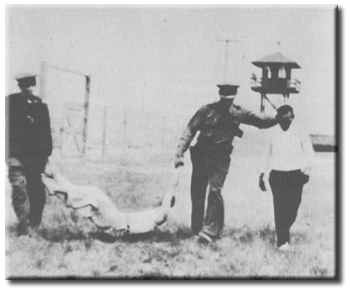
A small riot erupted after a guard tossed tear gas at a prisoner and billy clubs appeared. Officials gloated about keeping the incident out of the press, he added. "A few people went to the hospital."

Camp members were allowed to send and receive mail, but much of it was censored. "There are a lot of letters," Simon said. "A lot of folks said a whole letter would be cut out. This was very routine."

Seichi "Sam" Yamakawa, who died in 2011, was shipped to Santa Fefor stating in hearings that he would not serve in the U.S. Army and planned to repatriate to Japan to care for his mother. After the war, he returned to California only to find people from Oklahoma had moved West and taken over his family farmland.

"I think he must have said 10 times, 'Take it as it comes,' " Simon said. "He never was an ambitious man after his camp experience. His daughter was very sad about his whole life. But you got from him this sense of honor and a lack of bitterness."

"I went into this project thinking every interview would be the same — denigrating the U.S. government and parallels to 9/11," he added. "And to a man, it was the opposite."

Former Malibu resident remembers forced WWII internment

Wednesday, April 27, 2011


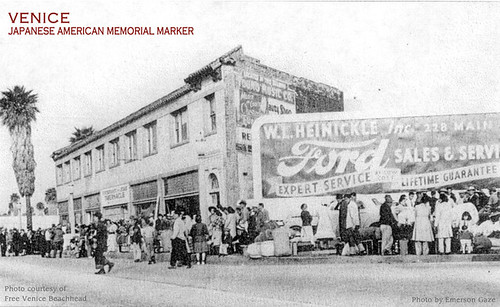
A memorial marker denoting the relocation of 1,000 local residents, including former Malibu resident Amy Ioki, to the Manzanar camp during World War II, will be placed at an intersection in Venice.

Amy Ioki was a member of the only Japanese American family in Malibu-and just 16 years old-when the call came to assemble at the corner of Lincoln and Venice boulevards in Venice, Calif. It was April 1942, four months after the bombing of Pearl Harbor, when the United States entered the World War II stage as one of the Allied Big Three. Ioki's family, the Takahashis, was ordered to board the bus en route to the Manzanar War Relocation Authority Camp. It didn't matter that the high school junior, her two older brothers and three sisters were U.S. born; their crime was simply being Japanese.


“It was really like a concentration camp until they found out we were really harmless,” Ioki said.


Ioki, now 85, is one of the few surviving Southern California Japanese American citizens who will revisit next week, 69 years later, that fated intersection where 1,000 local residents who were removed from their homes were gathered and sent to the camp in Inyo County. The April 25 event, at 10 a.m., will be a groundbreaking for a memorial plaque to be located at the northwest corner of Venice and Lincoln. On the marker is an abbreviated synopsis of President Roosevelt's Executive Order 9066 that allowed the U.S. government to declare the states of California, Oregon and Washington-at the time populated with more than 120,000 Japanese people-as “militarily sensitive” due to Pearl Harbor. Another command gave those families just days to dispose of their property and possessions, essentially forcing them to drop their lives.


It was a different story before the war, when Ioki, then Amy Takahashi, wasn't ostracized in the least by her fellow Caucasian peers.

“We lived in Malibu, I never felt any prejudice,” she said. “We all went on the same bus, day in and day out, and all became good friends.”


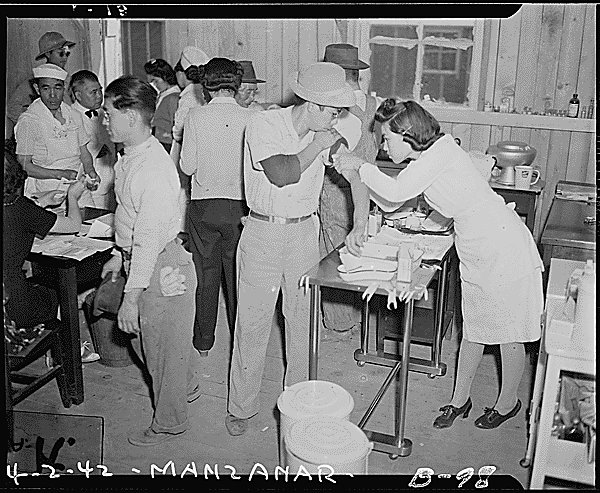
The trek to Manzanar, cramped in a dirty, stifled bus, poked and prodded through a round of vaccinations, was a far cry from the bucolic life in Malibu, where Ioki's parents were immigrant farmers from Yokohama. Luckily, because the Takahashis were a large family, they were placed in their own barrack, Block 23.

“If you were in a small family, they were put in a room with three other families,” Ioki said.


Overall conditions were poor: food consisted of tinned rations and school for the children consisted of hardly anything conducive to learning. It would remain that way for three years, until the end of the war.


“We sat on the floor and it was cold,” Ioki said. “No books, and the teachers were very young and probably just starting. Who would come out to a place like that if you were a good teacher?”


Their Japanese culture is what kept them going. Not long after being imprisoned, the internees found some solace through gardening and the arts. Ioki would go on to work in the camp hospital, which led to her later career path of medical stenography.

“When we were in camp, you had to make a life for yourself,” Ioki said, “because there were people from all phases of life, and the Japanese are for education, they had all kinds of classes.”


Ioki missed her high school graduation. And as she remained in the prison camp, her friends back in Malibu went off to attend Santa Monica City College or UCLA. Ioki credits her parents' strong resolve as survivors for getting them through the wartime period. “I think it's still part of the Japanese not to complain,” she said. “I never heard them complain about anything. We had to pick up everything and go. They never said a word, and my father never resented that they treated us differently. He never said anything against America. That's the mentality of the Japanese.” She continued, “Our folks were brought up that way; that we do as we're told.”


Though the connections came through tragedy, Ioki said she is grateful to have bonded with so many other Japanese during her time at Manzanar, like Mae Kakehashi, Arnold Maeda and Kazumi Tatsumi.

“We actually made many friends in camp. We stayed friends for 70 years now,” she said. “I guess we all had something in common. Everybody was the same. Everybody lived in a barrack. After we were released and we'd meet another Japanese, they'd ask, ‘What camp were you in?' The conversation would start there.

An ad-hoc group, VJAMM, the Venice Japanese Memorial Marker Committee, was formed specifically to create and place the memorial at the Venice street corner. The pedestal and accompanying plaque's design of suitcases and luggage, created by artist Emily Winters, symbolize, in part, the sudden displacement of the Japanese that day in April 1942.

VJAMM member Suzanne Thompson, also a co-founder of the Venice Arts Council, said the project originated through Venice High School teacher Phyllis Hayashibara, whose students reached out to Los Angeles District 11 Council Member Bill Rosendahl. Rosendahl became interested in the project, Thompson said, and took the steps to obtain permits for the memorial's construction, and also fronted $5,000 for the project. VJAMM has also raised about $2,500, but still needs $15,000 more to cover all expenses. Both the Venice Community Housing Corporation and the arts council are overseeing the donation fund.

After being released from Manzanar, Ioki, who now lives in Mar Vista, later married and had four children, who all graduated from UCLA. Ioki's husband died last year. Ioki said the marker is special for her because it pays respect to her parents and all the Japanese mothers and fathers who were forced to uproot their families.


“I think it's a nice thing for people because they had a lot of Japanese farmers. It would be a nice thing for them all to be remembered like that,” she said. “We don't want something like this to happen again.”


Contributions toward the memorial marker can be made to the VCHC/VAC (“VJAMM” in the memo section of personal checks) and mailed to the Venice Arts Council/VJAMM, P.O. Box 993, Venice, CA 90294. More information can be obtained by calling 310.570.5419 or online at www.venicejamm.org 

Reprint from The Malibu Times; By Paul Sisolak / Special to The Malibu Times

They Call Me Moses Masaoka

Friday, April 22, 2011


Mike Masaru Masaoka (October 15, 1915–June 26, 1991) was born in Fresno, California. The family moved to Salt Lake City where Masaoka legally changed his first name to "Mike," and became a member of The Church of Jesus Christ of Latter-day Saints.
He became a champion debater and graduated in 1937 from the University of Utah in economics and political science. At the age of 25, Masaoka was named National Secretary and Field Executive of the Japanese American Citizens League (JACL) just before the outbreak of World War II.
Masaoka was a key player in JACL's decision to cooperate with the Japanese American internment during the war, seeing that resistance would be counterproductive and increase the tension between the Nikkei and the FDR Administration. In his position as a national spokesman he urged cooperation and opposed legal challenges to the government, advised the government on how to run the camps (thus to reduce friction between the internees and their captors). He also advocated the segregation of so‑called "troublemakers," though the War Relocation Authority cast the net more broadly than Masaoka had anticipated. The government used him as their liaison with the entire Japanese American population in the camps, although he himself was never imprisoned in a camp.
Masaoka was involved in leading the call for the formation of the Nisei 100th Battalion and 442nd Regimental Combat Team, and later served as publicist for the highly-decorated volunteer units, so that the contributions (and heavy price paid) of the Japanese Americans would be known nationwide.
He later served as Technical Consultant for the 1951 film Go For Broke! which not only portrayed the heroics of the 442nd RCT and 100th Battalion, but starred several veterans of the 442nd.
Near the end of his life, Masaoka strongly implied (without directly stating) that the government had pressured him to make statements and "suggestions" to go along with their policies. In a Public Broadcasting Service interview, he said "it was a kind of a shibai . . .We were pretty desperate." Shibai is Japanese for performance or show.
In 1950 Masaoka was involved in successfully lobbying for the rights of the Issei (Japanese immigrants) to naturalize as citizens.In 1952 he worked with the ACLU to bring a case in his mother's name, Masaoka vs. the State of California, to the California State Supreme Court that was one of the two cases that overturned the Alien Land Law (Masaoka v. People , 39 Cal.2d 883). He represented the JACL as a founding member of the Leadership Council on Civil Rights, and joined Dr. Martin Luther King's 1963 March on Washington. With his own consulting firm, Mike Masaoka Associates, he also lobbied on behalf of American and Japanese commercial interests.
In 1972 he left JACL to become a full‑time lobbyist. His autobiography, They Call Me Moses Masaoka, written with Bill Hosokawa, was published in 1987. Associates considered the title a sign of his ego, though the title was originally bestowed derisively by political opponents during the 1940s.
Masaoka was married to Etsu Mineta Masaoka, the elder sister of Secretary of Transportation and Congressman Norman Mineta.  Masaoka died in Washington, DC in 1991.

Japanese American Youth Answer World War II’s Allegiance Question

Saturday, April 16, 2011


By Christine McFadden, Correspondent
First published April 15, 2011


What would you do if you were forced to declare your allegiance to a country that betrays your constitutional rights?

When faced with the government’s loyalty questionnaire while incarcerated in Jerome, Arkansas during World War II, Roy Nakano’s parents took a bold stand.

Asked about their willingness to serve the United States and swear “unqualified allegiance” to America in question No. 28 of the infamous loyalty questionnaire, Nakano’s parents both answered that they were “undecided.” Both U.S. citizens born in Hawaii, they cited the “existing racial discrimination and prejudice” of the “unconstitutional compulsory evacuation,” as their reason, stating: “As long as I have citizenship, I wish to remain neutral.” 

As a result, Nakano’s parents and their family were transferred to Tule Lake. Once there, they took their protest a step further and both renounced their U.S. citizenship. 

“I would not have had the guts to do what they did,” said Nakano, an attorney in Southern California and one of the founders of the National Coalition for Redress and Reparations (NCRR).

It’s a question many younger Japanese Americans may not want to think about: What would you do if you were in your grandparents’ or your parents’ shoes during WWII and were asked to declare allegiance to the country that incarcerated you? 

While many teenage Yonsei say they would have asserted their rebellious intentions, under the same circumstances, they say they would ultimately stay subdued in the face of war hysteria and mass incarceration. 

After Japan attacked Pearl Harbor, JAs were looked upon with suspicion and forced in many ways to prove their loyalty to the U.S. Some joined a segregated unit of the U.S. Army to prove their allegiance, others took a stand, while still others renounced their American citizenship in disgust.


“Allegiance,” a new musical play about “love, loss and heroism in the backdrop of the Japanese American internment” has sparked controversy by trying to address the question of allegiance.

The musical by Jay Kuo, which aims to open in New York City next year, features a scene with an actor playing WWII JACL National Secretary Mike Masaoka, who called for JAs to be calm and cooperative with the president’s order for a mass evacuation. In a stage reading performed before an audience, which was recorded and placed on YouTube, actor Paolo Montalban said it’s “a little known fact that Masaoka worked with the U.S. government to implement the Japanese American internment.”

The scars of the allegiance question during WWII still affect the JA community today. And many say that if faced with the same circumstances, they would have done nothing different.


Joan Coe, whose mother Mary Hara was incarcerated as a young teenager at Minidoka near Twin Falls, Idaho, would not have rebelled. 

“You have to go with the flow,” said Coe, a Sansei. “You had to do it — you’re a minor. You’re a kid, and you’re going to do what your mom and dad say and you’re going to be sad about it and you’re going to be embarrassed, too. It’s humiliating.”

Hara was the youngest of seven children, born in Gresham, Oregon to Issei parents. No matter how confused, scared or angry, Coe said she would not have violated Executive Order 9066, the curfew orders, or rebelled in any way unless she felt immediately physically threatened. 

“Right now, you and I have hindsight, and you can see it’s wrong, but at that time they’re telling you it’s for your protection,” said Coe. “The government is convincing you it’s for your own good. The government tells you to go, and you go.” 


Both of Hara’s brothers served in the 442nd Regimental Combat Team, a segregated JA unit of the U.S., but Coe’s 16-year-old Yonsei son Alexander said he would not have made the decision to serve.

“I’d be much more likely to run away or something than to join the military division [442nd] or take it to court,” he said. 

Many Issei and Nisei often describe their wartime experience as something that could not be helped — shikata ga nai.

“I would ask my dad, ‘Why didn’t you do something about it [the internment]?’” said Connie Masuoka, a Sansei Portland JACL board member. “We would go round and round about this and then he would get mad and say there was nothing he could have done.”

“I used to think my father’s answer was a poor one, but actually it was an honest one. Would I risk going to jail or prison by breaking curfew or refusing to join the military?” she said. 

Justin Hayase, who co-founded the Japanese American Student Union at Yale, recognizes that being raised as a Yonsei “is very different from the world that my Nisei grandparents lived in.” 

“Having gone through a college environment where speaking out against injustice is encouraged, I would more than likely react more like the Korematsus and the Endos, based on my experience,” he said.


During WWII, Korematsu defied the evacuation orders and took his battle all the way to the Supreme Court. Mitsuye Endo similarly hired a lawyer to represent her legal protest against the forced evacuation.

In spite of these statements of rebellion, Hayase points out the different time periods and ultimately has a change of heart. 

“I can say this now because a precedence has already been set,” he said. “I would imagine things were much scarier 70 years ago, and JAs simply didn’t have the resources that we might utilize today in fighting against injustice.

“To be honest, I suppose if I were alive in 1942, I likely would have reacted in the same way that the majority of JAs did, which was a reaction of stoic endurance and survival,” he added.
Rachel Seeman, a 19-year-old student in California, says she could see herself rebelling inside the internment camps, although she would have been torn between wanting to show her allegiance to the U.S. and defending her Constitutional rights.

“I would have been very angry and fighting for my rights … I can’t see myself having any other choice,” she said.

Katie Nakano, a freshman at the University of California, Santa Barbara, said although she is sympathetic of her grandparents’ plight during WWII, if she were forced to answer the allegiance question at the age she is now — 18 — she would be “extremely rebellious.”


Coe, who was born in the 1950s, noted the generational differences between her generation and the youth of today.

“Kids were more compliant then, and that’s the way I am,” she said. “That’s my generation. We did as we were told.”

Today’s generational differences notwithstanding, many Yonsei would have admittedly taken the same path if they were placed in their grandparents’ shoes during the incarceration. 


“Looking back at the way my grandparents responded to the camps, I’m extremely grateful to them,” Hayase said. “They persevered through the hardship, and they didn’t let it break their spirit.”

“Their suffering was their motivation to work harder to give their grandchildren the opportunities that were taken away from them, and today I use that knowledge as my own motivation.”