Showing posts with label Slavery. Show all posts

Freedom for California’s Indians

Friday, February 2, 2018


On April 27, 1863, nearly five months after President Abraham Lincoln issued the Emancipation Proclamation, California abolished its system of forced apprenticeship for American Indians. Under the apprenticeship provisions of the state’s Act for the Government and Protection of Indians, several thousand California Indians, mostly children, had suffered kidnapping, sale and involuntary servitude for over a decade.

Newly elected California Republicans, eager to bring California in line with the national march toward emancipation, agitated for two years in the early 1860s to repeal Indian apprenticeship. And yet those Republicans’ limited vision of Indian freedom — one in which Indians would be free to reap the fruits of their labor, but not free from the duty to labor altogether — made for an incomplete Indian Emancipation Proclamation. Although California was distant from the battlefields of the Civil War, the state endured its own struggle over freedom that paralleled that of the North and the South.

The Republican campaign to abolish Indian servitude ran up against nearly a century of coerced Indian labor in California. Under Spanish and Mexican rule, thousands of California Indians worked on missions and ranches, bound to their employment through a combination of economic necessity, captivity, physical compulsion and debt.

With the United States’ conquest of California in 1847, the discovery of gold in 1848 and the formation of a state government in 1849, new American lawmakers expanded and formalized Indian servitude to meet growing demands for labor. The 1850 Act for the Government and Protection of Indians authorized whites to hold Indian children as wards until they reached adulthood. Indian adults convicted of vagrancy or other crimes could be forced to work for whites who paid their bail.

Skyrocketing demand for farmworkers and domestic servants, combined with violence between Indians and invading whites in the northwestern part of the state, left Democrats in war-torn counties clamoring for the expansion of the 1850 Indian act. A “general system of peonage or apprenticeship” was the only way to quell Indian wars, one Democrat argued. A stint of involuntary labor would civilize Indians, establish them in “permanent and comfortable homes,” and provide white settlers with “profitable and convenient servants.” In 1860, Democrats proposed new amendments to the Act for the Government and Protection of Indians that allowed whites to bind Indian children as apprentices until they reached their mid-20s. Indian adults accused of being vagrants without steady employment, or taken as captives of war, could be apprenticed for 10-year terms. The amendments passed with little debate.

As the nation hurtled toward a war over slavery, Californians watched as their own state became a battleground over the future of human bondage. Apprenticeship laws aimed at “civilizing” the state’s Indians encouraged a robust and horrific slave trade in the northwestern counties. Frontier whites eagerly paid from $50 to $100 for Indian children to apprentice. Groups of kidnappers, dubbed “baby hunters” in the California press, supplied this market by attacking isolated Indian villages and snatching up children in the chaos of battle. Some assailants murdered Indian parents who refused to give up their children.

Once deposited in white homes, captive apprentices often suffered abuse and neglect. The death of Rosa, a 10-year-old apprentice from either the Yuki or Pomo tribes, provides a grim case in point. Just two weeks before the repeal of Indian apprenticeship, the Mendocino County coroner found the dead girl “nearly naked, lying in a box out of doors” next to the home of her mistress, a Mrs. Bassett of Ukiah. Neighbors testified that the child was sick and restless and that Basset shut her out of the house in the middle of a raging snowstorm. Huge bruises on Rosa’s abdomen suggested that Bassett had mercilessly beaten the ill child before tossing her out into the blizzard. Mendocino officials never brought charges in the case.

The horrors of kidnapping and apprenticeship filled the state’s newspapers just as antislavery California Republicans swept into power in 1861-2. Republicans assailed the apprentice system and blamed Democrats for the “abominable system of Indian apprenticeship, which has been used as a means of introducing actual slavery into our free State.” George Hanson, an Illinois Republican whose close relationship with Abraham Lincoln earned him an appointment as Northern California’s superintendent of Indian affairs, vowed to eliminate the state’s “unholy traffic in human blood and souls.” He tracked down and prosecuted kidnappers in the northwestern counties (with mixed success) and petitioned the State Legislature to abolish the apprenticeship system.

In 1862, Republican legislators proposed two new measures to overturn the 1860 apprenticeship amendments. Democrats blocked these bills and insisted that apprenticeship “embodied one of the most important measures” for Indians’ “improvement and civilization.” Indian servitude lived on.

By the time the legislature met again in the spring of 1863, however, all signs pointed to the destruction of the apprenticeship system. Republicans won firm majorities in both houses of the State Legislature, and in January California became the first state to endorse Lincoln’s Emancipation Proclamation. Republicans again proposed to repeal the apprenticeship amendments, and this time they achieved their goal with no debate or dissent. Involuntary labor for American Indians died quietly.

Or did it? Republicans had eliminated all the 1860 amendments authorizing the forced apprenticeship of American Indians. But they had left intact sections of the original 1850 act that mandated the forcible binding out of Indian convicts and vagrants. Moreover, repeal only prevented future apprenticeships; Republican legislation did not liberate Indians already legally apprenticed. After repeal, as many as 6,000 Indian children remained servants in white homes.

The incomplete nature of Indian emancipation in California reflected Republicans’ own ambivalence toward Indian freedom. Most Republicans opposed the kidnapping and enslavement of Indians. They believed that Indians, like former African-American slaves, should be entitled to reap the economic rewards of their own work. On the other hand, they asserted that the key to “civilizing” Indians was to force them to participate in the California labor market. They could not be free to support themselves through traditional mobile hunting and gathering practices that removed their labor from white supervision and tied up valuable natural resources. Such a lifestyle was, in Republicans’ minds, little more than idle vagrancy. Just as their Republican colleagues on the East Coast argued that ex-slaves should be schooled to labor by being bound to plantation wage work through long-term contracts, California Republicans began to advocate compulsory labor as the only way to cure Indian vagrancy.

The Republican vision for Indian freedom quickly took shape after the Civil War. Republican appointees who oversaw California’s Indian reservations compelled all able-bodied Indians to work on the reservation farms. Those who refused, or who pursued native food-gathering practices, forfeited the meager federal rations allotted to reservation Indians. By 1867, one Republican agent declared that “the hoe and the broadaxe will sooner civilize and Christianize than the spelling book and the Bible.” He advocated forcing Indians to work until they had been “humanized by systematic labor.” These policies persisted long after the war. At Round Valley Reservation, one critic observed in 1874 that “compulsion is used to keep the Indians and to drive them to work.” Indian workers received no payment for “labor and no opportunity to accumulate individual property.”

The ambiguous postwar liberty of California Indians reveals that the Civil War was a transcontinental conflict that reached west to the Pacific. The freedoms won in wartime, and the unfulfilled promises of emancipation, encompassed not only black and white, free and slave, but also American Indian peoples who suffered from distinctly Western systems of unfree labor. The Civil War and Reconstruction are best understood as truly national struggles over the meaning and limits of freedom, north, south and west.


On the April 22, 1850, to “craft its own code of compulsory labor”, an "Act for the Government and Protection of Indians” was passed which legally curtailed rights of Indians. It provided that:

  • "White persons or proprietors could apply to the Justice of Peace for the removal of Indians from lands in the white person’s possession"
  • "Any person could go before a Justice of Peace to obtain Indian children for indenture. The Justice determined whether or not compulsory means were used to obtain the child. If the Justice was satisfied that no coercion occurred, the person obtain a certificate that authorized him to have the care, custody, control and earnings of an Indian until their age of majority (for males, eighteen years, for females, fifteen years)." In actual practice this section lead to a trade system of kidnapped Indian children, either stolen from their parents or taken from the results of militia attacks during the 1850s and 1860s. Frontier whites often eagerly paid $50–$100 for Indian children to apprentice and so groups of kidnappers would often raid isolated Indian villages, snatching up children in the chaos of battle.
  • “If a convicted Indian was punished by paying a fine, any white person, with the consent of the Justice, could give bond for the Indian’s fine and costs. In return, the Indian was “compelled to work until his fine was discharged or cancelled.” The person bailing was supposed to “treat the Indian humanely, and clothe and feed him properly.” The Court decided “the allowance given for such labor.”” Local authorities were often required to hire out the “convicts” within the next 24 hours to the highest bidder essentially creating a system of selling slaves out of jail.
  • Indians could not testify for or against whites. It was illegal to sell or administer alcohol to Indians and if Indians were convicted of stealing any valuable or livestock, they could receive any number of lashes (as long as it was less than 25) and a fine of up to $200.
Who was Isabel de Olvera?

Saturday, January 13, 2018

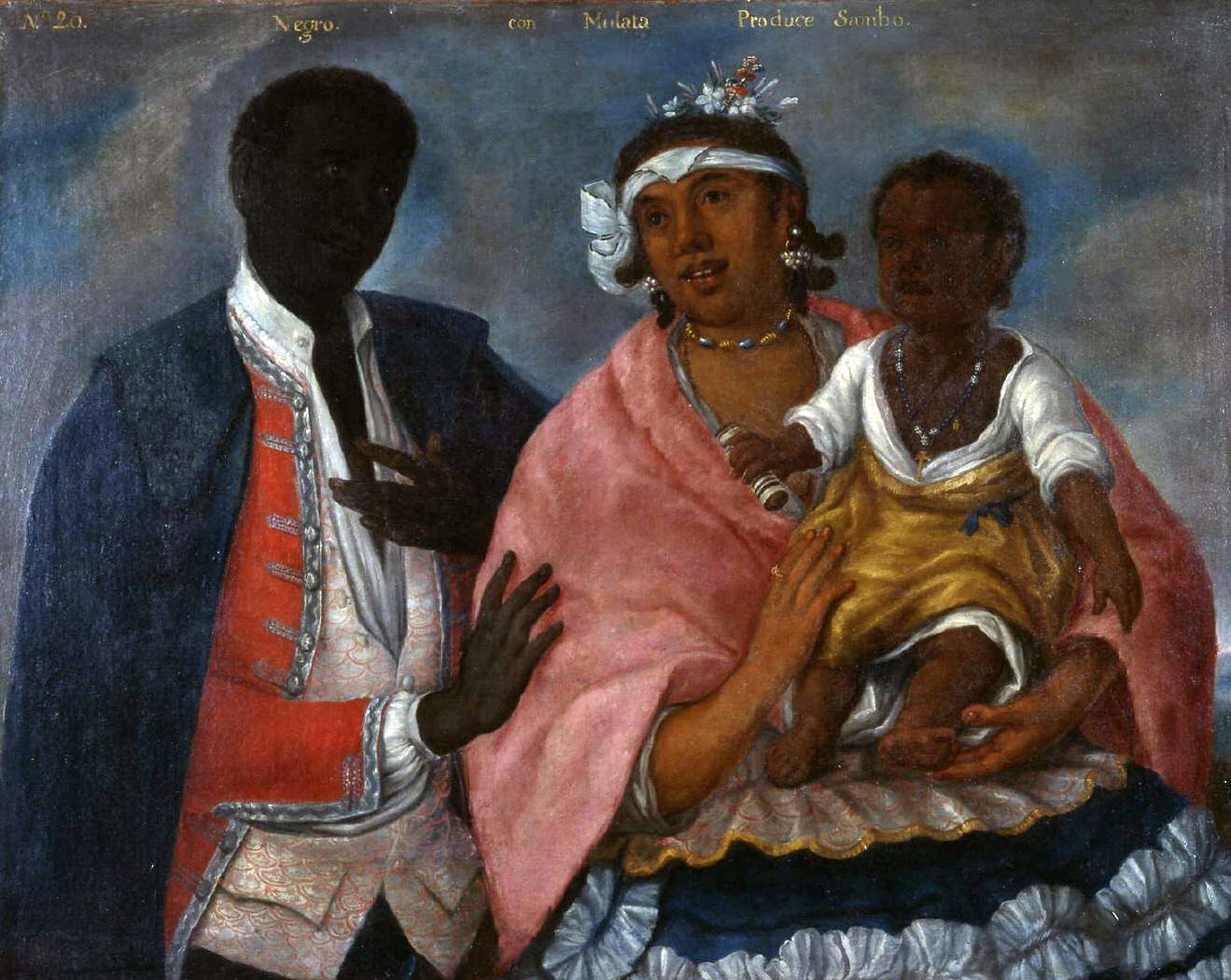
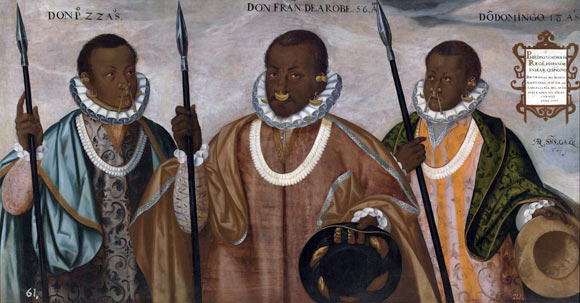
A free woman of African descent living in Querétaro, Mexico, Isabel de Olvera joined a relief expedition to the recently colonized province of New Mexico in 1600.  She would travel as a servant to a Spanish woman.  Little is known about Olvera, except for an extraordinary deposition she filed with the Querétaro alcalde (mayor), don Pedro Lorenzo de Castilla.  In front of three witnesses (a free black man, a mestiza woman, and a black slave woman), Isabel de Olvera dictated the following:

I am going on the expedition to New Mexico and have some reason to fear that I may be annoyed by some individual since I am a mulatta, and it is proper to protect my rights in such an eventuality by an affidavit showing that I am a free woman, unmarried and the legitimate daughter of Hernando, a Negro, and an Indian named Magdalena . . . . I therefore request your grace to accept this affidavit, which shows that I am free and not bound by marriage or slavery.  I request that a properly certified and signed copy be given to me in order to protect my rights, and that it carry full legal authority.  I demand justice.

Whether Isabel de Olvera’s deposition worked as a protector of her freedoms remains unknown to history.  However, the document somehow made its way into the Spanish colonial archives, memorializing its progenitor and her understandings of personal freedom for generations of historians. Olvera understood that her cherished freedom could be restricted in two realms of bondage: slavery and marriage.  In Querétaro, her freedoms were a matter of public knowledge.  As the three witnesses verified, Isabel de Olvera was an unmarried mulatta woman of free status.  Her future neighbors in the unknown north, however, might challenge those freedoms and Olvera’s status.  Yet, despite her fear that she might “be annoyed by some individual” on the expedition to New Mexico, she agreed to make the journey.  Perhaps she hoped to find increased freedoms in New Mexico, and not to remain long in the position of servant.

resources: www.blackpast.org

Timeline of Africans and Black Spaniards within the Spanish colonies:
http://www.blackpast.org/timelines/african-american-history-american-west-timeline

What is Modern Slavery?

Sunday, November 9, 2014

What is Modern Slavery?


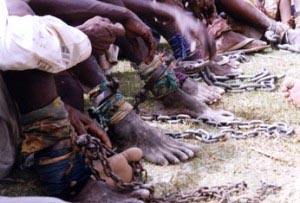
Over the past 15 years, “trafficking in persons” and “human trafficking” have been used as umbrella terms for activities involved when someone obtains or holds a person in compelled service. The United States government considers trafficking in persons to include all of the criminal conduct involved in forced labor and sex trafficking, essentially the conduct involved in reducing or holding someone in compelled service. Under the Trafficking Victims Protection Act as amended (TVPA) and consistent with the United Nations Protocol to Prevent, Suppress and Punish Trafficking in Persons, Especially Women and Children (Palermo Protocol), individuals may be trafficking victims regardless of whether they once consented, participated in a crime as a direct result of being trafficked, were transported into the exploitative situation, or were simply born into a state of servitude. Despite a term that seems to connote movement, at the heart of the phenomenon of trafficking in persons are the many forms of enslavement, not the activities involved in international transportation.

Slavery did not end with abolition in the 19th century. 
The practice still continues today in one form or another in every country in the world. From women forced into prostitution, children and adults forced to work in agriculture, domestic work, or factories and sweatshops producing goods for global supply chains, entire families forced to work for nothing to pay off generational debts; or girls forced to marry older men, the illegal practice still blights contemporary world. 

According to the International Labour Organisation (ILO) around 21 million men, women and children around the world are in a form of slavery.There are many different characteristics that distinguish slavery from other human rights violations, however only one needs to be present for slavery to exist. Someone is in slavery if they are: 

  • forced to work - through mental or physical threat;
  • owned or controlled by an 'employer', usually through mental or physical abuse or the threat of abuse;
  • dehumanised, treated as a commodity or bought and sold as 'property';
  • physically constrained or has restrictions placed on his/her freedom of movement.
Contemporary slavery takes various forms and affects people of all ages, gender and races.

WHAT FORMS OF SLAVERY EXIST TODAY?

Forced Labor

Also known as involuntary servitude, forced labor may result when unscrupulous employers exploit workers made more vulnerable by high rates of unemployment, poverty, crime, discrimination, corruption, political conflict, or even cultural acceptance of the practice. Immigrants are particularly vulnerable, but individuals also may be forced into labor in their own countries. Female victims of forced or bonded labor, especially women and girls in domestic servitude, are often sexually exploited as well.

Sex Trafficking

When an adult is coerced, forced, or deceived into prostitution – or maintained in prostitution through coercion – that person is a victim of trafficking. All of those involved in recruiting, transporting, harboring, receiving, or obtaining the person for that purpose have committed a trafficking crime. Sex trafficking can also occur within debt bondage, as women and girls are forced to continue in prostitution through the use of unlawful “debt” purportedly incurred through their transportation, recruitment, or even their crude “sale,” which exploiters insist they must pay off before they can be free. It is critical to understand that a person’s initial consent to participate in prostitution is not legally determinative; if an individual is thereafter held in service through psychological manipulation or physical force, that person is a trafficking victim and should receive the benefits outlined in the United Nations’ Palermo Protocol and applicable laws.

Bonded Labor

One form of coercion is the use of a bond, or debt. Often referred to as “bonded labor” or “debt bondage,” the practice has long been prohibited under U.S. law by its Spanish name, peonage, and the Palermo Protocol calls for its criminalization as a form of trafficking in persons. Workers around the world fall victim to debt bondage when traffickers or recruiters unlawfully exploit an initial debt the worker assumed as part of the terms of employment. Workers may also inherit intergenerational debt in more traditional systems of bonded labor.

Debt Bondage Among Migrant Laborers

Abuses of contracts and hazardous conditions of employment for migrant laborers do not necessarily constitute human trafficking. However, the burden of illegal costs and debts on these laborers in the source country, often with the support of labor agencies and employers in the destination country, can contribute to a situation of debt bondage. This is often exacerbated when the worker’s status in the country is tied to the employer in the context of employment-based temporary work programs and there is no effective redress for abuse.

Involuntary Domestic Servitude

A unique form of forced labor is the involuntary servitude of domestic workers, whose workplace is informal, connected to their off-duty living quarters, and not often shared with other workers. Such an environment, which often socially isolates domestic workers, is conducive to nonconsensual exploitation since authorities cannot inspect private property as easily as formal workplaces. Investigators and service providers report many cases of untreated illnesses and, tragically, widespread sexual abuse, which in some cases may be symptoms of a situation of involuntary servitude. Ongoing international efforts seek to ensure that not only that administrative remedies are enforced but also that criminal penalties are enacted against those who hold others in involuntary domestic servitude.

Forced Child Labor

Most international organizations and national laws recognize that children may legally engage in certain forms of work. There is a growing consensus, however, that the worst forms of child labor should be eradicated. The sale and trafficking of children and their entrapment in bonded and forced labor are among these worst forms of child labor. A child can be a victim of human trafficking regardless of the location of that exploitation. Indicators of forced labor of a child include situations in which the child appears to be in the custody of a non-family member who has the child perform work that financially benefits someone outside the child’s family and does not offer the child the option of leaving. Anti-trafficking responses should supplement, not replace, traditional actions against child labor, such as remediation and education. However, when children are enslaved, their abusers should not escape criminal punishment by virtue of longstanding patters of limited responses to child labor practices rather than more effective law enforcement action.

Child Soldiers

Child soldiering can be a manifestation of human trafficking where it involves the unlawful recruitment or use of children—through force, fraud, or coercion—as combatants, or for labor or sexual exploitation by armed forces. Perpetrators may be government forces, paramilitary organizations, or rebel groups. Many children are forcibly abducted to be used as combatants. Others are made unlawfully to work as porters, cooks, guards, servants, messengers, or spies. Young girls can be forced to marry or have sex with male combatants. Both male and female child soldiers are often sexually abused and are at high risk of contracting sexually transmitted diseases.

Child Sex Trafficking

According to UNICEF, as many as two million children are subjected to prostitution in the global commercial sex trade. International covenants and protocols obligate criminalization of the commercial sexual exploitation of children. The use of children in the commercial sex trade is prohibited under both U.S. law and the Palermo Protocol as well as by legislation in countries around the world. There can be no exceptions and no cultural or socioeconomic rationalizations preventing the rescue of children from sexual servitude. Sex trafficking has devastating consequences for minors, including long-lasting physical and psychological trauma, disease (including HIV/AIDS), drug addiction, unintended pregnancy, malnutrition, social ostracism, and death.

To educate yourself further about human trafficking, click here TIP 101 Training»

Columbus Day? True Legacy: Cruelty and Slavery

Thursday, October 9, 2014

Eric Kasum Headshot


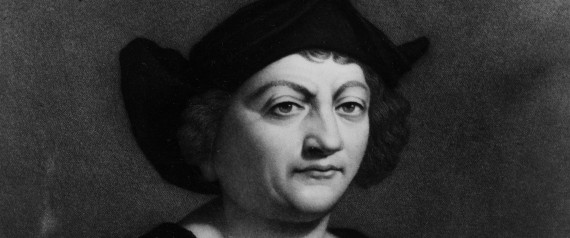
Once again, it's time to celebrate Columbus Day. Yet, the stunning truth is: If Christopher Columbus were alive today, he would be put on trial for crimes against humanity. Columbus' reign of terror, as documented by noted historians, was so bloody, his legacy so unspeakably cruel, that Columbus makes a modern villain like Saddam Hussein look like a pale codfish.
Question: Why do we honor a man who, if he were alive today, would almost certainly be sitting on Death Row awaiting execution?
If you'd like to know the true story about Christopher Columbus, please read on. But I warn you, it's not for the faint of heart.
Here's the basics. On the second Monday in October each year, we celebrate Columbus Day (this year, it's on October 11th). We teach our school kids a cute little song that goes: "In 1492, Columbus sailed the ocean blue." It's an American tradition, as American as pizza pie. Or is it? Surprisingly, the true story of Christopher Columbus has very little in common with the myth we all learned in school.
Columbus Day, as we know it in the United States, was invented by the Knights of Columbus, a Catholic fraternal service organization. Back in the 1930s, they were looking for a Catholic hero as a role-model their kids could look up to. In 1934, as a result of lobbying by the Knights of Columbus, Congress and President Franklin Roosevelt signed Columbus Day into law as a federal holiday to honor this courageous explorer. Or so we thought.
There are several problems with this. First of all, Columbus wasn't the first European to discover America. As we all know, the Viking, Leif Ericson probably founded a Norse village on Newfoundland some 500 years earlier. So, hat's off to Leif. But if you think about it, the whole concept of discovering America is, well, arrogant. After all, the Native Americans discovered North America about 14,000 years before Columbus was even born! Surprisingly, DNA evidence now suggests that courageous Polynesian adventurers sailed dugout canoes across the Pacific and settled in South America long before the Vikings.
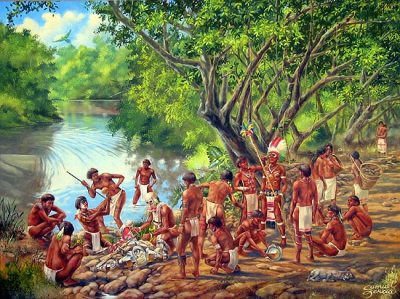
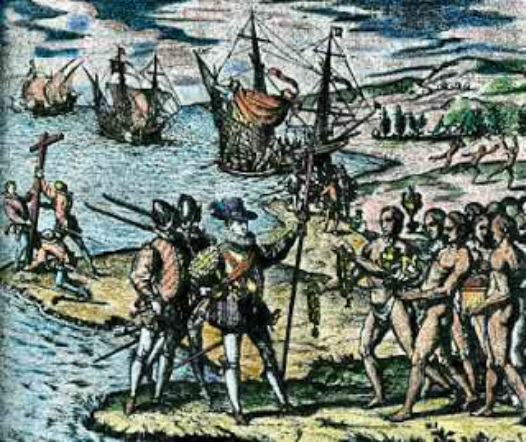
Second, Columbus wasn't a hero. When he set foot on that sandy beach in the Bahamas on October 12, 1492, Columbus discovered that the islands were inhabited by friendly, peaceful people called the Lucayans, Taínos and Arawaks. Writing in his diary, Columbus said they were a handsome, smart and kind people. He noted that the gentle Arawaks were remarkable for their hospitality. "They offered to share with anyone and when you ask for something, they never say no," he said. The Arawaks had no weapons; their society had neither criminals, prisons nor prisoners. They were so kind-hearted that Columbus noted in his diary that on the day the Santa Maria was shipwrecked, the Arawaks labored for hours to save his crew and cargo. The native people were so honest that not one thing was missing.
Columbus was so impressed with the hard work of these gentle islanders, that he immediately seized their land for Spain and enslaved them to work in his brutal gold mines. Within only two years, 125,000 (half of the population) of the original natives on the island were dead.
If I were a Native American, I would mark October 12, 1492, as a black day on my calendar.
Shockingly, Columbus supervised the selling of native girls into sexual slavery. Young girls of the ages 9 to 10 were the most desired by his men. In 1500, Columbus casually wrote about it in his log. He said: "A hundred castellanoes are as easily obtained for a woman as for a farm, and it is very general and there are plenty of dealers who go about looking for girls; those from nine to ten are now in demand."
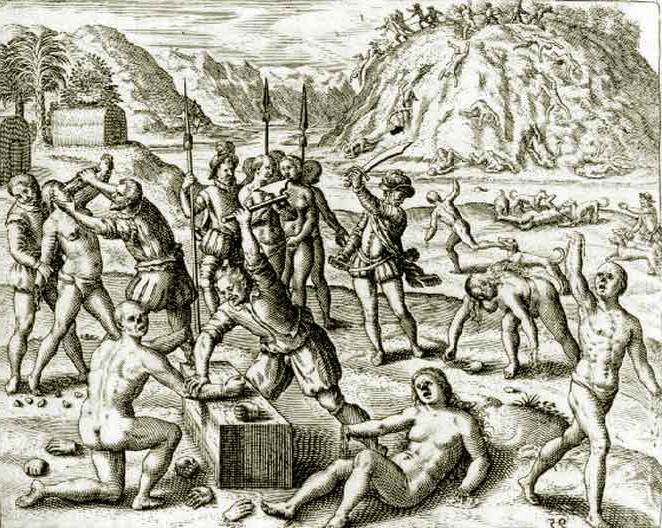
He forced these peaceful natives work in his gold mines until they died of exhaustion. If an "Indian" worker did not deliver his full quota of gold dust by Columbus' deadline, soldiers would cut off the man's hands and tie them around his neck to send a message. Slavery was so intolerable for these sweet, gentle island people that at one point, 100 of them committed mass suicide. Catholic law forbade the enslavement of Christians, but Columbus solved this problem. He simply refused to baptize the native people of Hispaniola.
On his second trip to the New World, Columbus brought cannons and attack dogs. If a native resisted slavery, he would cut off a nose or an ear. If slaves tried to escape, Columbus had them burned alive. Other times, he sent attack dogs to hunt them down, and the dogs would tear off the arms and legs of the screaming natives while they were still alive. If the Spaniards ran short of meat to feed the dogs, Arawak babies were killed for dog food.
Columbus' acts of cruelty were so unspeakable and so legendary - even in his own day - that Governor Francisco De Bobadilla arrested Columbus and his two brothers, slapped them into chains, and shipped them off to Spain to answer for their crimes against the Arawaks. But the King and Queen of Spain, their treasury filling up with gold, pardoned Columbus and let him go free.
One of Columbus' men, Bartolome De Las Casas, was so mortified by Columbus' brutal atrocities against the native peoples, that he quit working for Columbus and became a Catholic priest. He described how the Spaniards under Columbus' command cut off the legs of children who ran from them, to test the sharpness of their blades. According to De Las Casas, the men made bets as to who, with one sweep of his sword, could cut a person in half. He says that Columbus' men poured people full of boiling soap. In a single day, De Las Casas was an eye witness as the Spanish soldiers dismembered, beheaded, or raped 3000 native people. "Such inhumanities and barbarisms were committed in my sight as no age can parallel," De Las Casas wrote. "My eyes have seen these acts so foreign to human nature that now I tremble as I write."
De Las Casas spent the rest of his life trying to protect the helpless native people. But after a while, there were no more natives to protect. Experts generally agree that before 1492, the population on the island of Hispaniola probably numbered above 3 million. Within 20 years of Spanish arrival, it was reduced to only 60,000. Within 50 years, not a single original native inhabitant could be found.
In 1516, Spanish historian Peter Martyr wrote: "... a ship without compass, chart, or guide, but only following the trail of dead Indians who had been thrown from the ships could find its way from the Bahamas to Hispaniola."
Christopher Columbus derived most of his income from slavery, De Las Casas noted. In fact, Columbus was the first slave trader in the Americas. As the native slaves died off, they were replaced with black slaves. Columbus' son became the first African slave trader in 1505.
Are you surprised you never learned about any of this in school? I am too. Why do we have this extraordinary gap in our American ethos? Columbus himself kept detailed diaries, as did some of his men including De Las Casas and Michele de Cuneo. (If you don't believe me, just Google the words Columbus, sex slave, and gold mine.)
Columbus' reign of terror is one of the darkest chapters in our history. The REAL question is: Why do we celebrate a holiday in honor of this man? (Take three deep breaths. If you're like me, your stomach is heaving at this point. I'm sorry. Sometimes the truth hurts. That said, I'd like to turn in a more positive direction.)
Call me crazy, but I think holidays ought to honor people who are worthy of our admiration, true heroes who are positive role models for our children. If we're looking for heroes we can truly admire, I'd like to offer a few candidates. Foremost among them are school kids.
Let me tell you about some school kids who are changing the world. I think they are worthy of a holiday. My friend Nan Peterson is the director of the Blake School, a K-12 school in Minnesota. She recently visited Kenya. Nan says there are 33 million people in Kenya... and 11 million of them are orphans! Can you imagine that? She went to Kibera, the slum outside Nairobi, and a boy walked up to her and handed her a baby. He said: My father died. My mother died... and I'm not feeling so good myself. Here, take my sister. If I die, they will throw her into the street to die.
There are so many orphans in Kenya, the baby girls are throwaways!
Nan visited an orphanage for girls. The girls were starving to death. They had one old cow that only gave one cup of milk a day. So each girl only got ONE TEASPOON of milk a day!
After this heartbreaking experience, Nan went home to her school in Minnesota and asked the kids... what can we do? The kids got the idea to make homemade paper and sell it to buy a cow. So they made a bunch of paper, and sold the paper, and when they were done they had enough money to buy... FOUR COWS! And enough food to feed all of the cows for ONE FULL YEAR! These are kids... from 6 years old to 18... saving the lives of kids halfway around the world. And I thought: If a 6-year-old could do that... what could I do?
At Casady School in Oklahoma City, Oklahoma, seemingly "average" school kids raised $20,000 to dig clean water wells for children in Ethiopia. These kids are heroes. Why don't we celebrate "Kids Who Are Changing the Planet" Day?
Let me ask you a question: Would we celebrate Columbus Day if the story of Christopher Columbus were told from the point-of-view of his victims? No way!
The truth about Columbus is going to be a hard pill for some folks to swallow. Please, don't think I'm picking on Catholics. All the Catholics I know are wonderful people. I don't want to take away their holiday or their hero. But if we're looking for a Catholic our kids can admire, the Catholic church has many, many amazing people we could name a holiday after. How about Mother Teresa day? Or St. Francis of Assisi day? Or Betty Williams day (another Catholic Nobel Peace Prize winner). These men and women are truly heroes of peace, not just for Catholics, but for all of us.
Let's come clean. Let's tell the truth about Christopher Columbus. Let's boycott this outrageous holiday because it honors a mass murderer. If we skip the cute song about "In 1492 Columbus sailed the ocean blue," I don't think our first graders will miss it much, do you? True, Columbus' brutal treatment of peaceful Native Americans was so horrific... maybe we should hide the truth about Columbus until our kids reach at least High School age. Let's teach it to them about the same time we tell them about the Nazi death camps.
While we're at it, let's rewrite our history books. From now on, instead of glorifying the exploits of mass murderers like Alexander the Great, Julius Caesar, Genghis Khan, and Napoleon Bonaparte, let's teach our kids about true heroes, men and women of courage and kindness who devoted their lives to the good of others. There's a long list, starting with Florence Nightingale, Mahatma Gandhi, Rev. Martin Luther King, and John F. Kennedy.
These people were not adventurers who "discovered" an island in the Caribbean. They were noble souls who discovered what is best in the human spirit.
Why don't we create a holiday to replace Columbus Day?