Showing posts with label Halloween. Show all posts

History Behind Friday the 13th

Friday, July 13, 2018


Long considered a harbinger of bad luck, Friday the 13th has inspired a late 19th-century secret society, an early 20th-century novel, a horror film franchise and not one but two unwieldy terms—paraskavedekatriaphobia and friggatriskaidekaphobia—that describe fear of this supposedly unlucky day.

THE FEAR OF 13

Just like walking under a ladder, crossing paths with a black cat or breaking a mirror, many people hold fast to the belief that Friday the 13th brings bad luck. Though it’s uncertain exactly when this particular tradition began, negative superstitions have swirled around the number 13 for centuries.

While Western cultures have historically associated the number 12 with completeness (there are 12 days of Christmas, 12 months and zodiac signs, 12 labors of Hercules, 12 gods of Olympus and 12 tribes of Israel, just to name a few examples), its successor 13 has a long history as a sign of bad luck.

The ancient Code of Hammurabi, for example, reportedly omitted a 13th law from its list of legal rules. Though this was probably a clerical error, superstitious people sometimes point to this as proof of 13’s longstanding negative associations.

Fear of the number 13 has even earned a psychological term: triskaidekaphobia.
WHY IS FRIDAY THE 13TH UNLUCKY?

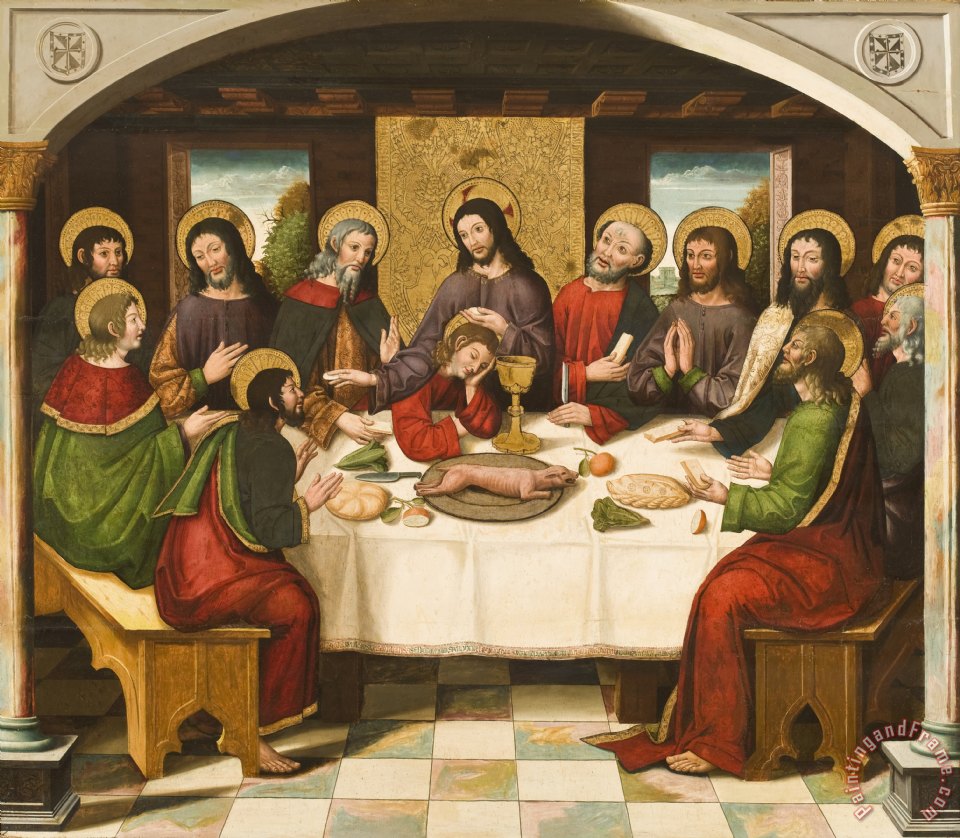
According to biblical tradition, 13 guests attended the Last Supper, held on Maundy Thursday, including Jesus and his 12 apostles (one of whom, Judas, betrayed him). The next day, of course, was Good Friday, the day of Jesus’ crucifixion.

The seating arrangement at the Last Supper is believed to have given rise to a longstanding Christian superstition that having 13 guests at a table was a bad omen—specifically, that it was courting death.

Though Friday’s negative associations are weaker, some have suggested they also have roots in Christian tradition: Just as Jesus was crucified on a Friday, Friday was also said to be the day Eve gave Adam the fateful apple from the Tree of Knowledge, as well as the day Cain killed his brother, Abel.

THE THIRTEEN CLUB

In the late-19th century, a New Yorker named Captain William Fowler (1827-1897) sought to remove the enduring stigma surrounding the number 13—and particularly the unwritten rule about not having 13 guests at a dinner table—by founding an exclusive society called the Thirteen Club.

The group dined regularly on the 13th day of the month in room 13 of the Knickerbocker Cottage, a popular watering hole Fowler owned from 1863 to 1883. Before sitting down for a 13-course dinner, members would pass beneath a ladder and a banner reading “Morituri te Salutamus,” Latin for “Those of us who are about to die salute you.”

Four former U.S. presidents (Chester A. Arthur, Grover Cleveland, Benjamin Harrison and Theodore Roosevelt) would join the Thirteen Club’s ranks at one time or another.
FRIDAY THE 13TH IN POP CULTURE

An important milestone in the history of the Friday the 13th legend in particular (not just the number 13) occurred in 1907, with the publication of the novel Friday, the Thirteenth written by Thomas William Lawson.

The book told the story of a New York City stockbroker who plays on superstitions about the date to create chaos on Wall Street, and make a killing on the market.

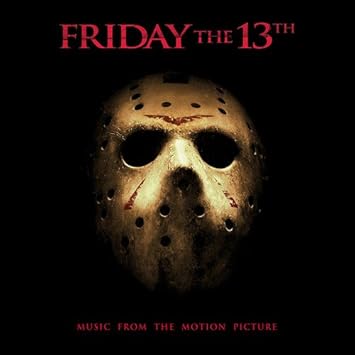
The horror movie Friday the 13th, released in 1980, introduced the world to a hockey mask-wearing killer named Jason, and is perhaps the best-known example of the famous superstition in pop culture history. The movie spawned multiple sequels, as well as comic books, novellas, video games, related merchandise and countless terrifying Halloween costumes.

WHAT BAD THINGS HAPPENED ON FRIDAY 13TH?

On Friday, October 13, 1307, officers of King Philip IV of France arrested hundreds of the Knights Templar, a powerful religious and military order formed in the 12th century for the defense of the Holy Land.

Imprisoned on charges of various illegal behaviors (but really because the king wanted access to their financial resources), many Templars were later executed. Some cite the link with the Templars as the origin of the Friday the 13th superstition, but like many legends involving the Templars and their history, the truth remains murky.

In more recent times, a number of traumatic events have occurred on Friday the 13th, including:

1.) the German bombing of Buckingham Palace (September 1940)
2.) the murder of Kitty Genovese in Queens, New York (March 1964)
3.) a cyclone that killed more than 300,000 people in Bangladesh (November 1970)
4.) the disappearance of a Chilean Air Force plane in the Andes (October 1972)
5.) the death of rapper Tupac Shakur (September 1996)
6.) the crash of the Costa Concordia cruise ship off the coast of Italy, which killed 30 people (January 2012)

Reprinted: history.com
SOURCES
“The Origins of Unlucky Friday the 13th,” Live Science.
“Friday the 13th: why is it unlucky and other facts about the worst day in the calendar,” The Telegraph.
“13 Freaky Things That Happened on Friday the 13th,” Live Science.
“Here’s Why Friday the 13th is Considered Unlucky,” Time.
“Friggatriskaidekaphobes Need Not Apply,” New-York Historical Society.

20 Freaky Historical Facts: So very Halloweenish!

Sunday, October 2, 2016

1.) Some chapels buried thousands of bodies in their floorboards. Instead of a separate cemetery, bodies used to be buried in churchyards, which in the olden days was profitable for churches. Since there was a finite amount of space in the yard, some churches buried corpses under their floors - one London chapel had 12,000 bodies in it.

2.) The Spanish Donkey was one of the worst tortures ever. During the Spanish Inquisition, this device would be used for torture and eventual death. The person would be placed on a triangular log and weights attached to their feet. They would be pulled downward by the weights as the sharp edge of the log slowly sliced them in half.

3.) 17th century rich people ate human flesh. They thought that consuming flesh, drinking human blood, and even rubbing human fat on the outside of the skin could cure any number of diseases.

4.) Human skulls were used by ancient civilizations as cups. Many ancient cultures hollowed out the skulls of their slain enemies and made them into drinking cups, with the earliest ones dating to about 14,000 years ago in what is now England.

5.) The Victorians made "memorial jewelry" - out of parts of their dead loved ones. To remember their lost family and friends, some Victorians had jewelry made out of parts of their loved ones' bodies, including teeth, hair, and bone. This brooch was made with a pretty knot made of hair.

6.) If someone died abroad in the Middle Ages, they might have been boiled so that their bones could be shipped home. Before modern embalming, it was difficult (and smelly) to transport a body back home if someone died far away. In the Middle Ages, some people chose to have their corpse cut into pieces and boiled. That way, the rotting flesh could be buried in the place the person passed on, but their bones could be easily shipped back to their ancestral burial ground.

7.) It was popular in France for royal women to give birth in front of a crowd. Marie Antoinette had such a large audience that she was almost crushed by the throng of people who tried to fit into her room at Versailles when she was giving birth.

8.) Dentures used to be made of the teeth of fallen soldiers. The teeth would be removed from the bodies, then placed in artificial gums for use by living people.

9.) In England, suicide victims were buried at crossroads to keep them from haunting towns. People in medieval England thought that burying people who'd committed suicide - which was a very serious crime - at a crossroads would confuse the restless soul and prevent them from coming "home" in spirit form.

10.) A guy wrote a book about a ship called the Titan crashing into an iceberg - fourteen years BEFORE the Titanic sank. Morgan Robertson's 1898 book tells the story of a British ship called the Titan, which was deemed to be unsinkable, that hit an iceberg and sank, killing many of the passengers because there weren't enough lifeboats. In 1912, the Titanic sank in almost the same manner.

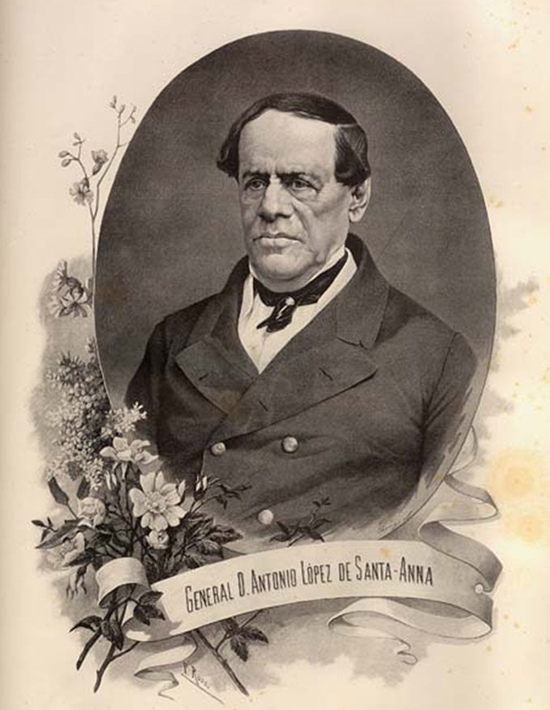
11.) General Antonio Lopez de Santa Anna ordered a full military funeral in 1838...for his leg. The Mexican leader lost his left leg when it was hit by a cannon, and had a funeral - with full military honors - for it when it was buried.

12.) Hungarian countess Elizabeth Bathory is considered the most prolific female serial killer in history. Four hundred years ago today, in August 1614, the notorious 54-year-old royal died under house arrest in Čachtice Castle in modern-day Slovakia, having been implicated in as many as 650 deaths — mostly peasant girls and servants. Elizabeth was prone to fits of rage and seizures, and it appears that mental illness — possibly the result of years of inbreeding — was common in her extended family. The torture and murder was done largely for Báthory’s pleasure, and some scholars believe she was a sexual sadist in addition to a psychopath. Báthory and her accomplices terrorized the surrounding countryside for years with impunity. And it was not until her bloodlust crept up the social ladder, and the daughters of nobles went missing, that her fellow royals started to pay attention to the dark rumors surrounding the countess. Just after Christmas in 1610, Báthory’s castle was raided by the local authorities, who were horrified to discover dead and dying maidens strewn across the courtyard and basement. The countess’s collaborators were imprisoned, put on trial, and themselves tortured and executed. Báthory herself was never tried or convicted — perhaps to spare her family the embarrassment — but she was placed under house arrest in a tower room within Čachtice Castle where she died less than four years later.

13.) Sultan Ibrahim I of the Ottoman Empire once drowned 280 of his concubines. The reason? One of them had slept with another man.

14.) The first major syphilis outbreak made people look like gross zombies. In 1494, Florence, Italy had a big syphilis outbreak, and before antibiotics, you just sort of had to...deal. With syphilis, that meant that parts of your face would literally be falling off, and you'd just have sores all over your body.

15.) When Mount Vesuvius went off, it actually exploded people's heads. The city of Herculaneum was hit not by magma or ash when Vesuvius went off, but by a superheated cloud of gas with temperatures up to 1000 degrees Fahrenheit. This meant that people's heads got really hot, really fast. Since the liquid in your head has nowhere to go because of your skull...their heads legit exploded.

16.) The first recorded serial killer in history was a woman. Nowadays, most of the major serial killers (that we know about, anyway) are men. But back in Roman times, there was a serial killer named Locusta who liked poisoning people. A lot. Fortunately for her, Emperor Nero sometimes needed people killed, so instead of punishing her for being a murderer, he pardoned her and asked her to help him out.

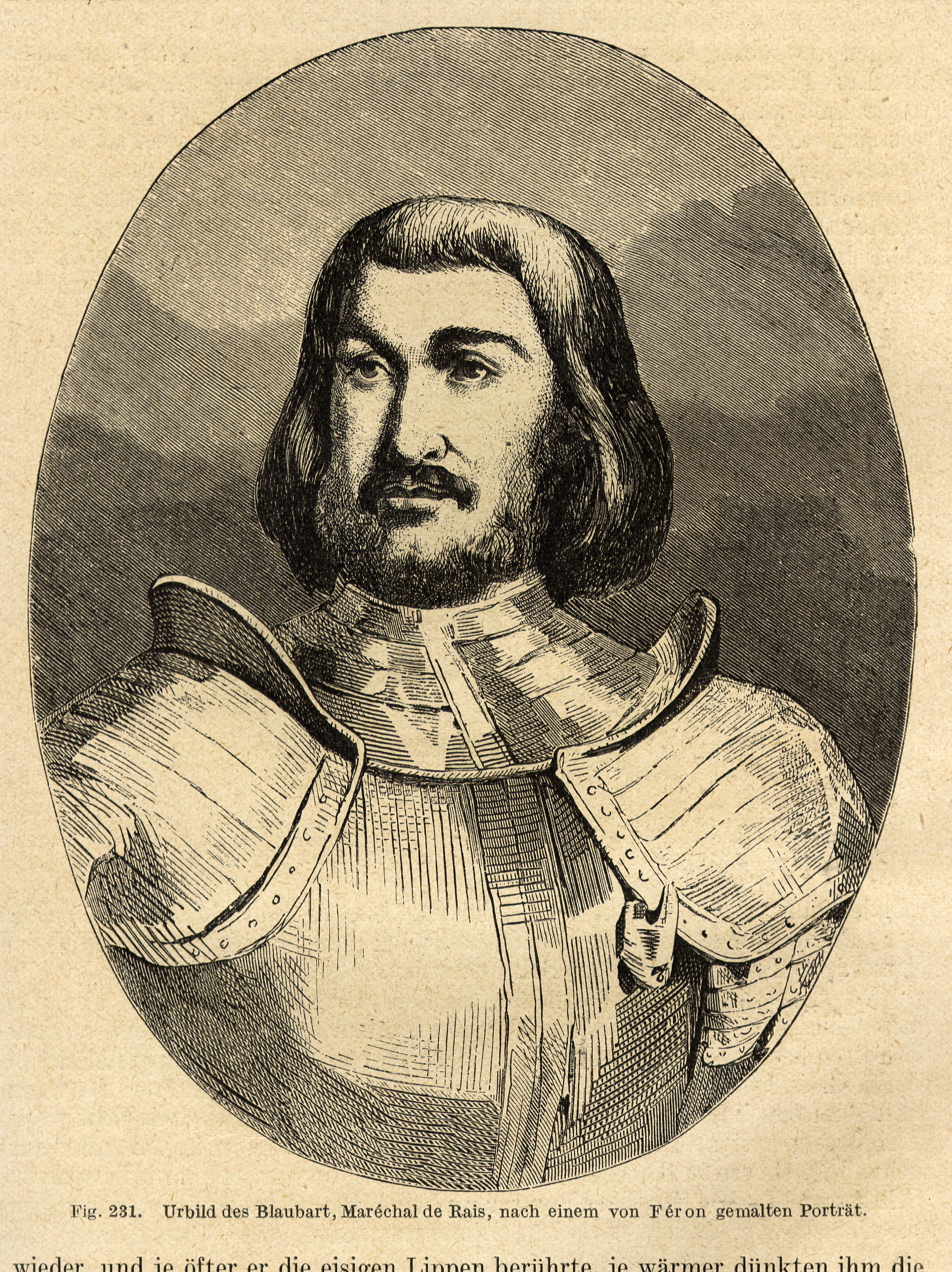
17.) One of Joan of Arc's most ardent supporters was a serial child killer. Joan of Arc was amazing, obviously, but she had help in the French Army, including Gilles de Rais, a knight. He fought bravely for France... and also killed anywhere between 80 and 800 children in horrifyingly brutal ways.

18.) James Smithson, the founder of the Smithsonian Institution, is buried there. Employees have said they've seen Smithson's ghost wandering the halls of the famed Washington, D.C. museum, to the point where in 1973, the institute did a study of Smithson's casket and remains to make sure everything was a-OK.

19.) In 1892, two soldiers stationed at the fort that used to occupy Liberty Island tried to dig up some treasure they'd heard was buried nearby. When they got to the box, a demon appeared to them, most likely the spirit of Captain Kidd, a pirate who liked to bury his treasure there.Liberty Island used to be a haven for pirates... and might be haunted by one.

20.) The Romanians believed redheads with blue eyes were vampires. Redheads were believed to be a specific kind of vampire called strigoi, who were able to send their spirits out at night to meet other strigoi.

Best Halloween Books For Adults

Sunday, October 26, 2014

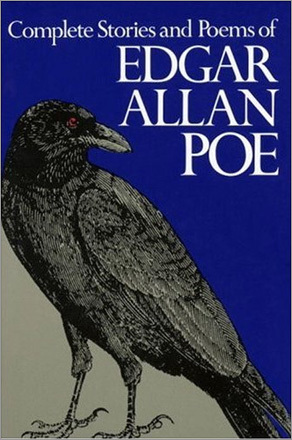
Complete Stories and Poems of Edgar Allan Poe
This collection from the all-time master of the macabre contains Poe’s dark poem “The Raven,” a Halloween classic about a gloomy man’s bizarre encounter with an “ebony bird.” You can also read heart-stopping horror stories such as “The Pit and the Pendulum,” “The Black Cat,” and “The Tell-tale Heart.” In this last story, the unnamed narrator murders an old man simply because “he had the eye of a vulture.” In Poe’s autumnal world, every night seems dark and gloomy and his many stories reflect a morbid sensibility that’s frightening any day of the year, especially on Halloween.


Heart-Shaped Box by Joe Hill
The son of legendary horror-master Stephen King, Hill has written a ghost novel that will keep your heart pounding past midnight. Over-the-hill rock star Jude Coyne is obsessed with the occult. He goes online to buy a suit advertised as being haunted by the dead owner's ghost. After the suit arrives in a heart-shaped box, so does the suit's spooky owner. Hill keeps up a breathtaking pace as Jude and the ghost fight an epic battle. Jude can run but can’t hide: "The ghosts always caught up eventually,” Jude realizes, “and there was no way to lock the door on them."


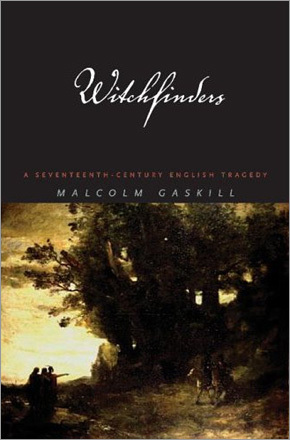
Witchfinders: A Seventeenth-Century English Tragedy by Matthew Gaskill
Historian Gaskill chronicles a chilling, real-life example of witch hysteria that occurred in England a half-century before the infamous Salem Witch Trials. Between 1645 and 1647, two “witchfinders” named Matthew Hopkins and John Stearne roamed the English countryside in a campaign to eradicate witchcraft, interrogating some 300 suspected witches (often using torture). Gaskill explores how and why it all happened. When the two witchfinders were done, more than a hundred “witches” had been executed.


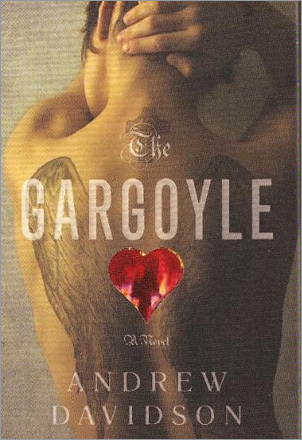
The Gargoyle by Andrew Davidson
A page-turner of a novel that mixes the occult, medieval symbolism, and Christian allegory to tell a story of love and adventure across six centuries. The book begins with the unnamed narrator in a fiery car crash. Hospitalized, he’s visited by a woman who claims she’s loved him since the 14th century. For all his faults as a prose stylist, Davidson understands how to build narrative tension, how to combine fantasy elements with realistic details, and how to keep readers engrossed.


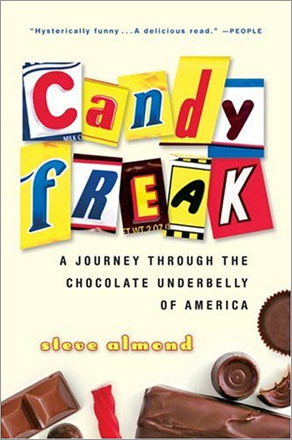
Candy Freak: A Journey Through the Chocolate Underbelly of America by Steve Almond
For local author Steve Almond, it’s Halloween all year round. To say that Almond likes candy is an understatement. The hilariously candy-obsessed Almond “has between three and seven pounds of candy in his house at all times," he admits. Not only does he humorously explore his own candy fixation, but Almond journeys to the places where his favorite candy is produced, and visits with “chocolate engineers” who explain candy’s allure. Almond’s book is delicious fun, like a Halloween bagful of treats.


Salem Witch by Patricia Hermes
It is colonial Massachusetts in 1692, right in the middle of Salem’s infamous witch hysteria. Hermes offers us two different sides of these dramatic events, one from a young woman named Elizabeth who confronts accusations of witchcraft and one from George, the son of a judge overseeing the witch trials. As these two young people try to understand what’s happening, readers get a fresh perspective on a community in crisis. The book’s unique format allows readers the opportunity to read Elizabeth's side of the story first and then flip the book over to read George's.


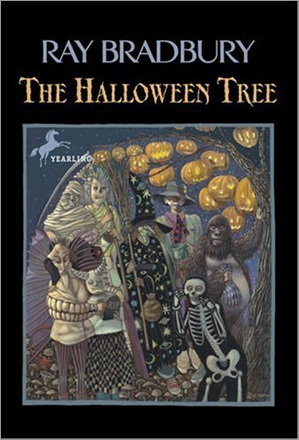
The Halloween Tree by Ray Bradbury
A legendary sci-fi writer, Bradbury (“The Martian Chronicles”) offers the story of eight boys who set out on a Halloween night of trick-or-treating only to be led into the depths of the past by a tall, mysterious character named Moundshroud.  During their time travels, the boys visit distant lands and observe how Halloween has been celebrated around the world, from ancient Egypt to the Roman Empire to Aztec Mexico. Bradbury, as always, moves his story along at a fast pace, allowing readers to discover how the rituals and symbols of Halloween have developed over history.


15 Interesting facts about Halloween


Read more at http://thechive.com/2013/09/19/30-interesting-facts-about-halloween-30-photos/#CPsIugcGCHtc6zGj.99