What is Modern Slavery?

Sunday, November 9, 2014

What is Modern Slavery?


Over the past 15 years, “trafficking in persons” and “human trafficking” have been used as umbrella terms for activities involved when someone obtains or holds a person in compelled service. The United States government considers trafficking in persons to include all of the criminal conduct involved in forced labor and sex trafficking, essentially the conduct involved in reducing or holding someone in compelled service. Under the Trafficking Victims Protection Act as amended (TVPA) and consistent with the United Nations Protocol to Prevent, Suppress and Punish Trafficking in Persons, Especially Women and Children (Palermo Protocol), individuals may be trafficking victims regardless of whether they once consented, participated in a crime as a direct result of being trafficked, were transported into the exploitative situation, or were simply born into a state of servitude. Despite a term that seems to connote movement, at the heart of the phenomenon of trafficking in persons are the many forms of enslavement, not the activities involved in international transportation.

Slavery did not end with abolition in the 19th century. 
The practice still continues today in one form or another in every country in the world. From women forced into prostitution, children and adults forced to work in agriculture, domestic work, or factories and sweatshops producing goods for global supply chains, entire families forced to work for nothing to pay off generational debts; or girls forced to marry older men, the illegal practice still blights contemporary world. 

According to the International Labour Organisation (ILO) around 21 million men, women and children around the world are in a form of slavery.There are many different characteristics that distinguish slavery from other human rights violations, however only one needs to be present for slavery to exist. Someone is in slavery if they are: 

  • forced to work - through mental or physical threat;
  • owned or controlled by an 'employer', usually through mental or physical abuse or the threat of abuse;
  • dehumanised, treated as a commodity or bought and sold as 'property';
  • physically constrained or has restrictions placed on his/her freedom of movement.
Contemporary slavery takes various forms and affects people of all ages, gender and races.

WHAT FORMS OF SLAVERY EXIST TODAY?

Forced Labor

Also known as involuntary servitude, forced labor may result when unscrupulous employers exploit workers made more vulnerable by high rates of unemployment, poverty, crime, discrimination, corruption, political conflict, or even cultural acceptance of the practice. Immigrants are particularly vulnerable, but individuals also may be forced into labor in their own countries. Female victims of forced or bonded labor, especially women and girls in domestic servitude, are often sexually exploited as well.

Sex Trafficking

When an adult is coerced, forced, or deceived into prostitution – or maintained in prostitution through coercion – that person is a victim of trafficking. All of those involved in recruiting, transporting, harboring, receiving, or obtaining the person for that purpose have committed a trafficking crime. Sex trafficking can also occur within debt bondage, as women and girls are forced to continue in prostitution through the use of unlawful “debt” purportedly incurred through their transportation, recruitment, or even their crude “sale,” which exploiters insist they must pay off before they can be free. It is critical to understand that a person’s initial consent to participate in prostitution is not legally determinative; if an individual is thereafter held in service through psychological manipulation or physical force, that person is a trafficking victim and should receive the benefits outlined in the United Nations’ Palermo Protocol and applicable laws.
Bonded Labor

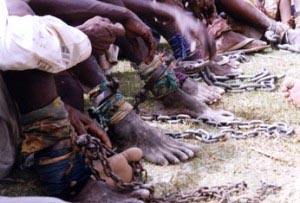
One form of coercion is the use of a bond, or debt. Often referred to as “bonded labor” or “debt bondage,” the practice has long been prohibited under U.S. law by its Spanish name, peonage, and the Palermo Protocol calls for its criminalization as a form of trafficking in persons. Workers around the world fall victim to debt bondage when traffickers or recruiters unlawfully exploit an initial debt the worker assumed as part of the terms of employment. Workers may also inherit intergenerational debt in more traditional systems of bonded labor.

Debt Bondage Among Migrant Laborers

Abuses of contracts and hazardous conditions of employment for migrant laborers do not necessarily constitute human trafficking. However, the burden of illegal costs and debts on these laborers in the source country, often with the support of labor agencies and employers in the destination country, can contribute to a situation of debt bondage. This is often exacerbated when the worker’s status in the country is tied to the employer in the context of employment-based temporary work programs and there is no effective redress for abuse.

Involuntary Domestic Servitude

A unique form of forced labor is the involuntary servitude of domestic workers, whose workplace is informal, connected to their off-duty living quarters, and not often shared with other workers. Such an environment, which often socially isolates domestic workers, is conducive to nonconsensual exploitation since authorities cannot inspect private property as easily as formal workplaces. Investigators and service providers report many cases of untreated illnesses and, tragically, widespread sexual abuse, which in some cases may be symptoms of a situation of involuntary servitude. Ongoing international efforts seek to ensure that not only that administrative remedies are enforced but also that criminal penalties are enacted against those who hold others in involuntary domestic servitude.

Forced Child Labor

Most international organizations and national laws recognize that children may legally engage in certain forms of work. There is a growing consensus, however, that the worst forms of child labor should be eradicated. The sale and trafficking of children and their entrapment in bonded and forced labor are among these worst forms of child labor. A child can be a victim of human trafficking regardless of the location of that exploitation. Indicators of forced labor of a child include situations in which the child appears to be in the custody of a non-family member who has the child perform work that financially benefits someone outside the child’s family and does not offer the child the option of leaving. Anti-trafficking responses should supplement, not replace, traditional actions against child labor, such as remediation and education. However, when children are enslaved, their abusers should not escape criminal punishment by virtue of longstanding patters of limited responses to child labor practices rather than more effective law enforcement action.

Child Soldiers

Child soldiering can be a manifestation of human trafficking where it involves the unlawful recruitment or use of children—through force, fraud, or coercion—as combatants, or for labor or sexual exploitation by armed forces. Perpetrators may be government forces, paramilitary organizations, or rebel groups. Many children are forcibly abducted to be used as combatants. Others are made unlawfully to work as porters, cooks, guards, servants, messengers, or spies. Young girls can be forced to marry or have sex with male combatants. Both male and female child soldiers are often sexually abused and are at high risk of contracting sexually transmitted diseases.

Child Sex Trafficking

According to UNICEF, as many as two million children are subjected to prostitution in the global commercial sex trade. International covenants and protocols obligate criminalization of the commercial sexual exploitation of children. The use of children in the commercial sex trade is prohibited under both U.S. law and the Palermo Protocol as well as by legislation in countries around the world. There can be no exceptions and no cultural or socioeconomic rationalizations preventing the rescue of children from sexual servitude. Sex trafficking has devastating consequences for minors, including long-lasting physical and psychological trauma, disease (including HIV/AIDS), drug addiction, unintended pregnancy, malnutrition, social ostracism, and death.

To educate yourself further about human trafficking, click here TIP 101 Training»

15 Medieval Hygiene Practices That Might Make You Queasy

Friday, November 7, 2014

By Megan Senseney
Chamber Pots
Chamber pots were containers for collecting urine overnight. Back in old Edinburgh, you always have to be alert for the shout of 'garde loo,' which is French for 'watch out for the water.' If you're not quick enough, you could find yourself being showered with the contents of chamber pots hurled from tenement windows.


Privies and Garderobe
In Tudor houses, toilets were a bowl with a slab of wood and a hole carved at the top. Builders set the toilet into a recess or cupboard-like area called a garderobe.  In castles, a slab of wood covers a hole in the floor that took waste products straight into the moat. Poor people didn't have the luxury of toilets, so they simply relieved themselves wherever they could and just buried the waste matter.

Leaves or Moss as Toilet Paper

Neither rich nor poor people had toilet paper. Poor people used leaves or moss to wipe their bottoms while the rich used lamb's wool instead. Kings had a royal bum wiper known as the 'Groom of the Stool.' 

Cesspits
Since the sewage system back then was not yet proper, people had to make do with burying much of their waste material in a cesspit in their cellar or garden.  People should have emptied these cesspits regularly, but only a few of them did. The stench was overwhelming especially during summer and winter.


Ceruse Lead Makeup Poisoned People

Ceruse was the foundation make-up choice for both men and women as it gave them a smooth, pale look. However, it contained lead that seeped into the body through the skin, leading to poisoning.

Lead-Lined Water Tanks
Even though the rich paid for private water companies for their drinking and other water needs, the water that they consumed was not exactly better than those of peasants.  The main water supply came from elm trunks and domestic pipes lined with lead. Water also required storage in large lead tanks and often became stagnant.

Nose-Gays When Walking in a Crowd
A nose-gay was something to keep the smells at bay, usually held in the hand or on the wrists on a lapel.  It could be a small bouquet of flowers or a sachet of dried flowers and herbs. People held it up to their noses while walking in a large crowd.

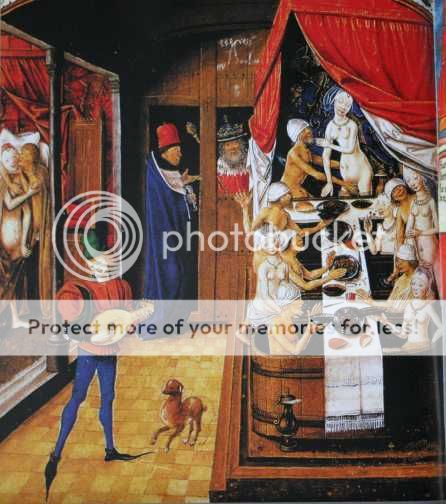
People Bathed Using the Same Water
Public baths were popular during the 13th century. But because of the scarcity of firewood used to heat the bath, bathing became an expensive practice.  Whole families and friends had to share a bath, or many of them would remain dirty.

Laundry Was Scoured in Lye Made of Ashes and Urine
Ancient Romans believed in the ability of urine to remove stains. Until the medieval times, people used lye made of ashes and urine in order to clean their clothes.  

No Changing of Clothes
King James VI of Scotland wore the same clothes for months on end, even sleeping on them on occasion.  He also kept the same hat on 24 hours a day until it fell apart. He didn't take a bath as he thought it was bad for his health.
Lice Infested Wigs
Nits and lice were common back then, so many of the more wealthy folks would shave their natural hair and wear periwigs instead.  Unfortunately, even periwigs could be infested with nits, especially during plagues.

Bird Droppings on the Bed
Houses in the past didn't have the protective roofing that houses have today, so it wasn't unusual for bugs, pests, and droppings to fall onto the clean bedding.  People then invented four-poster beds in order to keep a canopy that would catch all unpleasant stuff falling from the roof and not soil the bedding.

Infection from Rushes
One of the biggest sources of infection during the medieval times was the use of rushes or straws to cover up the natural dirt floor of a building.  Although people often changed the top rushes, they did not do the same to the bottom layer, hence leading to all manner of possible infection sources.

Mousey Eyebrows
People were already fashion-conscious during the medieval times. When their eyebrows did not look fashionable, they often masked them with tiny pieces of skin from a mouse.  

A Peculiar Cure to Baldness
Men had to combine potassium salts with chicken droppings, and then place the mixture on the affected area.  If they wanted to remove unwanted hair from any area of the body, they had to make a paste consisting of eggs, strong vinegar, and cat dung, and then apply it to the area where they want to remove hair.

Article reprinted from http://www.healthyway.com

If a book is written...

Sunday, November 2, 2014


Of course playing off the cliche: "If a tree falls in a forest and no one is around to hear it, does it make a sound?"  But to clarify the meaning, in a nutshell, it's a philosophical thought experiment that raises questions regarding observation and knowledge of reality.  So contemplating on the same plane of knowledge and existence, if a book was indeed written but no one reads it, does the book still have a soul?

Having posing this question to other authors, all say "yes!"  The life brought into the story is evidence of the books existence, thereby concluding it does posses a "soul," as it were. Like all living beings giving birth, life breeds life.  

But I raise the question of why writers write, and how their existence is influenced by the deepest desire to have their voices heard.  Even through the argument that an artist should only write for her or himself, without worry of an audience, yet still, writers wish to share their art; and by sharing, an audience is needed, regardless of size.  So, once a writer has composed words onto paper, but no one "listens" to the interpretations, how is the connection and kinship shared?  To create life is one form of the soul, but to sustain it, to give it purpose, that is the destination.  If a reader doesn't know the existence of the book or chooses to not read it, endorsing George Berkley's observations about whether something can exist without being perceived, does that book truly exist?  And if that book doesn't exist, can it truly have a soul?

Whether a tree does make a sound, or whether a book does encompass a soul, to be perceived is the question of any argument.  Naturally the answer is bi-polar in examination.  Shared knowledge is a writer's ambition, and that is the only reality a writer is able to express. 

Best Halloween Books For Adults

Sunday, October 26, 2014

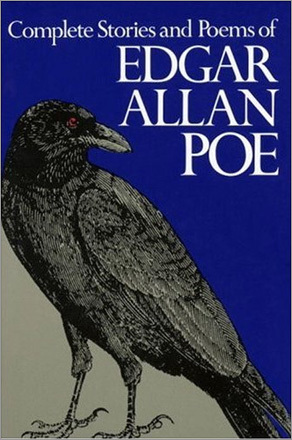
Complete Stories and Poems of Edgar Allan Poe
This collection from the all-time master of the macabre contains Poe’s dark poem “The Raven,” a Halloween classic about a gloomy man’s bizarre encounter with an “ebony bird.” You can also read heart-stopping horror stories such as “The Pit and the Pendulum,” “The Black Cat,” and “The Tell-tale Heart.” In this last story, the unnamed narrator murders an old man simply because “he had the eye of a vulture.” In Poe’s autumnal world, every night seems dark and gloomy and his many stories reflect a morbid sensibility that’s frightening any day of the year, especially on Halloween.


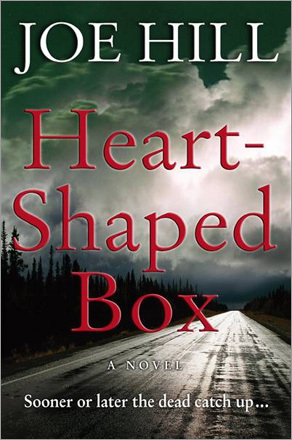
Heart-Shaped Box by Joe Hill
The son of legendary horror-master Stephen King, Hill has written a ghost novel that will keep your heart pounding past midnight. Over-the-hill rock star Jude Coyne is obsessed with the occult. He goes online to buy a suit advertised as being haunted by the dead owner's ghost. After the suit arrives in a heart-shaped box, so does the suit's spooky owner. Hill keeps up a breathtaking pace as Jude and the ghost fight an epic battle. Jude can run but can’t hide: "The ghosts always caught up eventually,” Jude realizes, “and there was no way to lock the door on them."


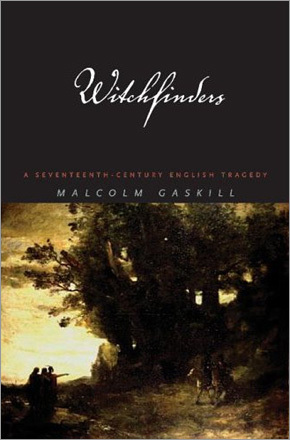
Witchfinders: A Seventeenth-Century English Tragedy by Matthew Gaskill
Historian Gaskill chronicles a chilling, real-life example of witch hysteria that occurred in England a half-century before the infamous Salem Witch Trials. Between 1645 and 1647, two “witchfinders” named Matthew Hopkins and John Stearne roamed the English countryside in a campaign to eradicate witchcraft, interrogating some 300 suspected witches (often using torture). Gaskill explores how and why it all happened. When the two witchfinders were done, more than a hundred “witches” had been executed.


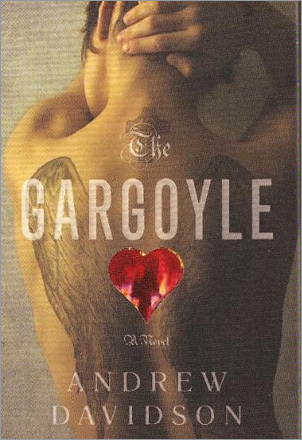
The Gargoyle by Andrew Davidson
A page-turner of a novel that mixes the occult, medieval symbolism, and Christian allegory to tell a story of love and adventure across six centuries. The book begins with the unnamed narrator in a fiery car crash. Hospitalized, he’s visited by a woman who claims she’s loved him since the 14th century. For all his faults as a prose stylist, Davidson understands how to build narrative tension, how to combine fantasy elements with realistic details, and how to keep readers engrossed.


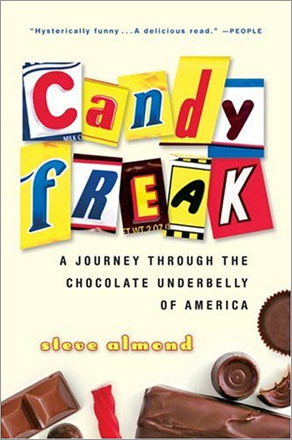
Candy Freak: A Journey Through the Chocolate Underbelly of America by Steve Almond
For local author Steve Almond, it’s Halloween all year round. To say that Almond likes candy is an understatement. The hilariously candy-obsessed Almond “has between three and seven pounds of candy in his house at all times," he admits. Not only does he humorously explore his own candy fixation, but Almond journeys to the places where his favorite candy is produced, and visits with “chocolate engineers” who explain candy’s allure. Almond’s book is delicious fun, like a Halloween bagful of treats.


Salem Witch by Patricia Hermes
It is colonial Massachusetts in 1692, right in the middle of Salem’s infamous witch hysteria. Hermes offers us two different sides of these dramatic events, one from a young woman named Elizabeth who confronts accusations of witchcraft and one from George, the son of a judge overseeing the witch trials. As these two young people try to understand what’s happening, readers get a fresh perspective on a community in crisis. The book’s unique format allows readers the opportunity to read Elizabeth's side of the story first and then flip the book over to read George's.


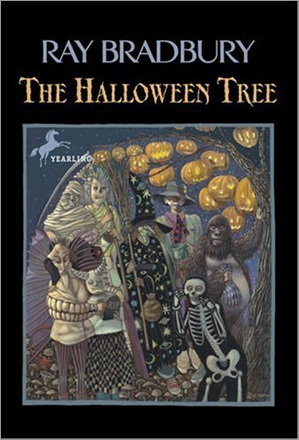
The Halloween Tree by Ray Bradbury
A legendary sci-fi writer, Bradbury (“The Martian Chronicles”) offers the story of eight boys who set out on a Halloween night of trick-or-treating only to be led into the depths of the past by a tall, mysterious character named Moundshroud.  During their time travels, the boys visit distant lands and observe how Halloween has been celebrated around the world, from ancient Egypt to the Roman Empire to Aztec Mexico. Bradbury, as always, moves his story along at a fast pace, allowing readers to discover how the rituals and symbols of Halloween have developed over history.


15 Interesting facts about Halloween


Read more at http://thechive.com/2013/09/19/30-interesting-facts-about-halloween-30-photos/#CPsIugcGCHtc6zGj.99

Inspiration behind How the Water Falls: South Africa's legacy

Friday, October 17, 2014


Is still the apartheid a subject of interest? What history teaches us?
There are two reasons that the subject of apartheid prevails: One, there is a strong correlation of what occurred in South Africa to what is happening now in Israel (Perscription for Gaza). I understand it's not identical because no history is identical based on politics and its landscape, but there are key factors which bind these two places: Segregating a population, denying them citizenship, displacing that population into ghettos or refugee camps, and the violence that precipitates mirrors the two countries in hardships and failures. When laws can’t and don’t protect all people living on the same land, it opens up abuse and injustice. Two, it’s only been twenty years since the eradication of apartheid, and we’re continuing to understand what all of that meant. Although political emancipation has succeeded, but discrimination and corruption resumes. The aftermath of apartheid endures a legacy of unresolved issues. What we all should learn from history is that a true democracy, one that is not dysfunctional, is all inclusive, and that education is best method to make it so. Ignorance and greed is what makes war; education and uniting people for a common goal is what saves our future.


Where do the ideas for your book come from?
From real people and real events.  If a person is to become socially conscious as a means to understand the world around oneself, then exploring the past is a good way to start.  For me, it began with the movie Cry Freedom, which was based on the friendship between Donald Woods and Steve Bike.  The inhumanity shown in the movie left me horrified and emotionally displaced.  I was only fourteen.  Then, years later, I came across a documentary, the name I don't remember because I missed the beginning, about a white South African couple who had nothing in common. The wife was a liberal reporter, and the husband was a former army personnel and police officer who had been fired as a scapegoat for apartheid's problems.  They struggled with understanding each other's past.  The other inspirations came from the book Kaffir Boy and A Human Being Died That Night: A South African Woman Confronts the Legacy of Apartheid.  In dealing with how to come to terms with violence and poverty, these two books opened up a world history books didn't touch.  


How much fiction / non fiction is in How the Waters Falls?
The first chapter begins with the Truth and Reconciliation where I abstract real stories from those who testified at these events. From there, I doused the novel with historical events and references to fuse with the development of the plot. Several of my main characters, such as Joanne, Lena, Wanda, Jared, Hans, Father Mulalo, and Topsy are inspired by a mesh of people I’ve researched. I wish to preserve the integrity of the historical significance as much as possible while maintaining a strong story. If I had to calculate between the two, I would put fact and fiction at 50/50.


Why take such important historical events and transpose them in fiction stories?
There is more freedom in fiction. Although I do my darndest to uphold historical continuity, sometimes I need to bend the actual timeline or combine few real people into one person, thereby fictionalizing that character, as a means to represent either an archetype in fiction form or to establish the attitudes of that era.


What is the writer’s responsibility when approaching such themes?
Honestly, John Steinbeck wrote it best: “The writer is delegated to declare and to celebrate man's proven capacity for greatness of heart and spirit—for gallantry in defeat, for courage, compassion and love. In the endless war against weakness and despair, these are the bright rally flags of hope and of emulation. I hold that a writer who does not believe in the perfectibility of man has no dedication nor any membership in literature.” And within the same context, he also wrote, “I have come to believe that a great teacher is a great artist and that there are as few as there are any other great artists. Teaching might even be the greatest of the arts since the medium is the human mind and spirit.”


How did you come up with the title of your book?
I wish to have a symbolic connection with the titles to the meaning of my stories. How the Water Falls is meant to represent the ideology of power and corruption through the structure of waterfalls, and how a system can fall by the pressure of united power. One of my characters, Lena, explains it all at the ending of the book.


How important are names to you in your books? Do you choose the names based on liking the way it sounds or the meaning? Do you have any name choosing resources you recommend?
I chose names based on both the way it sounds and what it represents. Because my novels tend to be researched inspired, I often abstract names from books I’ve read to uphold authenticity. For my South African novel, I have a link of my characters here with descriptions of their purpose to the story on my indiegogo site.


Which of your characters do you think is the most like you?
So I'm going to need to flush out my multiple personalities! I would have to be a split between Joanne and Lena.  Joanne is close to her family and seeks to have the truth be known. Lena struggles with depression, but finds a way out of it through trusting people.  As I have mentioned before, I am both an optimistic and pessimistic.


What have you learned creating this book?
I've learned that apartheid was entirely more convoluted than I could wrap my head around.  It was insane.  And while trying to reinterpret it as I wrote in fiction form was the greatest puzzle I had yet put together.  Because the system was so corrupted, it wasn't as difficult to establish a plot.  Each character had a purpose to fulfill and fit naturally according to the development of the story.  I loved it!


Who is your intended audience and why should they read your book?
Adults who love a hybrid of historical fiction and thriller. And this is a very adult book based on content and language. The writing pulls you into South African struggles while full of suspenseful action and mystery. This novel is certainly political and ethically explorative, but it doesn’t suffer from its big concepts making it too lofty and inaccessible – inarguably. How the Water Falls is about people. The human experience is the main character, and for the reader, an understanding of what this group of people had to endure is the best lesson to inherit.


What do you think your readers will take away from this book?
A haunting impression that still leaves you with a sense of hope.  For those who never really understood what had happened during that period will at least have an inclination of why the system was so evil, and how it affected everyone, both black and white.  If change is going to be resurrected, there needs to be an ambition of hope.


What other books are similar to your own? What makes them alike?
If you have read and savored over The Power of One, Cry the Beloved Country, Waiting for the Barbarians, and Bloodlines, then you’ll hunger for How the Water Falls. They all are about stories that take place in South Africa and combine a human story with the corruption, bigotry, injustice, and violence surrounding apartheid. But it’s more than just that. There are lessons to be learned. There are introspections to be evaluated. There are empathy, rage, and sorrow to embrace. Whether the message is hopeful, tragic, or both, regardless, it should be influential.


What makes your book different than others that fall under this genre?
Although I have it marked as a thriller, sub genre of psychological, historical, and political, despite of its backdrop, the story is about people and how they relate to one another.  It's an intense journey that does have moments of humor and tenderness.  If the reader cannot connect to any other characters, then the author has failed to make that connection.


What inspires you most?
I'm greatly inspired by stories that deal with struggle for freedom, searching for identity and purpose, and have some sort of message that forces you to contemplate.  John Steinbeck best made the claim: "The writer is delegated to declare and to celebrate man's proven capacity for greatness of heart and spirit - for gallantry in defeat, for courage, compassion and love.  In the endless war against weakness and despair, these are the bright rally flags of hope and of emulation.  I hold that a writer who does not believe in the perfectibility of man has no dedication nor any membership in literature."  And within the same context, he also wrote, "I have come to believe that a great teacher is a great artist and that there are as few as there are any other great artists.  Teaching might even be the greatest of the arts since the medium is the human mind and spirit."


Is there anything about writing you find most challenging?
I worry about maintaining authenticity within the time period and about the particular cultures.  As much as I love delving into another world, I agonize over whether I can or do preserve the integrity of these issues.  I have to keep reminding myself that people are people, regardless which time period and location: focus on the people first, and let the rest come naturally.


What do you think makes a good story?
Show that each and every character is imperfect, and that those characters have personal conflicts to overcome, whether they actually do, or try to, or fail to do.  Within these sentiments, a storyline is surely to unravel before your very eyes.


What is the biggest trap to avoid in a psychological thriller? But in one based on real events?
My concern, when I wrote my second novel, was not to feel cheated after reading it from start to finish. And what I mean by “cheated” is by making sure each of my characters felt real, had an authentic voice and purpose to the story, that there was a reason for their existence. I also wanted to make sure I didn’t “cheat” the historical accuracy while allowing the plot to prevail. The two had to “tango” well together in order to understand the psychology of each of the character’s mindset. Based on where the characters were born, what families they were born into, had influenced how they reacted to their environment and toward each other. I hope nothing felt forced and had a natural experience through it all- even though the violence as well as the tender moments.