Brief History of Feminism

Saturday, March 11, 2017

A Brief History: The Three Waves of Feminism

SEPTEMBER 22, 2015 BY CAROLINE DOREY-STEIN

While the roots of feminism are buried in ancient Greece, most recognize the movement by the three waves of feminism. The third being the movement in which we are currently residing.

The first wave (1830’s – early 1900’s): Women’s fight for equal contract and property rights

Often taken for granted, women in the late 19th to early 20th centuries, realized that they must first gain political power (including the right to vote) to bring about change was how to fuel the fire. Their political agenda expanded to issues concerning sexual, reproductive and economic matters. The seed was planted that women have the potential to contribute just as much if not more than men.

The second wave (1960’s-1980’s): Broadening the debate

Coming off the heels of World War II, the second wave of feminism focused on the workplace, sexuality, family and reproductive rights. During a time when the United States was already trying to restructure itself, it was perceived that women had met their equality goals with the exception of the failure of the ratification of the Equal Rights Amendment (which has still yet to be passed).

Misconceptions…

This time is often dismissed as offensive, outdated and obsessed with middle class white women’s problems. Conversely, many women during the second wave were initially part of the Black Civil Rights Movement, Anti Vietnam Movement, Chicano Rights Movement, Asian-American Civil Rights Movement, Gay and Lesbian Movement and many other groups fighting for equality. Many of the women supporters of the aforementioned groups felt their voices were not being heard and felt that in order to gain respect in co-ed organizations they first needed to address gender equality concerns.

Women cared so much about these civil issues that they wanted to strengthen their voices by first fighting for gender equality to ensure they would be heard.

The third wave (1990’s – present): The “micropolitics” of gender equality

Today and unlike the former movements, the term ‘feminist’ is received less critically by the female population due to the varying feminist outlooks. There are the ego-cultural feminists, the radicals, the liberal/reforms, the electoral, academic, ecofeminists… the list goes on.

The main issues we face today were prefaced by the work done by the previous waves of women. We are still working to vanquish the disparities in male and female pay and the reproductive rights of women. We are working to end violence against women in our nation as well as others.

We are still fighting for acceptance and a true understanding of the term ‘feminism,’ it should be noted that we have made tremendous progress since the first wave. It is a term that has been unfairly associated first, with ladies in hoop skirts and ringlet curls, then followed by butch, man-hating women. Due to the range of feminist issues today, it is much harder to put a label on what a feminist looks like.

Quite frankly, it all comes down to the dictionary’s very simple yet profound definition: “the theory of the political, economic and social equality of the sexes.” If that’s what a feminist is – who wouldn’t want to be called that?

Feminism: Why Not ‘Egalitarianism’ or ‘Humanism’?

Caroline Dorey-Stein
SEPTEMBER 24, 2015 BY CAROLINE DOREY-STEIN

During my studies of women’s leadership and equality, I have become increasingly frustrated with the hesitance some co-workers, friends and family respond with when I discuss feminism. The most common rebuttal is “why is it called feminism if it’s the equality of both men and women?” or, my personal favorite, “why not ‘Egalitarianism’ or ‘Humanism’ instead?”

I’ve even been told “Caroline, I don’t think you’re a feminist.”

I wanted to address this question because if I hear it frequently, chances are so do others and we should all be equipped to answer.

Before I begin my explanation of why it is ‘feminism’ and not another word signifying equality, I want to stress something. I do not just go up to people and blab about how great feminism is! I am not preachy with a few exceptions in my writings and sometimes when I talk with fellow feminists (that’s preaching to the choir, however). Typically feminist arguments surface when someone just simply asks me about my work. When I explain I’m studying women’s leadership and gender equality and it makes them somehow uncomfortable, this is when the retorts to the term arise.

The movement was given the name ‘feminism’ because it focuses on the gender inequality issues that impact women.  Just like any other civil rights category, feminism is a term used to show that one supports women’s equality and wants to address the serious amount of gender discrepancies they face daily. It does not take away from other civil rights matters.

Feminism is not called Humanism or Egalitarianism because Feminism, Humanism and Egalitarianism are three distinct theories.

Humanism is a branch of philosophy and ethics that advocates for equality, tolerance and secularism. It recognizes that human beings do not “require” religion in order to develop moral systems or behave morally. More simply, Humanism is the theory that humans are allowed to use logic to decide what is ethical instead of using a higher power to define for them.

Egalitarianism is a form of political philosophy that advocates all human beings are fundamentally equal and therefore equally entitled to resources. Yet, it has some distinct limits in applied practice. Egalitarianism has been an inactive socio-political movement for quite a while now.

Equality was originally conceptualized as a means to give everyone the same things, and although concepts and theories of equality are meant to be fair, rarely if ever are they in practice in reality.

This is not to infer that these two practices did not help shape Feminism. Humanism and Egalitarianism are important intellectual movements whose philosophies inform Feminism as well as global human rights legislation. But Feminism is the only movement actively advocating for gender equality.

The movement operates on the tenant that gender is not an acceptable basis for discrimination, oppression and/or eradication. It’s called Feminism because the gender being denied personhood and subjected to oppression is female. Feminism was given its name because it began as a socio-political movement to achieve gender equality for females and through its own rhetoric has become a movement to achieve equality for all persons regardless of gender.

20 Freaky Historical Facts: So very Halloweenish!

Sunday, October 2, 2016

1.) Some chapels buried thousands of bodies in their floorboards. Instead of a separate cemetery, bodies used to be buried in churchyards, which in the olden days was profitable for churches. Since there was a finite amount of space in the yard, some churches buried corpses under their floors - one London chapel had 12,000 bodies in it.

2.) The Spanish Donkey was one of the worst tortures ever. During the Spanish Inquisition, this device would be used for torture and eventual death. The person would be placed on a triangular log and weights attached to their feet. They would be pulled downward by the weights as the sharp edge of the log slowly sliced them in half.

3.) 17th century rich people ate human flesh. They thought that consuming flesh, drinking human blood, and even rubbing human fat on the outside of the skin could cure any number of diseases.

4.) Human skulls were used by ancient civilizations as cups. Many ancient cultures hollowed out the skulls of their slain enemies and made them into drinking cups, with the earliest ones dating to about 14,000 years ago in what is now England.

5.) The Victorians made "memorial jewelry" - out of parts of their dead loved ones. To remember their lost family and friends, some Victorians had jewelry made out of parts of their loved ones' bodies, including teeth, hair, and bone. This brooch was made with a pretty knot made of hair.

6.) If someone died abroad in the Middle Ages, they might have been boiled so that their bones could be shipped home. Before modern embalming, it was difficult (and smelly) to transport a body back home if someone died far away. In the Middle Ages, some people chose to have their corpse cut into pieces and boiled. That way, the rotting flesh could be buried in the place the person passed on, but their bones could be easily shipped back to their ancestral burial ground.

7.) It was popular in France for royal women to give birth in front of a crowd. Marie Antoinette had such a large audience that she was almost crushed by the throng of people who tried to fit into her room at Versailles when she was giving birth.

8.) Dentures used to be made of the teeth of fallen soldiers. The teeth would be removed from the bodies, then placed in artificial gums for use by living people.

9.) In England, suicide victims were buried at crossroads to keep them from haunting towns. People in medieval England thought that burying people who'd committed suicide - which was a very serious crime - at a crossroads would confuse the restless soul and prevent them from coming "home" in spirit form.

10.) A guy wrote a book about a ship called the Titan crashing into an iceberg - fourteen years BEFORE the Titanic sank. Morgan Robertson's 1898 book tells the story of a British ship called the Titan, which was deemed to be unsinkable, that hit an iceberg and sank, killing many of the passengers because there weren't enough lifeboats. In 1912, the Titanic sank in almost the same manner.

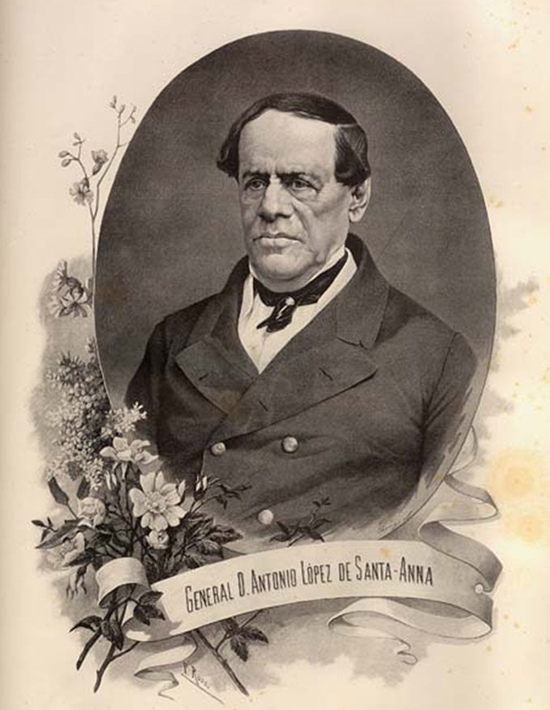
11.) General Antonio Lopez de Santa Anna ordered a full military funeral in 1838...for his leg. The Mexican leader lost his left leg when it was hit by a cannon, and had a funeral - with full military honors - for it when it was buried.

12.) Hungarian countess Elizabeth Bathory is considered the most prolific female serial killer in history. Four hundred years ago today, in August 1614, the notorious 54-year-old royal died under house arrest in Čachtice Castle in modern-day Slovakia, having been implicated in as many as 650 deaths — mostly peasant girls and servants. Elizabeth was prone to fits of rage and seizures, and it appears that mental illness — possibly the result of years of inbreeding — was common in her extended family. The torture and murder was done largely for Báthory’s pleasure, and some scholars believe she was a sexual sadist in addition to a psychopath. Báthory and her accomplices terrorized the surrounding countryside for years with impunity. And it was not until her bloodlust crept up the social ladder, and the daughters of nobles went missing, that her fellow royals started to pay attention to the dark rumors surrounding the countess. Just after Christmas in 1610, Báthory’s castle was raided by the local authorities, who were horrified to discover dead and dying maidens strewn across the courtyard and basement. The countess’s collaborators were imprisoned, put on trial, and themselves tortured and executed. Báthory herself was never tried or convicted — perhaps to spare her family the embarrassment — but she was placed under house arrest in a tower room within Čachtice Castle where she died less than four years later.

13.) Sultan Ibrahim I of the Ottoman Empire once drowned 280 of his concubines. The reason? One of them had slept with another man.

14.) The first major syphilis outbreak made people look like gross zombies. In 1494, Florence, Italy had a big syphilis outbreak, and before antibiotics, you just sort of had to...deal. With syphilis, that meant that parts of your face would literally be falling off, and you'd just have sores all over your body.

15.) When Mount Vesuvius went off, it actually exploded people's heads. The city of Herculaneum was hit not by magma or ash when Vesuvius went off, but by a superheated cloud of gas with temperatures up to 1000 degrees Fahrenheit. This meant that people's heads got really hot, really fast. Since the liquid in your head has nowhere to go because of your skull...their heads legit exploded.

16.) The first recorded serial killer in history was a woman. Nowadays, most of the major serial killers (that we know about, anyway) are men. But back in Roman times, there was a serial killer named Locusta who liked poisoning people. A lot. Fortunately for her, Emperor Nero sometimes needed people killed, so instead of punishing her for being a murderer, he pardoned her and asked her to help him out.

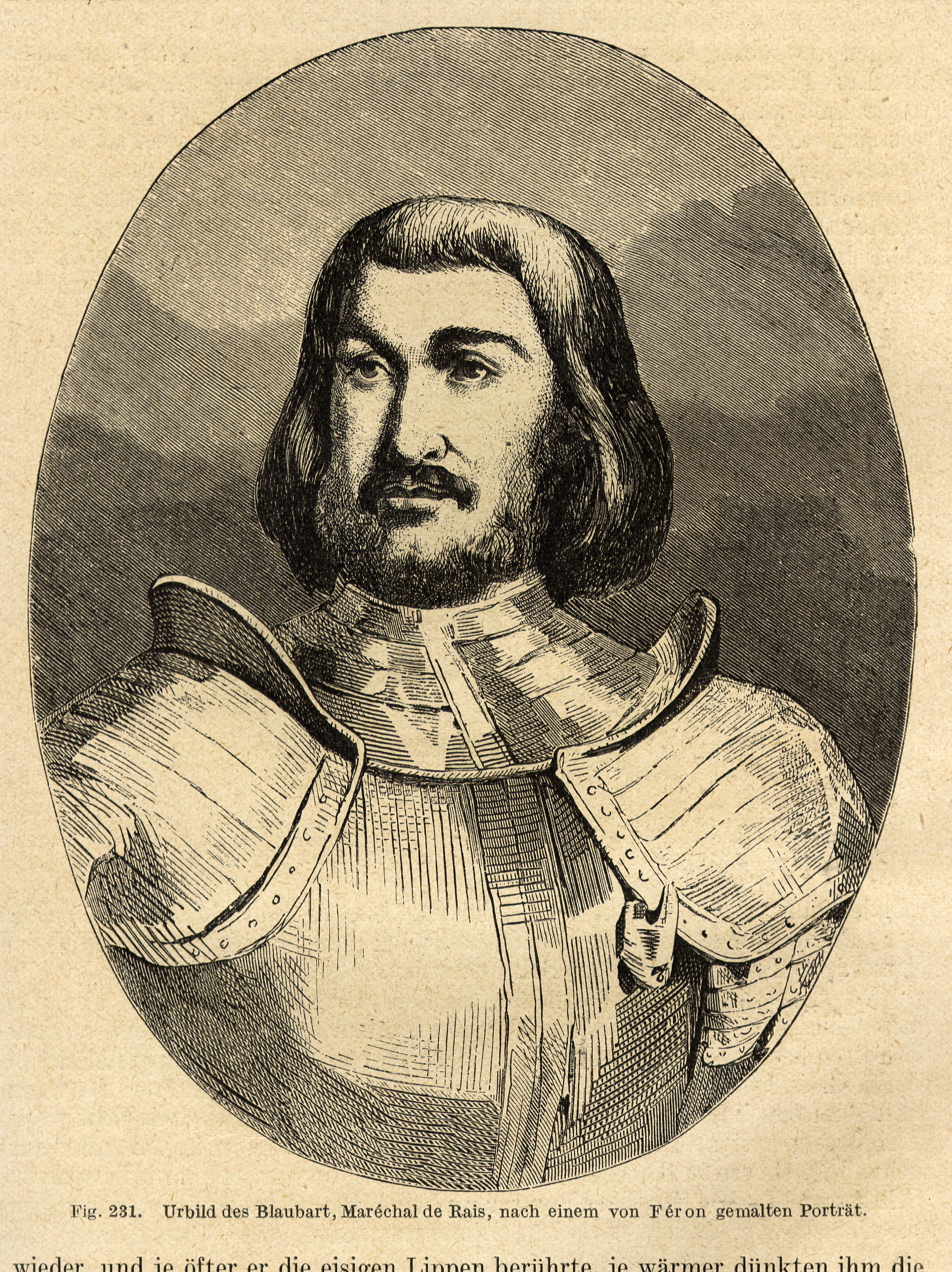
17.) One of Joan of Arc's most ardent supporters was a serial child killer. Joan of Arc was amazing, obviously, but she had help in the French Army, including Gilles de Rais, a knight. He fought bravely for France... and also killed anywhere between 80 and 800 children in horrifyingly brutal ways.

18.) James Smithson, the founder of the Smithsonian Institution, is buried there. Employees have said they've seen Smithson's ghost wandering the halls of the famed Washington, D.C. museum, to the point where in 1973, the institute did a study of Smithson's casket and remains to make sure everything was a-OK.

19.) In 1892, two soldiers stationed at the fort that used to occupy Liberty Island tried to dig up some treasure they'd heard was buried nearby. When they got to the box, a demon appeared to them, most likely the spirit of Captain Kidd, a pirate who liked to bury his treasure there.Liberty Island used to be a haven for pirates... and might be haunted by one.

20.) The Romanians believed redheads with blue eyes were vampires. Redheads were believed to be a specific kind of vampire called strigoi, who were able to send their spirits out at night to meet other strigoi.

Breakdown of the Generations with the last 100 years

Wednesday, August 31, 2016


Generations table

The following table summarizes what you need to know about Western generations so you can track your own in time.
GenerationBirths fromBirths untilComing of age
The G.I. Generation – Greatest Generation190019241918 - 1929
The Silent Generation – Lucky Few192519451943 - 1962
The Baby Boom Generation – Baby Boomers194619651963 - 1972
Generation X – Latchkey Kids196619791988 - 1994
Generation Y – Millennials198019942098 - 2006
Generation Z – Gen Next199520162007 - 2020
Most of these primary generations still have a role in today’s market place, but the recent research has shown that Millennials have overtaken Baby Boomers as largest generation in the US.

What generation am I?

The generation calculator tool provides you with descriptions for all the established generations starting with 1900 and right until present:

G.I. Generation (1900-1924)

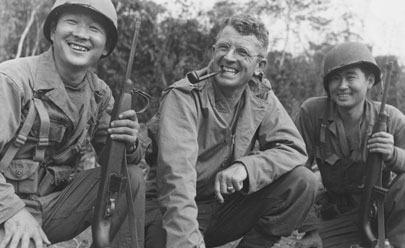
442nd Nisei Regiment
 Also known as the Greatest Generation, includes the veterans who fought in World War II.
 Lived through two World Wars, the Great Depression and many other advances.
 They are conservative savers, hard-working , with a high sense of moral obligation, patriotism and respect for authority.
 Two overlapping groups consistent with the Depression Era (born between 1912-1921) and the World War II cohort (born between 1920-1924 to fight in 1939-1945).

Silent Generation (1925-1945)
Soc Hop

 Born between the two World Wars, many of them who were too young to join the service in the World War II.
 Also known as the “Post War Cohort” or the “Lucky Few”.
 Lived through the post war economic boom but also through tensions and approaching wars.
 Conservative, rational savers, hard-working, patriotic members that fight for security and stability.


Baby Boom Generation (1946-1965)

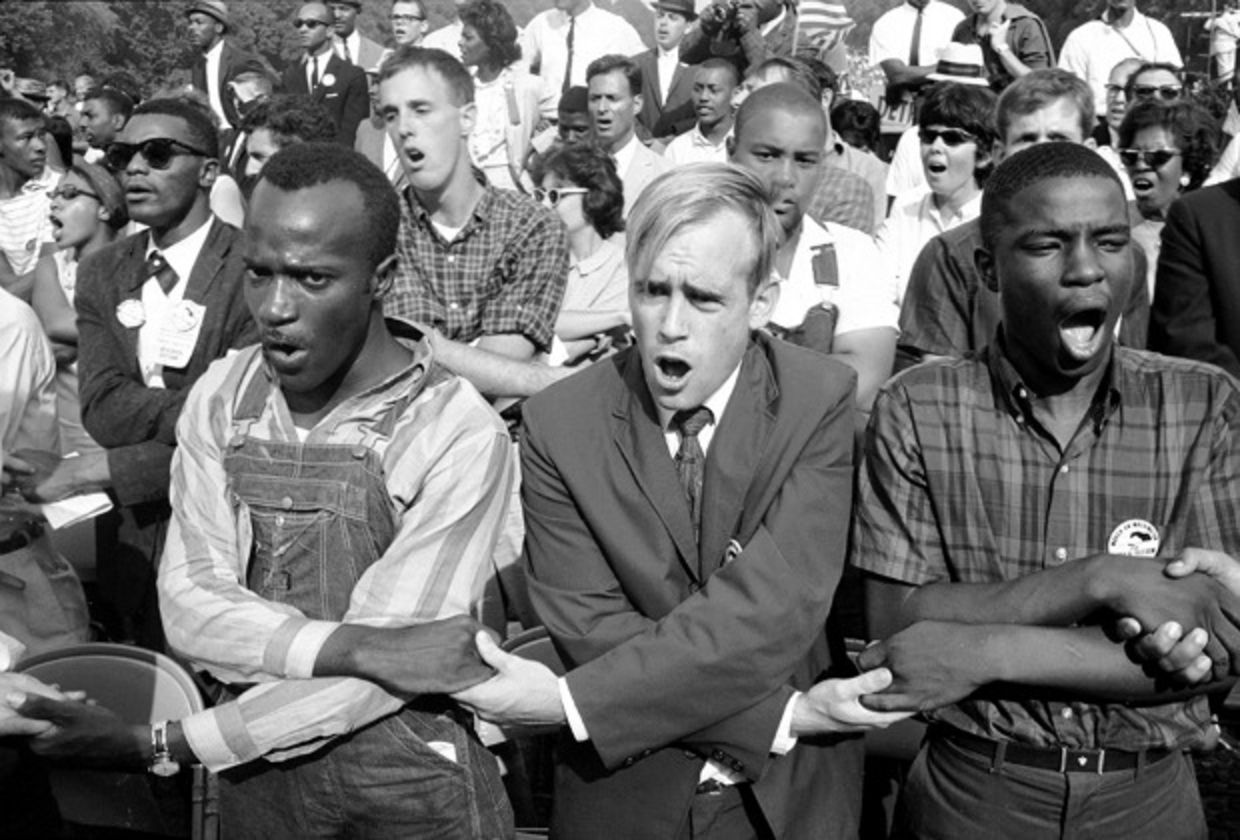
Civil Rights
 Born after the World War II, their parents belonging to the G.I. Generation.
 A 14 year increase in birth rate worldwide.
 Focused on the civil rights movement and cultural development.
 Lived through the Vietnam War, MLK, the Kennedy assassination, the Nixon resignation.
 They came of age in the ‘60s with the hippie movement, Woodstock and college rages.
 Boomers I or The Baby Boomers (1946-1954) and Boomers 2 or the Jones Generation (1955-1965).
 Many of the Baby boomers embraced a more conservative behavior and eventually gave birth to Generations X and Y.


Generation X (1966-1979)
Popular American TV shows

 Also known as the Gen X is the first generation to follow the Baby boomers.
 This is also the first generation to be named and defined by marketers.
 Many of its members are aware of their generational title.
 Came of age in the '80s and '90s with the Reagan era, Challenger explosion, fall of Berlin Wall, Persian Gulf War, economic recession.
 The all-knowing spoiled kids of the Baby Boomers yet with fewer ambitions and less driven to change the world.
 The generation X kids are called the “latchkey” kids, exposed to daycare and family instability and this has probably shaped how they regard their family life and how the next generation, Y, is being educated. - The best educated with 29% obtaining a bachelor’s degree or higher (6% higher than the previous generation).


Generation Y (1980-1994)

 Also known as the Echo Boomers or Millennials.
 The demographic cohort of individuals, primarily children of the Baby boomers.
 This generation grew up with many world-changing events including the rise of mass communication, technological advance.
 All knowing as the former Gen X they have what it takes but are also willing to do something about it.
 This generation benefits from all science advances and better education and has the ambition and desire to change the world.
 They have been exposed and seen so much that are now immune to traditional ways from marketing to sociology.


Generation Z (1995-    )

 The term generically used to describe the cohort of people born around 2000.
 Also known as iGenerationGen Tech, Gen Wii, Net Gen, Gen Next, Post Gen.
 This is a generation living in a society where everything is possible and the main communication channel is the internet.
 A volatile environment of terror threats, possible nuclear or biological attacks.
 Family stability and moral values put aside, heightened sense of self.
 Education is now focusing on developing practical skills and enriching creativity..
This generation calculator is a tool designed to help you find quickly what generation you are and which are the characteristics of your up bringing.
The algorithm behind it is simple and takes account only of the year you were born in and the sociologic and marketing studies in the area.
Apart from the particularities of a specific demographic cohort someone is born under, there are other interesting facts that can be found considering the age and birthday
RESOURCE: http://www.thecalculator.co

10 Jobs That No Longer Exist

Saturday, August 6, 2016

10. TELEPHONE OPERATOR

Before the advent of computerized telephone dialing systems, making a phone call required a switchboard operator. Some of you may have even held this job at one point, so we won’t go into too much detail, but the switchboard operator would connect calls by inserting a phone plugs into corresponding, appropriate jacks.
From Seattle Municipal Archives via Wiki Commons

9. GANDY DANCER

Don’t let the name fool you; being a Gandy Dancer is a tough job! Gandy dancer is a slang term used for early railroad workers. Before machines became capable of laying and maintaining railroad tracks, that work was done by hand. The term’s origins are unknown, but many think it comes from a “Gandy Shovel Company.”
From Edward Hungerford via Wiki Commons

8. PINSETTERS

Here’s one that we were surprised to learn about. Before Gottfried Schmidt invented the mechanical pinsetter in 1936, bowling alleys employed pinsetters. Yep, a pinsetter would set the bowling pins back up after they were knocked down, hence the name (the position was also known as a pinboy, since many pinsetters were teenage boys given the nature of the job).
From Lewis Wickes Hine via Wiki Commons

7. SODA JERKS

If there’s one position that’s near and dear to our hearts, it’s the soda jerk. These were the servers who would make the ice cream sodas and soda water at the drugstores up until the 1960s. Though a soda jerk was formally called a soda clerk, the name came from the motion the server would use to swing the soda handle back and forth while adding the soda water.
From Alan Fisher via Wiki Commons

6. RADIO ACTORS

While this position might technically still exist in the form of radio commercials, gone are the days of radio actors entertaining us on shows like The Lone Ranger or The Burns and Allen Show. Not only were the actors amazing, but the way they created sound effects was quite clever. See for yourself in this behind-the-scenes clip.

5. LAMPLIGHTER

Electricity sure did change a lot of things, including the way we lit our streets at night! Before light bulbs, the common means of illuminating the dark sky were by candle, oil or gas. These lights needed to be manually lit, hence the lamplighter. Most lamplighters used a giant pole to reach the light, and would come back in the early hours of the morning to extinguish it.
From Klearchos Kapoutsis via Wiki Commons

4. MILKMEN

OK, so here’s another profession that might technically still exist, but not in the way we remember it! Growing up, there was nothing better than waking up to a bottle of fresh milk waiting on your doorstep. The milkman was always friendly, wearing that trademark uniform and ready to deliver the day’s fresh milk. Sure, there are still services that will deliver milk to your door, but it’s just not the same.
Milkman

3. ICE CUTTER

Before the mechanical refrigerator, we had the icebox. In order to keep an icebox cool, you needed ice (who’da thunk it, right?). In the colder parts of the country, ice cutters would travel out onto the frozen bodies of water and cut out large blocks of ice to be used in the warmer months. While some ice cutting was seen as a chore for farmers, some operations were quite large, containing a crew of several dozens of men and harvesting up to 1500 tons of ice a day.
From the U.S. National Archives and Records Administration via Wiki Commons

2. FOOD SAFETY TESTERS

Believe it or not, before the FDA existed, people were basically allowed to put whatever they wanted into food products. In order to determine if the food was safe, it had to be tested. In fact, we have a great story about one chemist’s work in testing food safety, and the formation of what became known as the Poison Squad (Click Here to read that fascinating story).
image2107

1. LOG DRIVER

In the early days of the logging industry, the cheapest and most efficient way to transport logs from the forest to the sawmill was via log driving. Log driving was the process of binding several logs together, sometimes attached to a raft, and floating them down a river or a body of water to their intended destination. A log driver was the pilot of this makeshift log boat; and these boats could get quite big.
From: Facebook / Saildream

Newton Knight: Free State of Jones

Saturday, June 18, 2016

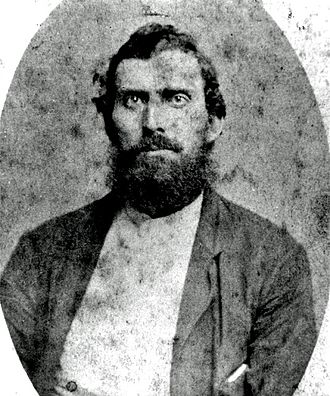
Newton Knight
Newton Knight (November 1837 – February 16, 1922) was an American farmer, soldier and southern Unionist, best known as the leader of the Knight Company, a band of Confederate army deserters that turned against the Confederacy during the Civil War. Local legends state that Knight and his men attempted to form the "Free State of Jones" in the area around Jones County, Mississippi, at the height of the war, though the exact nature of the Knight Company's opposition to the Confederate government is disputed. After the war, Knight aided Mississippi's Reconstruction government.
Knight has long been a controversial figure. Historians and descendants disagree over his motives and actions, with some arguing he was a noble and pious individual who refused to fight for a cause in which he did not believe, while others have portrayed him as a manipulative outlaw. This controversy was fueled in part by Knight's postwar marriage to a freed slave, which effectively established a small mixed-race community in southeastern Mississippi. The marriage would have been considered illegal as Mississippi banned interracial marriages except from 1870 to 1880 during the Reconstruction era.
The 1942 James H. Street novel, Tap Roots, was inspired by Knight's actions in the Civil War. The novel was the basis for the 1948 film of that name, which was directed by George Marshall.
Newton was a grandson of John "Jackie" Knight (1773–1861), one of Jones County's largest slaveholders. Newton's father, Albert (1799–1862), however, did not own any slaves, and was the only child of Jackie Knight who did not inherit any slaves. Newton, likewise, did not own any slaves. Some say he was morally opposed to the institution due to his Primitive Baptist beliefs. As a staunch Primitive Baptist, Newton also forswore alcohol, unlike his father and grandfather. He was probably taught to read and write by his mother.
Knight, like many Jones Countians, was opposed to secession. The county elected John H. Powell, the "cooperation" (anti-secession) candidate, to represent them at Mississippi's secession convention in January 1861. Powell voted against secession on the first ballot, but under pressure, switched his vote on the second ballot, joining the majority in voting to secede from the Union. In an interview many years later, Knight suggested many Jones Countians, unaware of how few options he had, felt betrayed by Powell.
Knight enlisted in the Confederate Army in July, 1861. He was given a furlough in January 1862, however, to return home and tend to his ailing father. In May 1862, Knight, along with a number of friends and neighbors, enlisted in Company F of the 7th Battalion, as they preferred to serve together in the same company, rather than with strangers.
Throughout the summer and fall of 1862, a number of factors prompted desertions by Jones Countians serving in the Confederate Army. One factor was the lack of food and supplies in the aftermath of theSiege of Corinth. Another involved reports of poor conditions back home, as small farms deteriorated from neglect. Knight was enraged when he received word that Confederate authorities had seized his family's horse. However, many believe Knight's principal reason for desertion was his outrage over the Confederate government's passing of the Twenty Negro Law. This act allowed wealthy plantation owners to avoid military service if they owned twenty slaves or more. An additional family member was exempted from service for each additional twenty slaves owned. Knight had also received word that his brother-in-law, Morgan, who had become the head of the family in Knight's absence, was abusing Knight's children. Morgan's identity has since been lost, but he is thought to be Morgan Lines, a day laborer and convicted murderer.
Knight was reported AWOL in October 1862. He later defended his desertion, arguing, "if they had a right to conscript me when I didn't want to fight the Union, I had a right to quit when I got ready." After returning home having deserted in the retreat following the defeat at Corinth, Knight, according to relatives, shot and killed Morgan.
In early 1863, Knight was arrested and jailed, and possibly tortured, by Confederate authorities for desertion. His homestead and farm were destroyed, leaving his family destitute. 
As the ranks of deserters swelled in the aftermath of the Siege of Vicksburg, Confederate authorities began receiving reports that deserters in the Jones County area were looting and burning houses. A local quartermaster, Captain W. J. Bryant, reported that "the deserters have overrun and taken possession of the country, in many cases exiling the good and loyal citizens or shooting them in cold blood on their own door-sills." General Braxton Bragg dispatched Major Amos McLemore to Jones County to investigate and round up deserters and stragglers. On October 5, 1863, McLemore was shot and killed in the Ellisville home of Amos Deason, and Knight was believed to have pulled the trigger.[3]
Leaf River
On October 13, 1863, the Knight Company, as it was called, a band of guerillas from Jones County and the adjacent counties of JasperCovingtonPerry and Smith, was organized to protect the area from Confederate authorities. Knight was elected "captain" of the company, which included many of his relatives and neighbors. The company's main hideout, known as "Devils Den," was located along the Leaf River at the Jones-Covington county line. Local women and slaves provided food and other aid to the men. Women blew cattlehorns to signal the approach of Confederate authorities.
From late 1863 to early 1865, the Knight Company allegedly fought fourteen skirmishes with Confederate forces. One skirmish took place on December 23, 1863, at the home of Sally Parker, a Knight Company supporter, leaving one Confederate soldier dead and two badly wounded.
During this same period, Knight led a raid into Paulding, where he and his men captured five wagonloads of corn, which they distributed among the local population. The company harassed Confederate officials, with numerous tax collectors, conscript officers, and other officials being reported killed in early 1864. In March 1864, the Jones County court clerk notified the governor that guerillas had made tax collections in the county all but impossible. In 2016, a letter dated February 13, 1864 from a Union scout addressed to Maj. Gen. John M. Palmer of the Union Army was discovered by a historian working in the National Archives. It estimates the Knight Company's numbers to be as high as 600 and confirms their intention to join up with the Union Army. The exact number is still a matter of debate, in light of an interview Knight gave after the war stating, "There was about 125 of us, never any more."
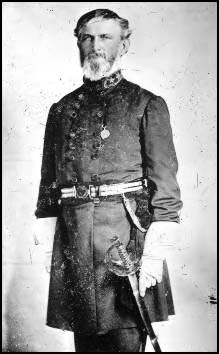
General Polk
By the spring of 1864, the Confederate government in the county had been effectively overthrown. Lieutenant General Leonidas Polk wrote Jefferson Davis on March 21, 1864, describing the conditions in Jones County. Polk stated that the band of deserters were “in open rebellion, defiant at the outset, proclaiming themselves ‘Southern Yankees,’ and resolved to resist by force of arms all efforts to capture them.” On March 29, 1864, Confederate Captain Wirt Thomson wrote James Seddon, Confederate Secretary of War, claiming the Knight Company had captured Ellisville and raised the U.S. flag over the courthouse in Jones County. He further reported, “The country is entirely at their mercy.” General William Tecumseh Sherman received a letter from a local group declaring its independence from the Confederacy. In July 1864, the Natchez Courier reported that Jones County had seceded from the Confederacy.
General Polk initially responded to the actions of the Knight Company by sending a contingent under Colonel Henry Maury into the area in February 1864. Maury reported he had cleared the area, but noted the deserters had threatened to obtain "Yankee aid" and return. Shortly afterward, Polk dispatched a veteran contingent of soldiers led by Colonel Robert Lowry, a future governor who would later describe Knight as an "ignorant and uneducated man." Using bloodhounds to track down guerillas in the swamps, Lowry rounded up and executed ten members of the Knight Company, including Newton's cousins, Benjamin Franklin Knight and Sil Coleman. Newton Knight, however, evaded capture. He later stated his company had unsuccessfully attempted to break through Confederate lines to join the Union Army.
At the end of the war, the Union Army tasked Knight with distributing food to struggling families in the Jones County area. He also led a raid that liberated several children who were still being held in slavery in a nearby county. Like many Southern Unionists, he supported the Republican Party, namely the Reconstruction administration of Governor Adelbert Ames. As conflict mounted between white neo-Confederate resistance (the Ku Klux Klan) and the Republican Reconstruction government, Ames appointed Knight Colonel of the First Infantry Regiment of Jasper County, an otherwise all black regiment defending against Klan activity. After southern Democrats regained control of the state government, he withdrew from politics.
In 1870, Knight petitioned the federal government for compensation for several members of the Knight Company, including the ten who had been executed by Lowry in 1864. He provided sworn statements from several individuals attesting to his loyalty to the Union, including a local judge and a state senate candidate. But the federal Court of Claims ruled that "the evidence fails to support the allegation of the petition that the Jones County Scouts were organized for military service in behalf of United States or that they were in sentiment and feeling throughout the war loyal to the Government of the United States."
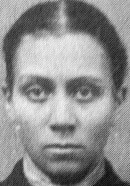
Rachel Knight
By the mid-1870s, Knight had separated from his wife, Serena, and married Rachel, a woman formerly enslaved by his grandfather. During the same period, Knight's son, Mat, married Rachel's daughter, Fannie, and Knight's daughter, Molly, married Rachel's son, Jeff. Newton and Rachel Knight had several children before her death in 1889. Newton Knight died on February 16, 1922 at the age of 84. In spite of a Mississippi law that barred the interment of whites and blacks in the same cemetery, he was buried next to Rachel on a hill overlooking their farm. Newton's engraved epitaph stated "He lived for others."
Newton and his grandson abt. 1910's