The Culture of Violence in the American West: Myth versus Reality

Sunday, November 18, 2018

Contrary to popular perception, the Old West was much more peaceful than American cities are today. The real culture of violence on the frontier during the latter half of the nineteenth century sprang from the U.S. government’s policies toward the Plains Indians.

The Not-So-Wild, Wild West

In a thorough review of the “West was violent” literature, Bruce Benson (1998) discovered that many historians simply assume that violence was pervasive—even more so than in modern-day America—and then theorize about its likely causes. In addition, some authors assume that the West was very violent and then assert, as Joe Franz does, that “American violence today reflects our frontier heritage” (Franz 1969, qtd. in Benson 1998, 98). Thus, an allegedly violent and stateless society of the nineteenth century is blamed for at least some of the violence in the United States today.

In a book-length survey of the “West was violent” literature, historian Roger McGrath echoes Benson’s skepticism about this theory when he writes that “the frontier-was-violent authors are not, for the most part, attempting to prove that the frontier was violent. Rather, they assume that it was violent and then proffer explanations for that alleged violence” (1984, 270).

In contrast, an alternative literature based on actual history concludes that the civil society of the American West in the nineteenth century was not very violent. Eugene Hollon writes that the western frontier “was a far more civilized, more peaceful and safer place than American society today” (1974, x). Terry Anderson and P. J. Hill affirm that although “[t]he West . . . is perceived as a place of great chaos, with little respect for property or life,” their research “indicates that this was not the case; property rights were protected and civil order prevailed. Private agencies provided the necessary basis for an orderly society in which property was protected and conflicts were resolved” (1979, 10).


What were these private protective agencies? They were not governments because they did not have a legal monopoly on keeping order. Instead, they included such organizations as land clubs, cattlemen’s associations, mining camps, and wagon trains.

So-called land clubs were organizations established by settlers before the U.S. government even surveyed the land, let alone started to sell it or give it away. Because disputes over land titles are inevitable, the land clubs adopted their own constitutions, laying out the “laws” that would define and protect property rights in land (Anderson and Hill 1979, 15). They administered land claims, protected them from outsiders, and arbitrated disputes. Social ostracism was used effectively against those who violated the rules. Establishing property rights in this way minimized disputes—and violence.

The wagon trains that transported thousands of people to the California gold fields and other parts of the West usually established their own constitutions before setting out. These constitutions often included detailed judicial systems. As a consequence, writes Benson, “[t]here were few instances of violence on the wagon trains even when food became extremely scarce and starvation threatened. When crimes against persons or their property were committed, the judicial system . . . would take effect” (1998, 102). Ostracism and threats of banishment from the group, instead of threats of violence, were usually sufficient to correct rule breakers’ behavior.

Dozens of movies have portrayed the nineteenth-century mining camps in the West as hot beds of anarchy and violence, but John Umbeck discovered that, beginning in 1848, the miners began forming contracts with one another to restrain their own behavior (1981, 51). There was no government authority in California at the time, apart from a few military posts. The miners’ contracts established property rights in land (and in any gold found on the land) that the miners themselves enforced. Miners who did not accept the rules the majority adopted were free to mine elsewhere or to set up their own contractual arrangements with other miners. The rules that were adopted were often consequently established with unanimous consent (Anderson and Hill 1979, 19). As long as a miner abided by the rules, the other miners defended his rights under the community contract. If he did not abide by the agreed-on rules, his claim would be regarded as “open to any [claim] jumpers” (Umbeck 1981, 53).

The mining camps hired “enforcement specialists”—justices of the peace and arbitrators—and developed an extensive body of property and criminal law. As a result, there was very little violence and theft. The fact that the miners were usually armed also helps to explain why crime was relatively infrequent. Benson concludes, “The contractual system of law effectively generated cooperation rather than conflict, and on those occasions when conflict arose it was, by and large, effectively quelled through nonviolent means” (1998, 105).
When government bureaucrats failed to police cattle rustling effectively, ranchers established cattlemen’s associations that drew up their own constitutions and hired private “protection agencies” that were often staffed by expert gunmen. This action deterred cattle rustling. Some of these “gunmen” did “drift in and out of a life of crime,” write Anderson and Hill (1979, 18), but they were usually dealt with by the cattlemen’s associations and never created any kind of large-scale criminal organization, as some have predicted would occur under a regime of private law enforcement.

In sum, this work by Benson, Anderson and Hill, Umbeck, and others challenges with solid historical research the claims made by the “West was violent” authors. The civil society of the American West in the nineteenth century was much more peaceful than American cities are today, and the evidence suggests that in fact the Old West was not a very violent place at all. History also reveals that the expanded presence of the U.S. government was the real cause of a culture of violence in the American West. If there is anything to the idea that a nineteenth-century culture of violence on the American frontier is the genesis of much of the violence in the United States today, the main source of that culture is therefore government, not civil society.

The Real Cause of Violence in the American West
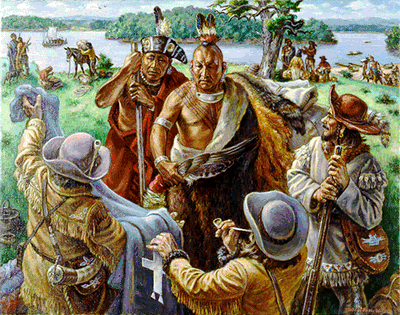
The real culture of violence in the American West of the latter half of the nineteenth century sprang from the U.S. government’s policies toward the Plains Indians. It is untrue that white European settlers were always at war with Indians, as popular folklore contends. After all, Indians assisted the Pilgrims and celebrated the first Thanksgiving with them; John Smith married Pocahontas; a white man (mostly Scots, with some Cherokee), John Ross, was the chief of the Cherokees of Tennessee and North Carolina; and there was always a great deal of trade with Indians, as opposed to violence. As Jennifer Roback has written, “Europeans generally acknowledged that the Indians retained possessory rights to their lands. More important, the English recognized the advantage of being on friendly terms with the Indians. Trade with the Indians, especially the fur trade, was profitable. War was costly” (1992, 9). Trade and cooperation with the Indians were much more common than conflict and violence during the first half of the nineteenth century.

Terry Anderson and Fred McChesney relate how Thomas Jefferson found that during his time negotiation was the Europeans’ predominant means of acquiring land from Indians (1994, 56). By the twentieth century, some $800 million had been paid for Indian lands. These authors also argue that various factors can alter the incentives for trade, as opposed to waging a war of conquest as a means of acquiring land. One of the most important factors is the existence of a standing army, as opposed to militias, which were used in the American West prior to the War Between the States. On this point, Anderson and McChesney quote Adam Smith, who wrote that “‘[i]n a militia, the character of the labourer, artificer, or tradesman, predominates over that of the soldier: in a standing army, that of the soldier predominates over every other character.’” (1994, 52). A standing army, according to Anderson and McChesney, “creates a class of professional soldiers whose personal welfare increases with warfare, even if fighting is a negative-sum act for the population as a whole” (52).

The change from militia to a standing army took place in the American West immediately upon the conclusion of the War Between the States. The result, say Anderson and McChesney, was that white settlers and railroad corporations were able to socialize the costs of stealing Indian lands by using violence supplied by the U.S. Army. On their own, they were much more likely to negotiate peacefully. Thus, “raid” replaced “trade” in white–Indian relations. Congress even voted in 1871 not to ratify any more Indian treaties, effectively announcing that it no longer sought peaceful relations with the Plains Indians. Anderson and McChesney do not consider why a standing army replaced militias in 1865, but the reason is not difficult to discern. One has only to read the official pronouncements of the soldiers and political figures who launched a campaign of extermination against the Plains Indians.


On June 27, 1865, General William Tecumseh Sherman was given command of the Military District of the Missouri, which was one of the five military divisions into which the U.S. government had divided the country. Sherman received this command for the purpose of commencing the twenty-five-year war against the Plains Indians, primarily as a form of veiled subsidy to the government-subsidized railroad corporations and other politically connected corporations involved in building the transcontinental railroads. These corporations were the financial backbone of the Republican Party. Indeed, in June 1861, Abraham Lincoln, former legal counsel of the Illinois Central Railroad, called a special emergency session of Congress not to deal with the two-month-old Civil War, but to commence work on the Pacific Railway Act. Subsidizing the transcontinental railroads was a primary (if not the primary) objective of the new Republican Party. As Dee Brown writes in Hear That Lonesome Whistle Blow, a history of the building of the transcontinental railroads, Lincoln’s 1862 Pacific Railway Act “assured the fortunes of a dynasty of American families . . . the Brewsters, Bushnells, Olcotts, Harkers, Harrisons, Trowbridges, Lanworthys, Reids, Ogdens, Bradfords, Noyeses, Brooks, Cornells, and dozens of others” (2001, 49), all of whom were tied to the Republican Party.

The federal railroad subsidies enriched many Republican members of Congress. Congressman Thaddeus Stevens of Pennsylvania “received a block of [Union Pacific] stock in exchange for his vote” on the Pacific Railroad bill, writes Brown (2001, 58). The Pennsylvania iron manufacturer and congressman also demanded a legal requirement that all iron used in constructing the railroad be made in the United States. Republican congressman Oakes Ames of Massachusetts was a shovel manufacturer who became “a loyal ally” of the legislation after he was promised shovel contracts (Brown 2001, 58). A great many shovels must have been required to dig railroad beds from Iowa to California.
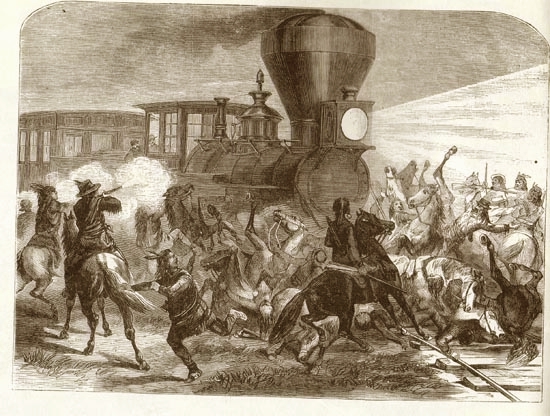
Sherman wrote in his memoirs that as soon as the war ended, “My thoughts and feelings at once reverted to the construction of the great Pacific Railway. . . . I put myself in communication with the parties engaged in the work, visiting them in person, and assured them that I would afford them all possible assistance and encouragement” (2005, 775). “We are not going to let a few thieving, ragged Indians check and stop the progress [of the railroads],” Sherman wrote to Ulysses S. Grant in 1867 (qtd. in Fellman 1995, 264).

The chief engineer of the government-subsidized transcontinental railroads was Grenville Dodge, another of Lincoln’s generals during the war with whom Sherman worked closely afterward. As Murray Rothbard points out, Dodge “helped swing the Iowa delegation to Lincoln” at the 1860 Republican National Convention, and “[i]n return, early in the Civil War, Lincoln appointed Dodge to army general. Dodge’s task was to clear the Indians from the designated path of the country’s first heavily subsidized federally chartered trans-continental railroad, the Union Pacific.” In this way, Rothbard concludes, “conscripted Union troops and hapless taxpayers were coerced into socializing the costs of constructing and operating the Union Pacific” (1997, 130).
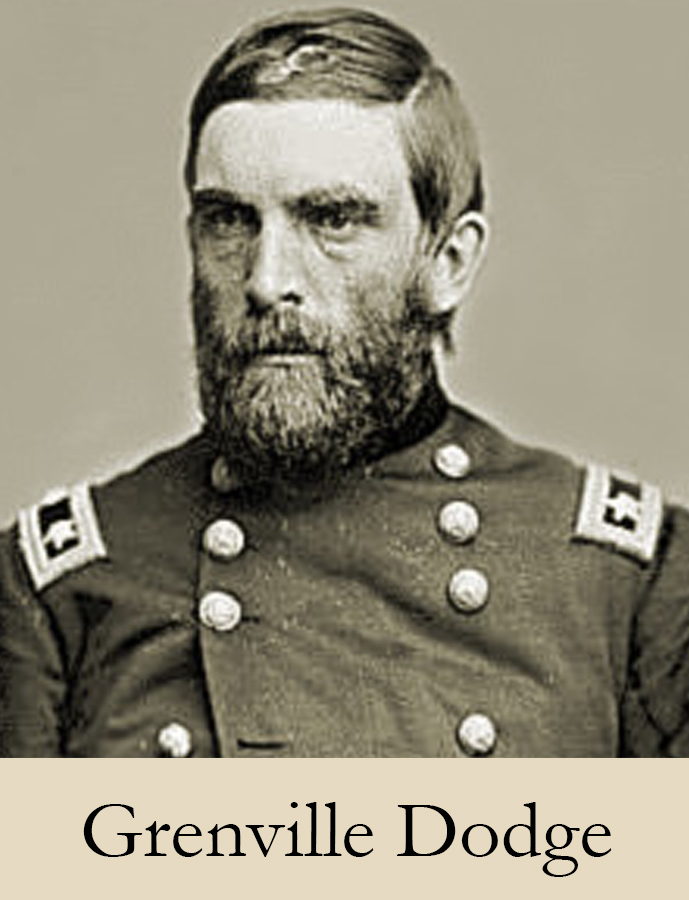
Immediately after the war, Dodge proposed enslaving the Plains Indians and forcing them “to do the grading” on the railroad beds, “with the Army furnishing a guard to make the Indians work, and keep them from running away” (Brown 2001, 64). Union army veterans were to be the “overseers” of this new class of slaves. Dodge’s proposal was rejected; the U.S. government decided instead to try to kill as many Indians as possible.

In his memoirs, Sherman has high praise for Thomas Clark Durant, the vice president of the Union Pacific Railroad, as “a person of ardent nature, of great ability and energy, enthusiastic in his undertaking” (2005, 775). Durant was also the chief instigator of the infamous Credit Mobilier scandal, one of the most shocking examples of political corruption in U.S. history. Sherman himself had invested in railroads before the war, and he was a consummate political insider, along with Durant, Dodge, and his brother, Senator John Sherman.

President Grant made his old friend Sherman the army’s commanding general, and another Civil War luminary, General Phillip Sheridan, assumed command on the ground in the West. “Thus the great triumvirate of the Union Civil War effort,” writes Sherman biographer Michael Fellman, “formulated and enacted military Indian policy until reaching, by the 1880s, what Sherman sometimes referred to as ‘the final solution of the Indian problem’” (1995, 260).

What Sherman called the “final solution of the Indian problem” involved “killing hostile Indians and segregating their pauperized survivors in remote places.” “These men,” writes Fellman, “applied their shared ruthlessness, born of their Civil War experiences, against a people all three [men] despised. . . . Sherman’s overall policy was never accommodation and compromise, but vigorous war against the Indians,” whom he regarded as “a less-than-human and savage race” (1995, 260).

All of the other generals who took part in the Indian Wars were “like Sherman [and Sheridan], Civil War luminaries,” writes Sherman biographer John Marszalek. “Their names were familiar from Civil War battles: John Pope, O. O. Howard, Nelson A. Miles, Alfred H. Terry, E. O. C. Ord, C. C. Augur . . . Edward Canby . . . George Armstrong Custer and Benjamin Garrison” (1993, 380). General Winfield Scott Hancock also belongs on this list.
Sherman and Sheridan’s biographers frequently point out that these men apparently viewed the Indian Wars as a continuation of the job they had performed during the Civil War. “Sherman viewed Indians as he viewed recalcitrant Southerners during the war and newly freed people after: resisters to the legitimate forces of an ordered society” (Marszalek 1993, 380). Marszalek might well have written also that Southerners, former slaves, and Indians were not so much opposed to an “ordered society,” but to being ordered around by politicians in Washington, D.C., primarily for the benefit of the politicians’ corporate benefactors.

“During the Civil War, Sherman and Sheridan had practiced a total war of destruction of property. . . . Now the army, in its Indian warfare, often wiped out entire villages” (Marszalek 1993, 382). Fellman writes that Sherman charged Sheridan “to act with all the vigor he had shown in the Shenandoah Valley during the final months of the Civil War” (1995, 270). Sheridan’s troops had burned and plundered the Shenandoah Valley after the Confederate army had evacuated the area and only women, children, and elderly men remained there (Morris 1992, 183). Even Prussian army officers are said to have been shocked when after the war Sheridan boasted to them of his exploits in the Shenandoah Valley. “[Sherman] insisted that the only answer to the Indian problem was all-out war—of the kind he had utilized against the Confederacy,” writes Marszalek. “Since the inferior Indians refused to step aside so superior American culture could create success and progress, they had to be driven out of the way as the Confederates had been driven back into the Union” (1993, 380).

Sherman’s compulsion for the “extermination” of anyone opposed to turning the U.S. state into an empire expressed the same reasoning he had expressed earlier with regard to his role in the War Between the States. In a letter to his wife early in the war, he declared that his ultimate purpose was “extermination, not of soldiers alone, that is the least part of the trouble, but the people.” Mrs. Sherman responded by expressing her similar wish that the conflict would be a “war of extermination, and that all [Southerners] would be driven like the swine into the sea. May we carry fire and sword into their states till not one habitation is left standing” (qtd. in Walters 1973, 61). Sherman did his best to take his wife’s advice, especially during his famous “march to the sea.” It is little wonder that Indian Wars historian S. L. A. Marshall observes, “[M]ost of the Plains Indian bands were in sympathy with the Southern cause” during the war (1972, 24).
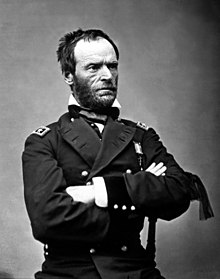
General Sherman
One theme among all of these Union Civil War veterans is that they considered Indians to be subhuman and racially inferior to whites and therefore deserving of extermination if they could not be “controlled” by the white population. Sherman himself thought of the former slaves in exactly the same way. “The Indians give a fair illustration of the fate of the negroes if they are released from the control of the whites,” he once said (qtd. in Kennett 2001, 296). He believed that intermarriage of whites and Indians would be disastrous, as he claimed it was in New Mexico, where “the blending of races had produced general equality, which led inevitably to Mexican anarchy” (qtd. in Kennett 2001, 297).

Sherman described the inhabitants of New Mexico, many of whom were part Mexican (Spanish), part Indian, and part Negro, as “mongrels.” His goal was to eliminate the possibility that such racial amalgamation might occur elsewhere in the United States, by undertaking to effect what Michael Fellman called a “racial cleansing of the land” (1995, 264), beginning with extermination of the Indians.
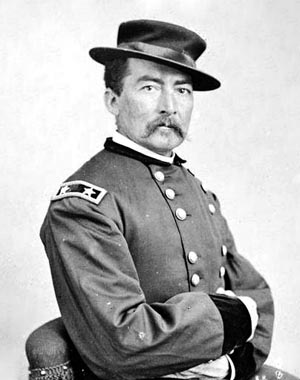
General Sheridan
Sherman, Sheridan, and the other top military commanders were not shy about announcing that their objective was extermination, a term that Sherman used literally on a number of occasions, as he had in reference to Southerners only a few years earlier. He and Sheridan are forever associated with the slogan “the only good Indian is a dead Indian.” “All the Indians will have to be killed or be maintained as a species of paupers,” he said. Sherman announced his objective as being “to prosecute the war with vindictive earnestness . . . till [the Indians] are obliterated or beg for mercy” (qtd. in Fellman 1995, 270). According to Fellman, Sherman gave “Sheridan prior authorization to slaughter as many women and children as well as men Sheridan or his subordinates felt was necessary when they attacked Indian villages” (1995, 271).

In case the media back east got wind of such atrocities, Sherman promised Sheridan that he would run interference against any complaints: “I will back you with my whole authority, and stand between you and any efforts that may be attempted in your rear to restrain your purpose or check your troops” (qtd. in Fellman 1995, 271). In later correspondence, Sherman wrote to Sheridan, “I am charmed at the handsome conduct of our troops in the field. They go in with the relish that used to make our hearts glad in 1864–5” (qtd. in Fellman 1995, 272).

Sherman and Sheridan’s troops conducted more than one thousand attacks on Indian villages, mostly in the winter months, when families were together. The U.S. army’s actions matched its leaders’ rhetoric of extermination. As mentioned earlier, Sherman gave orders to kill everyone and everything, including dogs, and to burn everything that would burn so as to increase the likelihood that any survivors would starve or freeze to death. The soldiers also waged a war of extermination on the buffalo, which was the Indians’ chief source of food, winter clothing, and other goods (the Indians even made fish hooks out of dried buffalo bones and bow strings out of sinews).

By 1882, the buffalo were all but extinct, and the cause was not just the tragedy of the commons. Because buffalo hides could be sold for as much as $3.50 each, an individual hunter would kill more than a hundred a day for as many days as he cared to hunt on the open plain. This exploitation of a “common property resource” decimated the buffalo herds, but the decimation was also an integral part of U.S. military policy aimed at starving the Plains Indians. When a group of Texans asked Sheridan if he could not do something to stop the extermination of the buffalo, he said: “Let them kill, skin, and sell until the buffalo is exterminated, as it is the only way to bring lasting peace and allow civilization to advance” (qtd. in Brown 1970, 265).

The escalation of violence against the Plains Indians actually began in earnest during the War Between the States. Sherman and Sheridan’s Indian policy was a continuation and escalation of a policy that General Grenville Dodge, among others, had already commenced. In 1851, the Santee Sioux Indians in Minnesota sold 24 million acres of land to the U.S. government for $1,410,000 in a typical “trade” (as opposed to raid) scenario. The federal government once again did not keep its side of the bargain, though, reneging on its payment to the Indians (Nichols 1978). By 1862, thousands of white settlers were moving onto the Indians’ land, and a crop failure in that year caused the Santee Sioux to become desperate for food. They attempted to take back their land by force with a short “war” in which President Lincoln placed General John Pope in charge. Pope announced, “It is my purpose to utterly exterminate the Sioux. . . . They are to be treated as maniacs or wild beasts, and by no means as people with whom treaties or compromises can be made” (qtd. in Nichols 1978, 87).


At the end of the month-long conflict, hundreds of Indians who had been taken prisoner were subjected to military “trials” lasting about ten minutes each, according to Nichols (1978). Most of the adult male prisoners were found guilty and sentenced to death—not based on evidence of the commission of a crime, but on their mere presence at the end of the fighting. Minnesota authorities wanted to execute all 303 who were convicted, but the Lincoln administration feared that the European powers would not view such an act favorably and did not want to give them an excuse to assist the Confederacy in any way. Therefore, “only” 38 of the Indians were hanged, making this travesty of justice still the largest mass execution in U.S. history (Nichols 1978). To appease the Minnesotans who wanted to execute all 303, Lincoln promised them $2 million and pledged that the U.S. Army would remove all Indians from the state at some future date.

One of the most famous incidents of Indian extermination, known as the Sand Creek Massacre, took place on November 29, 1864. There was a Cheyenne and Arapaho village located on Sand Creek in southeastern Colorado. These Indians had been assured by the U.S. government that they would be safe in Colorado. The government instructed them to fly a U.S. flag over their village, which they did, to assure their safety. However, another Civil War “luminary,” Colonel John Chivington, had other plans for them as he raided the village with 750 heavily armed soldiers. One account of what happened appears in the book Crimsoned Prairie: The Indian Wars (1972) by the renowned military historian S. L. A. Marshall, who held the title of chief historian of the European Theater in World War II and authored thirty books on American military history.
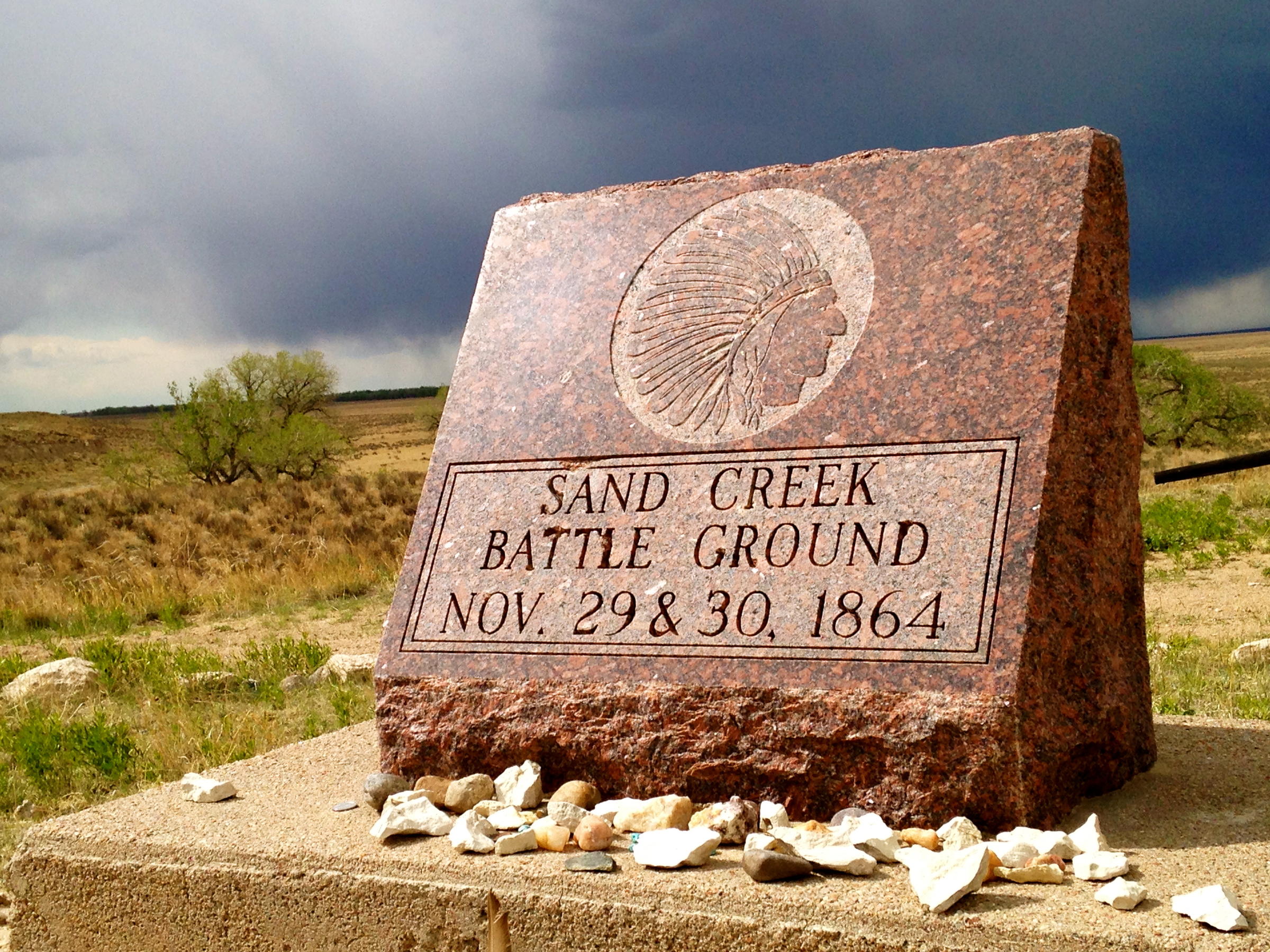
Chivington’s orders were: “I want you to kill and scalp all, big and little; nits make lice” (qtd. in Marshall 1972, 37). Then, despite the display of the U.S. flag and white surrender flags by these peaceful Indians, Chivington’s troops “began a full day given over to blood-lust, orgiastic mutilation, rapine, and destruction—with Chivington . . . looking on and approving” (Marshall 1972, 38). Marshall notes that the most reliable estimate of the number of Indians killed is “163, of which 110 were women and children” (39).

Upon returning to his fort, Chivington “and his raiders demonstrated around Denver, waving their trophies, more than one hundred drying scalps. They were acclaimed as conquering heroes, which was what they had sought mainly.” One Republican Party newspaper announced, “Colorado soldiers have once again covered themselves with glory” (qtd. in Marshall 1972, 39).

An even more detailed account of the Sand Creek Massacre, based on U.S. Army records, biographies, and firsthand accounts, appears in Dee Brown’s classic Bury My Heart at Wounded Knee: An Indian History of the American West: “When the troops came up to [the squaws,] they ran out and showed their persons to let the soldiers know they were squaws and begged for mercy, but the soldiers shot them all. . . . There seemed to be indiscriminate slaughter of men, women and children. . . .The squaws offered no resistance. Every one . . . was scalped” (1970, 89). Brown’s narrative gets much more graphic. The effect of such behavior was to eliminate forever the possibility of peaceful relations with these Indian tribes. They understood that they had become the objects of a campaign of extermination. As Brown writes, “In a few hours of madness at Sand Creek, Chivington and his soldiers destroyed the lives or the power of every Cheyenne and Arapaho chief who had held out for peace with the white men” (92). For the next two decades, the Plains Indians would do their best to return the barbarism in kind.
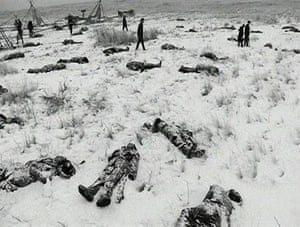
Wounded Knee
The books by Brown and Marshall show that the kind of barbarism that occurred at Sand Creek, Colorado, was repeated many times during the next two decades. For example, in 1868 General Winfield Scott Hancock ordered Custer to attack a Cheyenne camp with infantry, which Custer did. The attack led Superintendent of Indian Affairs Thomas Murphy to report to Washington that “General Hancock’s expedition . . . has resulted in no good, but, on the contrary, has been productive of much evil” (qtd. in Brown 1970, 157). A report of the attack prepared for the U.S. secretary of the interior concluded: “For a mighty nation like us to be carrying on a war with a few straggling nomads, under such circumstances, is a spectacle most humiliating, and injustice unparalleled, a national crime most revolting, that must, sooner or later, bring down upon us or our posterity the judgment of Heaven” (qtd. in Brown 1970, 157).

As the war on the Cheyenne continued, Custer and his troops apparently decided that to “kill or hang all the warriors,” as General Sheridan had ordered, “meant separating them from the old men, women, and children. This work was too slow and dangerous for the cavalrymen; they found it much more efficient and safe to kill indiscriminately. They killed 103 Cheyenne, but only eleven of them were warriors” (Brown 1970, 169).

Marshall calls Sheridan’s orders to Custer “the most brutal orders ever published to American troops” (1972, 106). This is a powerful statement coming from a man who wrote thirty books on American military history. In addition to ordering Custer to shoot or hang all warriors, even those that surrendered, Sheridan commanded him to slaughter all ponies and to burn all tepees and their contents. “Sheridan held with but one solution to the Indian problem—extermination—and Custer was his quite pliable instrument,” writes Marshall (1972, 106).

One of the oddest facts about the Indian Wars is that Custer famously instructed a band to play an Irish jig called “Garry Owens” during the attacks on Indian villages. “This was Custer’s way of gentling war. It made killing more rhythmic,” writes Marshall (1972, 107). During an attack on a Kiowa village on September 26, 1874, soldiers killed more than one thousand horses and forced 252 Kiowas to surrender. They were thrown into prison cells, where “each day their captors threw chunks of raw meat to them as if they were animals in a cage” (Brown 1970, 270). On numerous occasions, fleeing Indians sought refuge in Canada, where they knew they would be unmolested. Canadians built their own transcontinental railroad in the late nineteenth century, but they did not commence a campaign of extermination against the Indians living in that country as the government did in the United States.

No one denies that the U.S. government killed tens of thousands of Indians, including women and children, during the years from 1862 to 1890. There are various estimates of the number of Indians killed, the highest being that of historian Russell Thornton (1990), who used mostly military records to estimate that about forty-five thousand Indians, including women and children, were killed during the wars on the Plains Indians. It is reasonable to assume that thousands more were maimed and disabled for life and received little or no medical assistance. The thousands of soldiers who participated in the Indian Wars lived in a culture of violence and death that was cultivated by the U.S. government for a quarter of a century.

Conclusions

The culture of violence in the American West of the late nineteenth century was created almost entirely by the U.S. government’s military interventions, which were primarily a veiled subsidy to the government-subsidized transcontinental railroad corporations. As scandals go, the war on the Plains Indians makes the Credit Mobilier affair seem inconsequential. There is such a thing as a culture of war, especially in connection with a war as gruesome and bloody as the war on the Plains Indians. On this topic, World War II combat veteran Paul Fussell has written: “The culture of war . . . is not like the culture of ordinary peace-time life. It is a culture dominated by fear, blood, and sadism, by irrational actions and preposterous . . . results. It has more relation to science fiction or to absurdist theater than to actual life” (1997, 354). Such was the “culture” the U.S. Army created throughout much of the American West for the quarter century after the War Between the States. It is the “culture” that all military interventions at all times have created, and it contrasts sharply with the predominantly peaceful culture of the stateless civil society on the American frontier during much of the nineteenth century.

Fussell made this statement based on his personal experiences in combat, but it echoes the scholarly writing of Ludwig von Mises (who, let us remember, was also an Austrian army officer who had substantial combat experience during World War I): “What distinguishes man from animals is the insight into the advantages that can be derived from cooperation under the division of labor. Man curbs his innate Instinct of aggression in order to cooperate with other human beings. The more he wants to improve his material well being, the more he must expand the system of the division of labor. Concomitantly he must more and more restrict the sphere in which he resorts to military action.” Human cooperation under the division of labor in the civil society “bursts asunder,” Mises wrote, whenever “citizens turn into warriors” and resort to war (1998, 827).

It is not true that all whites waged a war of extermination against the Plains Indians. As noted earlier and as noted throughout the literature of the Indian Wars, many whites preferred the continuation of the peaceful trade and relations with Indians that had been the norm during the first half of the nineteenth century. (Conflicts sometimes occurred, of course, but “trade” dominated “raid” during that era.) Canadians built a transcontinental railroad without a Shermanesque campaign of “extermination” against the Indians in Canada. It is telling that the Plains Indians often sought refuge in Canada when the U.S. Army had them on the run.

The U.S. government dehumanized the Plains Indians, describing them as “wild beasts,” in order to justify slaughtering them, just as Sherman and his wife, among many others, dehumanized Southerners during and after the War Between the States. The same dehumanization by the government’s propaganda machine would eventually target Filipinos, who were killed by the hundreds of thousands at the hands of the U.S. Army during their 1899–1902 revolt against the U.S. conquest of their country barely a decade after the Indian Wars had finally ended. President Theodore Roosevelt “justified” the slaughter of hundreds of thousands of Filipinos by calling them “savages, half-breeds, a wild and ignorant people” (qtd. in Powell 2006, 64). Dehumanization of certain groups of “resisters” at the hands of the state’s propaganda apparatus is a prerequisite for the culture of war and violence that has long been the main preoccupation of the U.S. state.

It was not necessary to kill tens of thousands of Indians and imprison thousands more in concentration camps (“reservations”) for generations in order to build a transcontinental railroad. Nor were the wars on the Plains Indians a matter of “the white population’s” waging a war of extermination. This war stemmed from the policy of the relatively small group of white men who ran the Republican Party (with assistance from some Democrats), which effectively monopolized national politics for most of that time.

These men utilized the state’s latest technologies of mass killing developed during the Civil War and its mercenary soldiers (including the former slaves known as “buffalo soldiers”) to wage their war because they were in a hurry to shovel subsidies to the railroad corporations and other related business enterprises. Many of them profited handsomely, as the Credit Mobilier scandal revealed. The railroad corporations were the Microsofts and IBMs of their day, and the doctrines of neomercantilism defined the Republican Party’s reason for existing (DiLorenzo 2006). The Republican Party was, after all, the “Party of Lincoln,” the great railroad lawyer and a lobbyist for the Illinois Central and other midwestern railroads during his day.


References
Anderson, Terry, and P. J. Hill. 1979. An American Experiment in Anarcho-capitalism: The Not So Wild, Wild West. Journal of Libertarian Studies 3: 9–29.
Anderson, Terry, and Fred L. McChesney. 1994. Raid or Trade? An Economic Model of Indian-White Relations. Journal of Law and Economics 37: 39–74.
Benson, Bruce. 1998. To Serve and Protect: Privatization and Community in Criminal Justice. New York: New York University Press for The Independent Institute.
Brown, Dee. 1970. Bury My Heart at Wounded Knee: An Indian History of the American West. New York: Holt.———. 2001. Hear That Lonesome Whistle Blow. New York: Owl Books.
DiLorenzo, Thomas J. 2006. Lincoln Unmasked: What You’re Not Supposed to Know about Dishonest Abe. New York: Crown Forum.
Fellman, Michael. 1995. Citizen Sherman: A Life of William Tecumseh Sherman. Lawrence: University of Kansas Press.
Franz, Joe B. 1969. The Frontier Tradition: An Invitation to Violence. In The History of Violence in America, edited by Hugh D. Graham and Ted R. Gurr, 127–54. New York: New York Times Books.
Fussell, Paul. 1997. The Culture of War. In The Costs of War: America’s Pyrrhic Victories, edited by John Denson, 351–57. New Brunswick, N.J.: Transaction.
Hollon, W. Eugene. 1974. Frontier Violence: Another Look. New York: Oxford University Press.
Kennett, Lee B. 2001. Sherman: A Soldier’s Life. New York: HarperCollins.
Marshall, S. L. A. 1972. Crimsoned Prairie: The Indian Wars. New York: Da Capo Press.
Marszalek, John F. 1993. Sherman: A Soldier’s Passion for Order. New York: Vintage Books.
McGrath, Roger. 1984. Gunfighters, Highwaymen, and Vigilantes: Violence on the Frontier. Berkeley and Los Angeles: University of California Press.
Mises, Ludwig von. 1998. Human Action. Scholar’s Edition. Auburn, Ala.: Ludwig von Mises Institute.
Morris, Roy. 1992. Sheridan: The Life & Wars of General Phil Sheridan. New York: Vintage Books.
Nichols, David A. 1978. Lincoln and the Indians: Civil War Policy and Politics. Columbia: University of Missouri Press.
Powell, Jim. 2006. Bully Boy: The Truth about Theodore Roosevelt’s Legacy. New York: Crown Forum.
Roback, Jennifer. 1992. Exchange, Sovereignty, and Indian-Anglo Relations. In Property Rights and Indian Economies, edited by Terry Anderson, 5–26. Savage, Md.: Roman & Littlefield.
Rothbard, Murray N. 1997. America’s Two Just Wars: 1775 and 1861. In The Costs of War: America’s Pyrrhic Victories, edited by John Denson, 119–33. New Brunswick, N.J.: Transaction.
Sherman, William T. 2005. Memoirs. New York: Barnes & Noble.
Thornton, Russel. 1990. American Indian Holocaust and Survival: A Population History Since 1492. Oklahoma City: University of Oklahoma Press.
Umbeck, John. 1981. Might Makes Rights: A Theory of the Formation and Initial Distribution of Property Rights. Economic Inquiry 19: 38–59.
Walters, John Bennett. 1973. Merchant of Terror: General Sherman and Total War. New York: Bobbs-Merrill.

Thomas J. DiLorenzo is a Research Fellow at The Independent Institute, and Professor of Economics at Loyola College in Maryland.
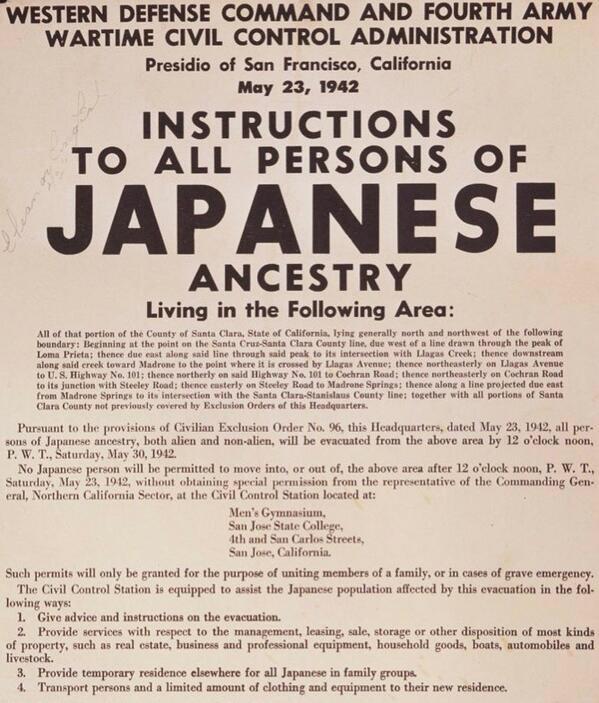
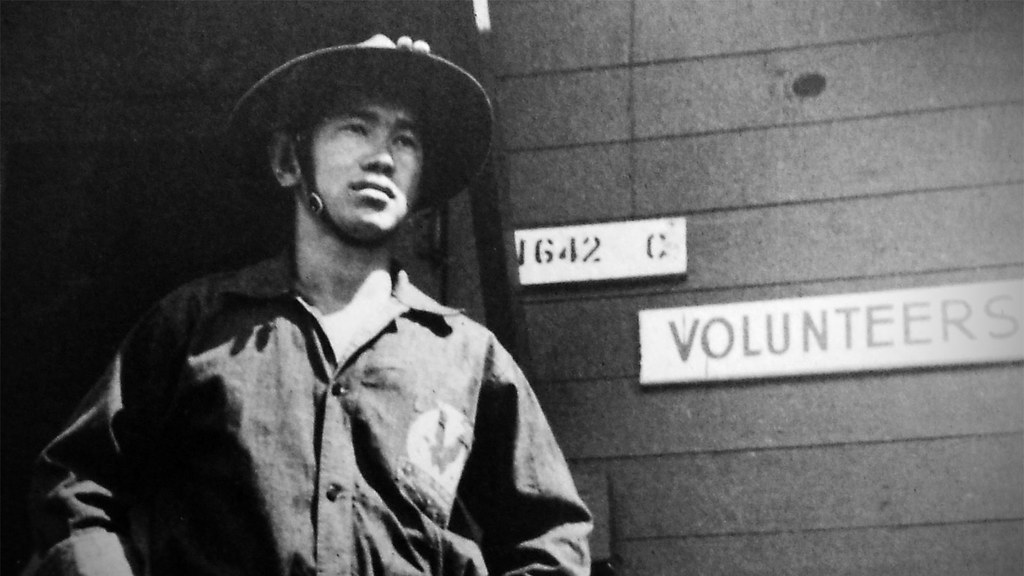

Unlikely World War II Soldiers Awarded Nation’s Highest Honor

Sunday, November 11, 2018

Nearly 70 years after the Japanese attack on Pearl Harbor and the United States’ entry into World War II, Japanese-American soldiers receive the country’s highest civilian honor.

by BARBARA MARANZANI

Almost immediately after the December 7, 1941, attack on the U.S. naval base at Pearl Harbor, the loyalty of all those of Japanese descent living in America, regardless of their citizenship status, was called into question. In February 1942, President Franklin D. Roosevelt signed Executive Order 9066, which authorized the War Department to establish military zones in much of the western United States. Under this order, residents with “Foreign Enemy Ancestry” could be placed under surveillance, detained and even relocated by military fiat. Few Americans of European ancestry were detained under this order, which was primarily directed at those of Japanese descent. Eventually, more than 110,000 Japanese and Japanese Americans living on the U.S. mainland were forcibly removed and interned in 10 relocation centers. There, the detainees were subjected to harsh conditions that included overcrowding, water shortages, sub-standard housing and exposure to extreme weather.

In Hawaii, where ethnic Japanese accounted for more than one-third of the islands’ population, first-generation Japanese and Nisei faced similar suspicions. Although few in Hawaii were relocated, their freedoms were severely curtailed. Many military advisors expressed their concerns over the loyalty of Japanese residents serving in the armed forces, and efforts were soon underway to remove those who had served prior to Pearl Harbor. Members of the Hawaii National Guard were temporarily disarmed, and local ROTC students and cadets were dismissed from service. Determined to prove their loyalty to the United States and come to the defense of their fellow Hawaiians, these former servicemen formed a civilian aide group, the “Varsity Victory Volunteers” or VVV, which provided the physical labor needed for the massive construction of U.S. military bases in the Pacific.

Impressed with the VVV’s determination–and swayed by vocal protests over treatment of the Nisei soldiers–the War Department reversed course, announcing the formation of an all-Nisei combat unit, the 100th Infantry Battalion. After nearly a year of training on the U.S. mainland, the 100th was deployed to North Africa in September 1943, where it participated in the attacks on Monte Cassino, the breakout from Anzio and the final Allied Offensive push from Rome to the Arno River. In August of that year, the 100th was reorganized and became part of the 442nd Regimental Combat Team (RCT), another Japanese-American unit, under which it would serve for the rest of the war.

Formed just six months after the 100th, the 442nd RCT included additional soldiers from Hawaii, but was primarily comprised of volunteers from the internment camps and Japanese Americans who had served in the U.S. Army prior to the war. In June 1944, they too were deployed to Europe, where they fought in eight major campaigns in France, Italy and Germany. In October of that year, they played a key role in the bloody rescue of the “Lost Battalion,” an Allied unit that had been trapped and surrounded by Axis forces in the Vosges forest in France. In April 1945, the men of the 442nd–many of whom had family members living in U.S. internment camps–were among the first Allied troops to participate in the liberation of the Nazi concentration camp at Dachau, a sobering experience that would haunt many of them for decades. Eventually, more than 13,000 soldiers would serve in the regiment, with more than 700 members killed or missing in action.

The 442nd became the most decorated unit of its size in U.S. military history. In less than two years of combat, the unit earned more than 18,000 awards, including 9,486 Purple Hearts, 4,000 Bronze Stars and 21 Medals of Honor. Upon their return to the United States, they were praised by President Harry Truman for their brave stand both home and abroad, and were even the subject of a 1951 film, “Go for Broke”; the film’s title was derived from the unit’s official slogan. Many members of the 442nd went on to distinguished careers in science, academia and government, including nine-term U.S. Senator Daniel Inouye from Hawaii, who lost an arm due to World War II combat injuries and was among those attending Wednesday’s event.

Also honored at the ceremony were the more than 6,000 Japanese Americans who served in the Military Intelligence Service, or MIS, during the war. These members, many of whom were recruited directly from internment camps, provided translation and interrogation assistance to the war effort. The MIS is perhaps best known for the crucial role it played in deciphering a captured set of Japanese military documents, known as the “Z Plan,” which outlined plans for a final, large-scale counterattack on Allied forces in 1944. The discovery of the Z Plan has been hailed as one of the most important military intelligence successes of World War II.

Wolf Land - a history of wolves in Ireland

Sunday, September 23, 2018

Wolves from Oppian of Apamea Cynegetica, 10th Century.


Wolves in Ireland were once an integral part of the Irish countryside and culture, but are now extinct. The last wild wolf in Ireland is said to have been killed in 1786, three hundred years after they were believed to have been wiped out in England and a century after their disappearance in Scotland.  

The grey wolf (Canis lupus) is a canine of the order Carnivora, an apex predator largely feeding on ungulates. The earliest radiocarbon date for Irish wolf remains come from excavated cave sites in Castlepook Cave, north of Doneraile, County Cork, and dates back to 34,000 BC. Wolf bones discovered in a number of other cave sites, particularly in the counties of Cork, Waterford and Clare indicate the presence of wolves throughout the Midlandian ice age which probably reached its peak between 20,000 BC and 18,000 BC. By about 14,000 BC Ireland became separated from Great Britain, which, itself, still formed part of mainland Europe, to become an island. Wolves were one of just a few species of land animal in Ireland that survived through the Nahanagan Stadial, a cold period that occurred between 10,800 BC and 9500 BC. Wolves were a major part of Ireland's postglacial fauna, as evidenced by their prominence in ancient Irish myths and legends, in a number of place names (both Irish and English), in archaeological sites, along with a considerable number of historical references. The ringforts, a common feature of the Irish landscape, were built partly as a defense against wolves and to protect livestock, over the period 1000 BC to AD 1000.

According to the Annals of Loch Cé, the poet Cúán úa Lothcháin (died 1024) was "slain by the men of Tethfa. God performed a ‘poet's miracle,' manifestly, on the party that killed him, for they died an evil death, and their bodies were not buried until wolves and birds preyed upon them." Among one of the earliest historic references to wolves attacking people in Ireland occurs in the Annals of Tigernach under the year 1137: The Blind one of ... that is, Giolla Muire, was killed by wolves. Under the year 1420 in the Annála Connacht is the statement "Wolves killed many people this year."  In 1571, as a result of its comprehensive destruction by "James Mac Maurice ... (and) ... the warlike troops of the Clann-Sweeny and Clann-Sheehy", Kilmallock "became the receptacle and abode of wolves" In 1573, the aftermath of the battle of Bel-an-Chip was described - "Noisy were the ravens and carrion-crows, and other ravenous birds of the air, and the wolves of the forest, over the bodies of the nobles slain in the battle on that day." In 1581 William Odhar O Carroll was put "unsparingly to the sword, and detested (the thought of) shewing him quarter or mercy. They slew him, and left his body under the talons of ravens and the claws of wolves."  In the aftermath of the Desmond rebellion, the body of a Dr. Saunders was found in Desmond in early 1583 who perished miserably, having fallen a victim to famine and the effects of exposure to the weather, and whose body was discovered partially devoured by wolves In the aftermath of the wreck of the Spanish Armada in 1588, Francisco de Cuellar turned to check upon a companion only to find him dead. There he lay on the ground with more than six hundred other dead bodies which the sea cast up, and the crows and wolves devoured them, without there being any one to bury them.

The port books of Bristol record between a yearly average of between 100 and 300 wolfskins exported from Ireland throughout the 1500s and a total of 961 skins in a single year. Pilib Ó Súilleabháin Béirre (c. 1590 – 1660), writing of Ireland and particularly Munster after the end of the Nine Years' War, described the aftermath: THUS the war was finished. Ireland was almost entirely laid waste and destroyed, and terrible want and famine oppressed all, so that many were forced to eat dogs and whelps: many not having even these, died. And not only men but even beasts were hungry. The wolves, coming out of the woods and mountains, attacked and tore to pieces, men weak from want. The dogs rooted from the graves rotten carcases partly decomposed. And so there was nought but abundance of misery ...Throughout most of the first half of the 17th century, Ireland had a substantial wolf population of not less than 400 and may be as high as 1000 wolves at any one time. One of the nicknames used for Ireland at this time was “wolf-land”.

The first instance of legislation against Irish wolves dates back to 1584 when John Perrot, the Lord Deputy of Ireland, ordered Robert Legge to come up with a scheme to encourage the destruction of problem wolves. Further records of legislation occur in 1610 and 1611. In 1614, an Englishman named Henric Tuttesham was offered £3 for every wolf he killed. The wolf population at the time was high enough for Tuttesham to be authorised to keep four men and 24 hounds in every county for seven years, a total of 128 men and 768 hounds. The bulk of anti-wolf legislation occurred during the decade following the Cromwellian conquest of Ireland. A number of writers from this time period suggest that as a result of ongoing military campaigns in Ireland, particularly the Cromwellian wars 1641-1652 and the devastation of much of the country and, with increasing numbers of farmed animals, wolf numbers were increasing and seen as a threat to business.

The level of rewards and bounties established by Oliver Cromwell's regime attracted a few professional wolf hunters to Ireland, mostly from England. Politically, the prospect of numbers of armed Irish roaming around the country hunting wolves was not acceptable, given the ongoing conflict between the Irish and the new English settlers, so it was seen as much safer for the English authorities to encourage men from their own country to deal with the wolf problem. The problems caused by wolves were considered serious enough by Cromwell's government to impose a ban on the exportation of Irish Wolfhounds. 

In 1652 the Commissioners of the Revenue of Cromwell's Irish Government set substantial bounties on wolves, £6 for a female, £5 for a male, £2 for a subadult and 10 shillings for a cub. In the same year, measures were taken for the destruction of wolves in the Barony of Castleknock, county Dublin. A grand total of £243 5s 4d was paid for wolf kills in Galway, Mayo, Sligo and part of Leitrim formerly within the precinct of Galway in 1655 or 1665, depending on the author. Between the period July 1649 and November 1656 the total amount of bounty paid out for wolf kills in Ireland as a whole was £3,847.  Galway, Mayo, Sligo and part of Leitrim had proportionately more wolves than the rest of the country, given that large tracts of this area were relatively untouched by humans.[1] A Captain Edward Piers was leased land over a five-year period in Dunboyne, County Meath on the condition that he kill fourteen wolves and 60 foxes. In the 1690s Rory Carragh was hired to kill the last two wolves in one part of Ulster and was equipped with a boy and two wolf dogs. The last reliable observation of a wolf in Ireland comes from County Carlow when a wolf was hunted down and killed near Mount Leinster for killing sheep in 1786.


History Behind Friday the 13th

Friday, July 13, 2018


Long considered a harbinger of bad luck, Friday the 13th has inspired a late 19th-century secret society, an early 20th-century novel, a horror film franchise and not one but two unwieldy terms—paraskavedekatriaphobia and friggatriskaidekaphobia—that describe fear of this supposedly unlucky day.

THE FEAR OF 13

Just like walking under a ladder, crossing paths with a black cat or breaking a mirror, many people hold fast to the belief that Friday the 13th brings bad luck. Though it’s uncertain exactly when this particular tradition began, negative superstitions have swirled around the number 13 for centuries.

While Western cultures have historically associated the number 12 with completeness (there are 12 days of Christmas, 12 months and zodiac signs, 12 labors of Hercules, 12 gods of Olympus and 12 tribes of Israel, just to name a few examples), its successor 13 has a long history as a sign of bad luck.

The ancient Code of Hammurabi, for example, reportedly omitted a 13th law from its list of legal rules. Though this was probably a clerical error, superstitious people sometimes point to this as proof of 13’s longstanding negative associations.

Fear of the number 13 has even earned a psychological term: triskaidekaphobia.

WHY IS FRIDAY THE 13TH UNLUCKY?

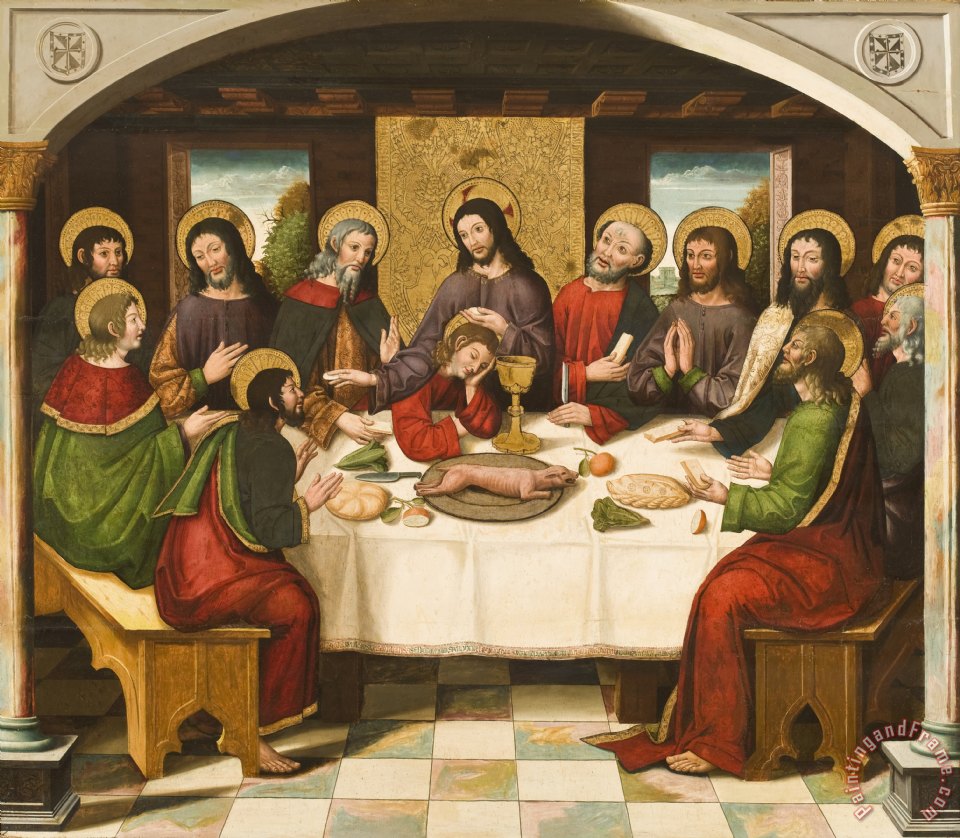
According to biblical tradition, 13 guests attended the Last Supper, held on Maundy Thursday, including Jesus and his 12 apostles (one of whom, Judas, betrayed him). The next day, of course, was Good Friday, the day of Jesus’ crucifixion.

The seating arrangement at the Last Supper is believed to have given rise to a longstanding Christian superstition that having 13 guests at a table was a bad omen—specifically, that it was courting death.

Though Friday’s negative associations are weaker, some have suggested they also have roots in Christian tradition: Just as Jesus was crucified on a Friday, Friday was also said to be the day Eve gave Adam the fateful apple from the Tree of Knowledge, as well as the day Cain killed his brother, Abel.

THE THIRTEEN CLUB

In the late-19th century, a New Yorker named Captain William Fowler (1827-1897) sought to remove the enduring stigma surrounding the number 13—and particularly the unwritten rule about not having 13 guests at a dinner table—by founding an exclusive society called the Thirteen Club.

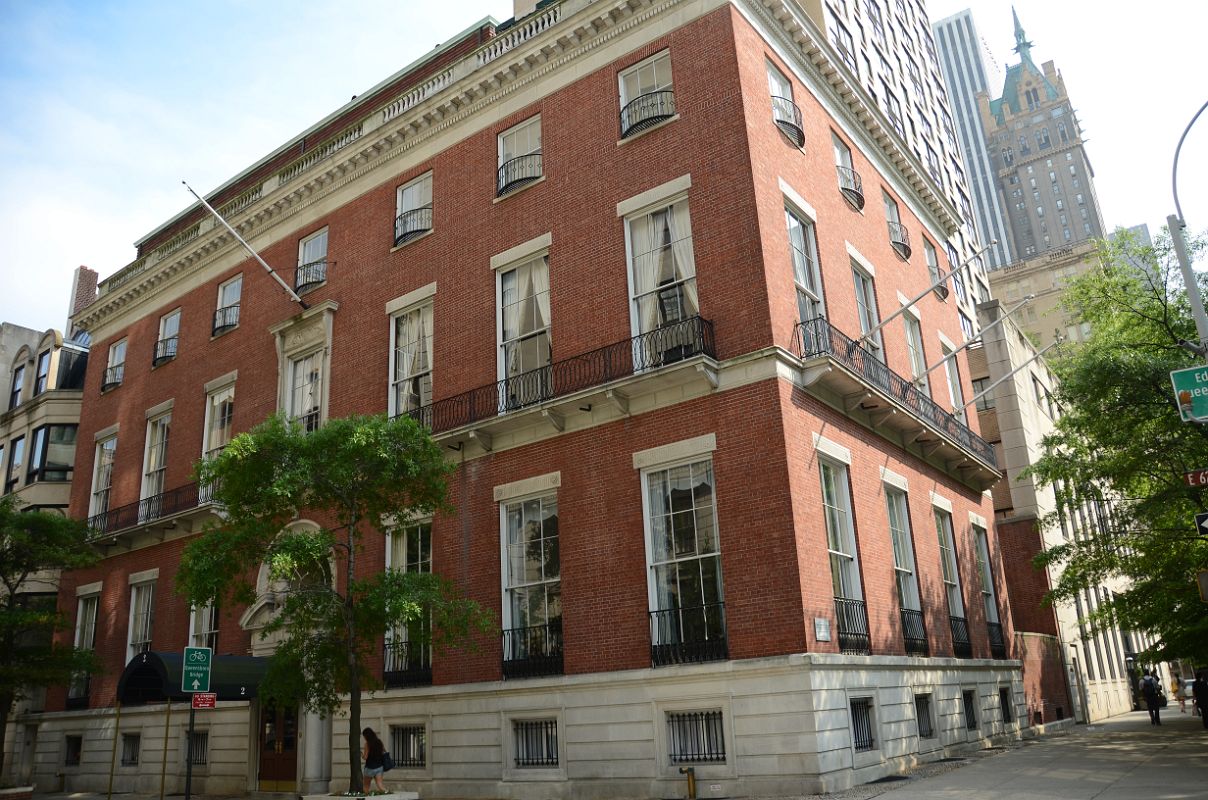
The group dined regularly on the 13th day of the month in room 13 of the Knickerbocker Cottage, a popular watering hole Fowler owned from 1863 to 1883. Before sitting down for a 13-course dinner, members would pass beneath a ladder and a banner reading “Morituri te Salutamus,” Latin for “Those of us who are about to die salute you.”

Four former U.S. presidents (Chester A. Arthur, Grover Cleveland, Benjamin Harrison and Theodore Roosevelt) would join the Thirteen Club’s ranks at one time or another.

FRIDAY THE 13TH IN POP CULTURE

An important milestone in the history of the Friday the 13th legend in particular (not just the number 13) occurred in 1907, with the publication of the novel Friday, the Thirteenth written by Thomas William Lawson.

The book told the story of a New York City stockbroker who plays on superstitions about the date to create chaos on Wall Street, and make a killing on the market.

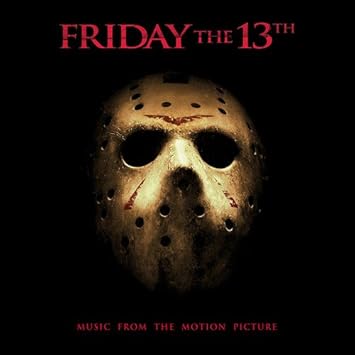
The horror movie Friday the 13th, released in 1980, introduced the world to a hockey mask-wearing killer named Jason, and is perhaps the best-known example of the famous superstition in pop culture history. The movie spawned multiple sequels, as well as comic books, novellas, video games, related merchandise and countless terrifying Halloween costumes.

WHAT BAD THINGS HAPPENED ON FRIDAY 13TH?

On Friday, October 13, 1307, officers of King Philip IV of France arrested hundreds of the Knights Templar, a powerful religious and military order formed in the 12th century for the defense of the Holy Land.

Imprisoned on charges of various illegal behaviors (but really because the king wanted access to their financial resources), many Templars were later executed. Some cite the link with the Templars as the origin of the Friday the 13th superstition, but like many legends involving the Templars and their history, the truth remains murky.

In more recent times, a number of traumatic events have occurred on Friday the 13th, including:

1.) the German bombing of Buckingham Palace (September 1940)
2.) the murder of Kitty Genovese in Queens, New York (March 1964)
3.) a cyclone that killed more than 300,000 people in Bangladesh (November 1970)
4.) the disappearance of a Chilean Air Force plane in the Andes (October 1972)
5.) the death of rapper Tupac Shakur (September 1996)
6.) the crash of the Costa Concordia cruise ship off the coast of Italy, which killed 30 people (January 2012)

Reprinted: history.com
SOURCES
“The Origins of Unlucky Friday the 13th,” Live Science.
“Friday the 13th: why is it unlucky and other facts about the worst day in the calendar,” The Telegraph.
“13 Freaky Things That Happened on Friday the 13th,” Live Science.
“Here’s Why Friday the 13th is Considered Unlucky,” Time.
“Friggatriskaidekaphobes Need Not Apply,” New-York Historical Society.

Where The Bleep Did That Curse Word Come From?

Saturday, March 10, 2018

We all have our favorite curse words to use when we're feeling angry, frustrated, upset, excited, surprised. Curse words provide a lot when it comes to expressing emotion. But, where did those filthy (yet cathartic) expressions come from?  Well, we took a deep look into some of the most common swears around. Warning: vulgar language ahead...


sh*& 
The word sh*& has been around since the early 1500s, and it is used mainly to describe an "obnoxious person." The word stems from the Middle Dutch schiten and the Middle English shiten (meaning "to defecate").  In the early 1920s, people began to use this curse word when describing something they don't care about (not giving a sh*&). Then, in the 60s, it was used to refer to someone who was drunk or sh*&faced. And, these days people use it to describe countries and locations they find unappealing (sh*&hole, anyone?)

A$$h*&#
This curse word (meaning "something bad" or "a mean person") dates all the way back to the 1300s, originating from the Middle English word, arshole. Back then, it was mainly used to describe someone's rear. Fast forward to the 1930s, when the word became more commonly used in reference to a "contemptible person." Today, we tend to keep up with this usage, showcasing our extreme distaste for someone by calling them . . . this term. (And, don't forget the hole part of the word when you are going for this meaning, because otherwise you're just calling that person a donkey.)

The F word
There are a lot of theories behind the origins of the swear word, f*&# (meaning "to have sex" or "to meddle"). It is believed that it originated from the Middle Dutch fokken, meaning "to thrust, copulate with." However, the truth behind the word still remains unknown because it was banned by the dictionary at the time it originated. What we do know is the word was first seen written in 1495–1505. In the second edition of the Oxford English Dictionary it appeared as fukkit and was later seen written by the poet Sir David Lyndesay as we know it today. In the 1900s, it grew into a word used to describe a very bad mistake and to tell someone to leave you alone.

B!#ch
While the word b!#ch (or a "lewd woman" or "female dog") is a rather common term these days (and can be used in both positive and negative ways), back in the 1800s, it was considered more offensive than the word whore.  B!#ch actually dates back to before the year 1000 though. (It could be featured as one of our oldest words!) It originates from the Middle English word bicche. But, it wasn't written until the 1400s when it was first seen in a play to describe a woman.

G#dd@mn
This swear word (which is normally used to express disgust) can be offensive to those with religious backgrounds (since it's seen as saying the Lord's name in vain). Stemmed from late Middle English, this word came about in the 1400s and became more popular as time went on. The word d@mn itself originates from damnare, a Latin word meaning "to condemn."  Fun fact: During the Hundred Years War, the French were said to refer to the English soldiers as "les goddems" because of their excessive use of profanities.

M%therf*c%er
According to Slate, the phrase m%therf*c%er (referring to someone who or something that is despicable) first came about in the "late 19th and early 20th centuries" and was originally documented during a "Texas Court of Appeals’ account." It was here that a witness referred to a defendant as a “G!d d@mned m#ther-f—ing, b@st@#%ly son-of-a-b—h.” Wow.  Then in World War II, the phrase became a more popular way to say someone or something is irritating or ruthless.  But, as the 1950s rolled around, the word "m%therf*c%er" took a turn for the good if you can believe it. It became used in a more favorable way to describe someone you're close with. For example, "I love him madly, he’s my m—erf—ng man," which was a line from the 1954 poetry book, The Life.

He!!
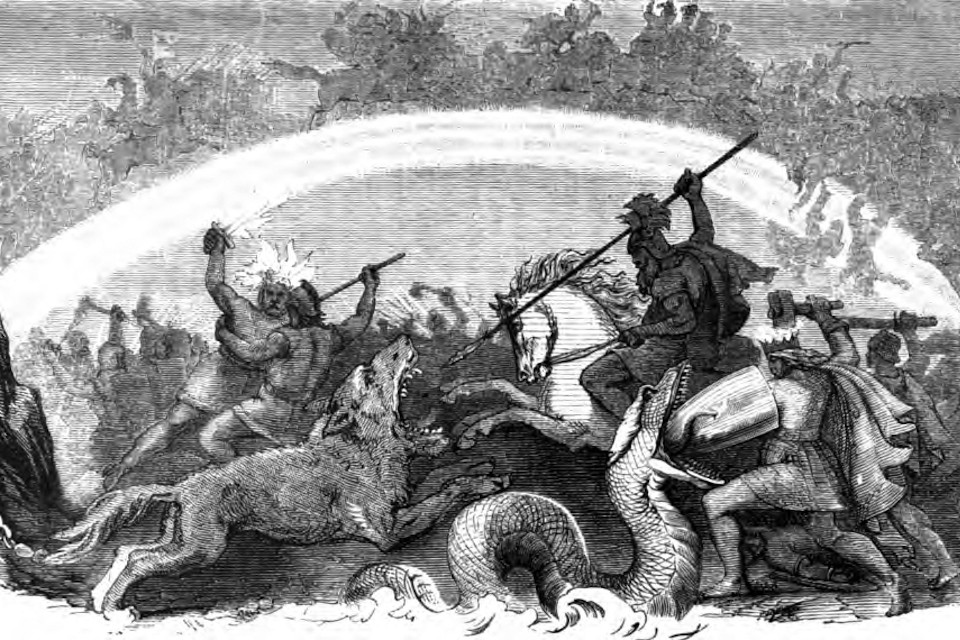
We've all heard (or used) the phrase, go to he!! at least once or twice in our lifetime. But, where does this curse word come from? Sure, we know it has something to do with heaven and the other place, but did you know it stems from the Gothic halja, which translates to the "underworld"?  The term came about sometime before 900 and could also possibly be related to Old Norse hel, which is found in Norse mythology (North Germanic people with ties to Norse paganism) and is the name of the ruler of the "evil dead." 

Pi$$
The word pi$$ might not be as offensive as some of the other curse words on this list, but it's still kind of foul. It can refer to anything from using the restroom to being exceedingly angry. And, the United Kingdom uses it to reference someone who has had one too many cocktails. The word came about somewhere between 1250–1300, originating from the Old French word pissier. In World War II, it was used to describe someone who was performing badly: pi$$-poor. Later, in 1947, the word was more commonly used to reference someone who was angry or irritated.

B@st@rd
When formally used, the word b@st@rd simply means a child who is "born out of wedlock." However, when using it as a curse word, it refers to an "unpleasant or despicable person."  It's been said that the word originated somewhere between 1250–1300 and is possibly from Old French. In the late 16th century, the use of the word became prevalent when describing a "brat, or small child" and later became a more crude term in the 1800s. 

Cr@p
The word cr@p (meaning "to talk nonsense" or "excrement") is kind of like the less distasteful way to say s#*t. Nonetheless, the word is still considered a crude curse word.  The word comes from the Middle Dutch word, krappe ("to cut off, pluck off"). Then, in the 15th century, it became a word you'd use more frequently to describe someone or something that is considered "nonsense."

Ready for some great fake swear words  on Screen you Fracking Smeghead?

Orson Scott Card cautioned against using invented swears in fiction because the fake “oaths” risked making the story silly. Fair enough. But, frak it, sometimes cussing is the only way to let it out. On-screen rules occasionally prohibit or limit profanity. So, screenwriters get creative. Even Fantastic Mr. Fox had to release some heat (“This is going to be a total cluster-cuss,” “You scared the cuss out of us”).  Using cuss as a cuss is cute, but pretty vanilla. For real kapow, here are some of the most creative fake swears seen on screen.


"Blurgh, you jagweed"
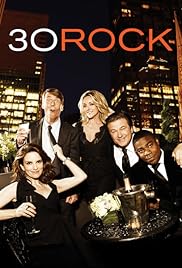
Liz Lemon first uttered “Blurgh!” in a 2007 episode of 30 Rock. It was so good, so compelling a swear that she used it three other times in the episode. It’s been immortalized ever since as a word expressing “revulsion, deflation, and disgust.” Tina Fey, who plays Ms. Lemon and who is the show’s creator, explained to GOOD Magazine that Blurgh was one of the invented swears the writers came up with while trying to circumvent the no-swear policy of network television. Jagweed, another zesty example of lewd-Lemon lexicon, is synonymous with “douchebag.” The fake cuss is a funny corruption of jerk off and jack off (you know, relating to the masturbatory undertaking).


“You fusking cloff-prunker”
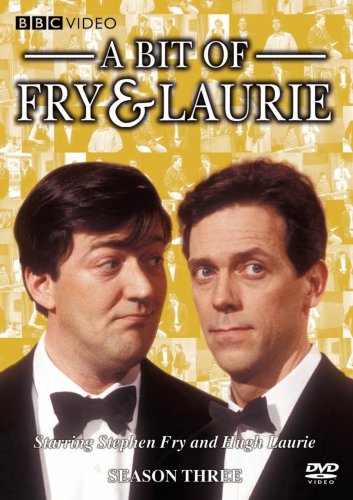
In the early 1990s, the British comedy sketch show A Bit of Fry & Laurie was a platform for Stephen Fry and Hugh Laurie to engage in hilarious bouts of wordplay. Aside from “The Language Conversation” (an episode focusing on the flexibility and arbitrariness of language), the most inventive displays of lexical wizardry were the meaningless but nevertheless obscene-sounding tell-offs: “You fusking cloff-prunker” and “Skank off, you cloffing cuck, you're all a load of shote-bag fuskers, so prunk that up your prime-ministering pim-hole."  When asked to explain what cloff-prunker means, Stephen Fry explains it’s a practice whereby “one person frangilates another’s slimp . . . and smuctat[es] them avially.” Very clear.

"Frak!"
Frak is one of the most well-known fake swears in fiction. Its appearances off the mothership Battlestar Galactica, in entertainment as divergent as Gossip Girl and the Dilbert comic strip, demonstrate frak’s immense appeal.  A futuristic stand-in for the f-word, frak first appeared in the 1978 series Battlestar Galactica. Originally spelled “frack,” the word was revamped for the 2010 revival of the series so that it reflected its true “four-letter-word” nature. Though not an intention of the producers, the respelling now differentiates the fictional swear from the practice of fracking . . . frak fracking!

"Frell!"
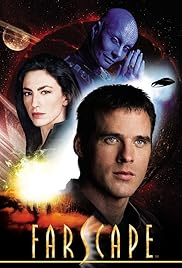
Farscape’s frell is another example of how writing teams imaginatively side-step the boundaries of what can be said on TV. According to a Farscape fan site, frell is used by Sebaceans, bipedal beings that look uncannily like humans (and can be played by them on the show, to the producers’ relief). Frell replaces the “coarse Anglo-Saxon monosyllable indicating sexual intercourse,” i.e., our old favorite: the f-word.


"Gorram!"
In 2002, Joss Whedon combined Western and sci-fi genres in Firefly, set in the year 2517. The language of the show is a mix of English and Chinese, reflecting Whedon’s visionary world in which the U.S. and China are the two most powerful cultures on the planet. Gorram is a substitute for God damn, and may be a “Chinglish” pronunciation of the swear according to Mentalfloss.com. Some fans question if gorram is actually a Chinese word, or somehow related to similar sounding words meaning “testicles,” “rotten,” and “f-d up” in various Chinese dialects. Others say there is no connection to Chinese.  However, Charles Dickens coined gormed in the 1800s, possibly as a mild form of “gosh darned” (and therefore of “God damned”) so this one may be older than BrownCoats know.    

“What the cabbage?”
The leap from adult sci-fi genres to a child’s fantasy adventure cartoon is not insignificant. Especially considering this slideshow is about invented cuss words. Adventure Time appeals to both kids and parents through the interactions of the protagonists, Finn and Jake, with magical characters in the Land of Ooo.  Along the way English words conjuring (for some) utter doom and dismay—like lump, cabbage, and math—are cheekily used in especially emotional dialogue: “I lumping hate them!,” “What the cabbage?,” and “I wanna go to sleep and you’re creeping me the math out!” While not coined from scratch, these cusses are certainly creative.


"Why, you stuck up, half-witted, scruffy-looking, nerfherder! "
Hop aboard the Millennium Falcon to venture back into the universe of fake swears. Star Wars is rife with inventive curse words, from f-bomb alternatives (farkled and krong), insults (laser brain and the Huttese E chu ta), to general expletives like vape and varp.  In The Empire Strikes Back, Princess Leia insults Han Solo as a nerfherder, someone who—as anyone from Alderaan would know—herds nerfs or “foul-smelling furry quadrupeds bred for meat across the galaxies.” Nerfherders had a bad reputation for being dirty and smelling like nerfs.

“Shazbot!”
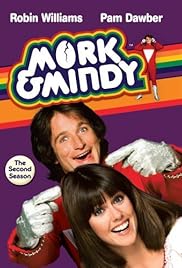
Coincidentally, while the human survivors on Battlestar Galactica were yelling “Frack you!” to the Ceylons, Mork (in Mork & Mindy) was exclaiming “Shazbot!” Robin Williams, the actor portraying Mork, might have invented the Orkan profanity in a moment of ad-libbed genius. Shazbot evokes the smelly “shiz” of a robot, and it was comfortably used in place of the four-letter word for the smelly droppings of a human.


"Smeggy, smegging smegger!”
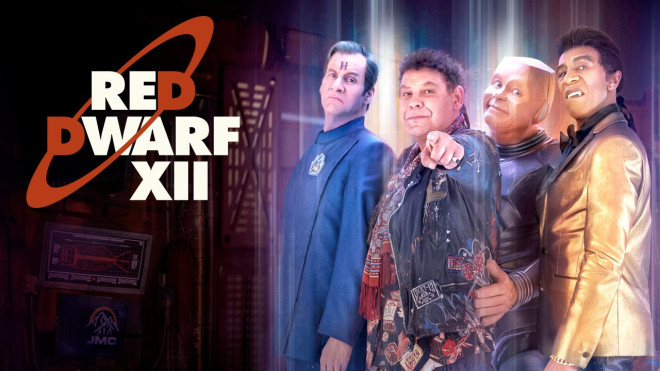
“. . . smeg off . . . you annoyingly little smeggy, smegging smegger!” proclaims a character in the British sci-fi comedy Red Dwarf. Based on this insult, in which smeg so flexibly morphs into any part of speech, it seems smeg can be used in place of at least a couple choice curse words. Adding head is a nice option if going for a version of shizhead (we have to euphemize; we know you understand).  The Red Dwarf screenwriters claim no association, but this coined obscenity has a fairly disgusting real cousin in English (and in physical anatomy): smegma is the “thick, cheeselike secretion” that collects beneath and around male and female netherparts. That’s smegging gross.

“Where the smurf are we?”
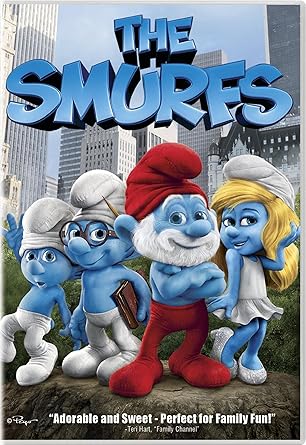
To help you move on from that last smegging visual, we’ll turn to The Smurfs. The little blue mushroom-dwellers use the word smurf to mean just about anything: “Our village has been smurfed by a smurf that smurfs smurf.” “When you smurf that smurf, you smurf off a whole series of smurfed smurfections . . . .”  Only Smurfs truly understand what one Smurf-speaking Smurf is smurfing. Smurf comes close to a minced oath for God in Papa Smurf’s cries of “Great smurfs!” and “Name of a smurf!” In the 2011 movie, there was no smurf about it: Smurf became a smurf-word: “Where the smurf are we?”

Resource: Dictionary.com

Freedom for California’s Indians

Friday, February 2, 2018


On April 27, 1863, nearly five months after President Abraham Lincoln issued the Emancipation Proclamation, California abolished its system of forced apprenticeship for American Indians. Under the apprenticeship provisions of the state’s Act for the Government and Protection of Indians, several thousand California Indians, mostly children, had suffered kidnapping, sale and involuntary servitude for over a decade.

Newly elected California Republicans, eager to bring California in line with the national march toward emancipation, agitated for two years in the early 1860s to repeal Indian apprenticeship. And yet those Republicans’ limited vision of Indian freedom — one in which Indians would be free to reap the fruits of their labor, but not free from the duty to labor altogether — made for an incomplete Indian Emancipation Proclamation. Although California was distant from the battlefields of the Civil War, the state endured its own struggle over freedom that paralleled that of the North and the South.

The Republican campaign to abolish Indian servitude ran up against nearly a century of coerced Indian labor in California. Under Spanish and Mexican rule, thousands of California Indians worked on missions and ranches, bound to their employment through a combination of economic necessity, captivity, physical compulsion and debt.

With the United States’ conquest of California in 1847, the discovery of gold in 1848 and the formation of a state government in 1849, new American lawmakers expanded and formalized Indian servitude to meet growing demands for labor. The 1850 Act for the Government and Protection of Indians authorized whites to hold Indian children as wards until they reached adulthood. Indian adults convicted of vagrancy or other crimes could be forced to work for whites who paid their bail.

Skyrocketing demand for farmworkers and domestic servants, combined with violence between Indians and invading whites in the northwestern part of the state, left Democrats in war-torn counties clamoring for the expansion of the 1850 Indian act. A “general system of peonage or apprenticeship” was the only way to quell Indian wars, one Democrat argued. A stint of involuntary labor would civilize Indians, establish them in “permanent and comfortable homes,” and provide white settlers with “profitable and convenient servants.” In 1860, Democrats proposed new amendments to the Act for the Government and Protection of Indians that allowed whites to bind Indian children as apprentices until they reached their mid-20s. Indian adults accused of being vagrants without steady employment, or taken as captives of war, could be apprenticed for 10-year terms. The amendments passed with little debate.

As the nation hurtled toward a war over slavery, Californians watched as their own state became a battleground over the future of human bondage. Apprenticeship laws aimed at “civilizing” the state’s Indians encouraged a robust and horrific slave trade in the northwestern counties. Frontier whites eagerly paid from $50 to $100 for Indian children to apprentice. Groups of kidnappers, dubbed “baby hunters” in the California press, supplied this market by attacking isolated Indian villages and snatching up children in the chaos of battle. Some assailants murdered Indian parents who refused to give up their children.

Once deposited in white homes, captive apprentices often suffered abuse and neglect. The death of Rosa, a 10-year-old apprentice from either the Yuki or Pomo tribes, provides a grim case in point. Just two weeks before the repeal of Indian apprenticeship, the Mendocino County coroner found the dead girl “nearly naked, lying in a box out of doors” next to the home of her mistress, a Mrs. Bassett of Ukiah. Neighbors testified that the child was sick and restless and that Basset shut her out of the house in the middle of a raging snowstorm. Huge bruises on Rosa’s abdomen suggested that Bassett had mercilessly beaten the ill child before tossing her out into the blizzard. Mendocino officials never brought charges in the case.

The horrors of kidnapping and apprenticeship filled the state’s newspapers just as antislavery California Republicans swept into power in 1861-2. Republicans assailed the apprentice system and blamed Democrats for the “abominable system of Indian apprenticeship, which has been used as a means of introducing actual slavery into our free State.” George Hanson, an Illinois Republican whose close relationship with Abraham Lincoln earned him an appointment as Northern California’s superintendent of Indian affairs, vowed to eliminate the state’s “unholy traffic in human blood and souls.” He tracked down and prosecuted kidnappers in the northwestern counties (with mixed success) and petitioned the State Legislature to abolish the apprenticeship system.

In 1862, Republican legislators proposed two new measures to overturn the 1860 apprenticeship amendments. Democrats blocked these bills and insisted that apprenticeship “embodied one of the most important measures” for Indians’ “improvement and civilization.” Indian servitude lived on.

By the time the legislature met again in the spring of 1863, however, all signs pointed to the destruction of the apprenticeship system. Republicans won firm majorities in both houses of the State Legislature, and in January California became the first state to endorse Lincoln’s Emancipation Proclamation. Republicans again proposed to repeal the apprenticeship amendments, and this time they achieved their goal with no debate or dissent. Involuntary labor for American Indians died quietly.

Or did it? Republicans had eliminated all the 1860 amendments authorizing the forced apprenticeship of American Indians. But they had left intact sections of the original 1850 act that mandated the forcible binding out of Indian convicts and vagrants. Moreover, repeal only prevented future apprenticeships; Republican legislation did not liberate Indians already legally apprenticed. After repeal, as many as 6,000 Indian children remained servants in white homes.

The incomplete nature of Indian emancipation in California reflected Republicans’ own ambivalence toward Indian freedom. Most Republicans opposed the kidnapping and enslavement of Indians. They believed that Indians, like former African-American slaves, should be entitled to reap the economic rewards of their own work. On the other hand, they asserted that the key to “civilizing” Indians was to force them to participate in the California labor market. They could not be free to support themselves through traditional mobile hunting and gathering practices that removed their labor from white supervision and tied up valuable natural resources. Such a lifestyle was, in Republicans’ minds, little more than idle vagrancy. Just as their Republican colleagues on the East Coast argued that ex-slaves should be schooled to labor by being bound to plantation wage work through long-term contracts, California Republicans began to advocate compulsory labor as the only way to cure Indian vagrancy.

The Republican vision for Indian freedom quickly took shape after the Civil War. Republican appointees who oversaw California’s Indian reservations compelled all able-bodied Indians to work on the reservation farms. Those who refused, or who pursued native food-gathering practices, forfeited the meager federal rations allotted to reservation Indians. By 1867, one Republican agent declared that “the hoe and the broadaxe will sooner civilize and Christianize than the spelling book and the Bible.” He advocated forcing Indians to work until they had been “humanized by systematic labor.” These policies persisted long after the war. At Round Valley Reservation, one critic observed in 1874 that “compulsion is used to keep the Indians and to drive them to work.” Indian workers received no payment for “labor and no opportunity to accumulate individual property.”

The ambiguous postwar liberty of California Indians reveals that the Civil War was a transcontinental conflict that reached west to the Pacific. The freedoms won in wartime, and the unfulfilled promises of emancipation, encompassed not only black and white, free and slave, but also American Indian peoples who suffered from distinctly Western systems of unfree labor. The Civil War and Reconstruction are best understood as truly national struggles over the meaning and limits of freedom, north, south and west.


On the April 22, 1850, to “craft its own code of compulsory labor”, an "Act for the Government and Protection of Indians” was passed which legally curtailed rights of Indians. It provided that:

  • "White persons or proprietors could apply to the Justice of Peace for the removal of Indians from lands in the white person’s possession"
  • "Any person could go before a Justice of Peace to obtain Indian children for indenture. The Justice determined whether or not compulsory means were used to obtain the child. If the Justice was satisfied that no coercion occurred, the person obtain a certificate that authorized him to have the care, custody, control and earnings of an Indian until their age of majority (for males, eighteen years, for females, fifteen years)." In actual practice this section lead to a trade system of kidnapped Indian children, either stolen from their parents or taken from the results of militia attacks during the 1850s and 1860s. Frontier whites often eagerly paid $50–$100 for Indian children to apprentice and so groups of kidnappers would often raid isolated Indian villages, snatching up children in the chaos of battle.
  • “If a convicted Indian was punished by paying a fine, any white person, with the consent of the Justice, could give bond for the Indian’s fine and costs. In return, the Indian was “compelled to work until his fine was discharged or cancelled.” The person bailing was supposed to “treat the Indian humanely, and clothe and feed him properly.” The Court decided “the allowance given for such labor.”” Local authorities were often required to hire out the “convicts” within the next 24 hours to the highest bidder essentially creating a system of selling slaves out of jail.
  • Indians could not testify for or against whites. It was illegal to sell or administer alcohol to Indians and if Indians were convicted of stealing any valuable or livestock, they could receive any number of lashes (as long as it was less than 25) and a fine of up to $200.