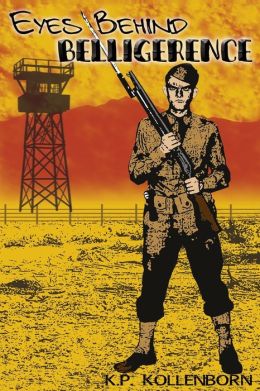
When I was fourteen I came across a book, called Kim/ Kimi, about a young girl searching for her real father, who was Japanese American, only to discover he had been imprisoned in an American internment camp during WWII. I had never heard of these camps up to that point in my life. In Europe, yes, even China, but not here. Not in America. I had to know and therefore went to the library to begin my journey. Three years later I put together a 30 minute mini-documentary for a class project and then wrote a short story. Nine years later I expanded that story into a novel. Why? I don’t have any Japanese ancestry in my family tree. I live in the Midwest and grew-up in a medium size town where cultural diversity is a bit underdeveloped. My reason is simple: I don’t want to continue to live in a conical world. Consciousness does not develop and mature by existing in a frozen pond, therefore after I had graduated college in 2000, my husband and I drove to Bainbridge Island, just on the tail skirt of Seattle, Washington, to pursue my journey. I already had made a couple of contacts to set up interviews; contacts I found researching on the internet.
My first interview was with a dentist, Frank, who is a Sansei. Frank, much to my surprise, was tremendously open about his experiences, from what he could remember since he was only two when he and his family were evacuated. He remembered the “ping-ping-ping” sounds of the train transporting them to a place where there were rumors of large mosquitoes awaiting them there to suck them dry. He remembered chasing tumble weeds down the dusty streets. And the time he became stuck in the mud, being too small to get himself out, crying until one of his uncles popped him out, leaving his boots rooted in the mud.
Frank was also candid about the Japanese-American community itself, including their own prejudices and insecurities as well as their resilience, because after all, as Mark Twain had simply put it: “There is a great deal of human nature in people.” Then, with a smile, he told me that he was an extra on the movie set Snow Falling Over Cedars during the big evacuation scene, (which you can see him standing directly behind the main character as she tearfully stands on the ferry boat.) After the interview, Frank supplied me with a long list of others who had consented with telling their stories in the past but only three out of the list were willing to speak with me. I took no offence given that I was a stranger. For instance, one told me over the phone that he had no further interests with additional interviews and, to confirm his point about his past, he revealed that he had burned his army uniform after his discharge.
So, the three who had agreed were family and a good friend of Frank’s; all of whom were incredibly gracious and humble that words fail to provide justice for their sincerity. Kay, his cousin and retired teacher, spoke with me with such ease that I felt like we had been friends for years and, ironically, had traveled through my home state once. Lily, his sister, cooked lunch for me and my husband in her home, but I won’t go into details of how we sadly struggled trying to use chop sticks as utensils. Just won’t. And then there was Gerald, his friend. Not only did he and his wife took us out to dinner but also bought our meals. (I have to admit, that was the best Thai I’ve eaten thus far!)
I chose Bainbridge Island as the setting because I wanted my characters to come from an isolated town where they felt safe and experienced minor racism. The purpose of this was to show the aggressive chains of events that would challenge their once secured lives. In keeping true to historical fact, I researched the different communities that were sent to Manzanar, many that came from Los Angles and other cities. This would provide an interesting clash in the upcoming trials and tribulations for my characters.
Two years later I even made a journey to Manzanar, which survives as a historical marker. And to this day it persists to creep into my dreams now and again with its surreal beauty. The dry desert air and its tornado-like dust devil, even in a calm wind. The two monstrous mountain ranges that seems to make you disappear. The rectangular residue of where the barracks use to stand. But the small cemetery still exists as does the medal administration building that stands nearby the two guard posts. Since then, Manzanar has been rebuilt, to an extent, to preserve the consequences of mass hysteria and a reminder of our accountability towards humanity.
The reason I chose Manzanar out of the other ten internment camps are influenced by two special details: First- Manzanar was the most photographed camp out of all the others; the others included Tule Lake, Minidoka, Heart Mountain, Poston, Gila River, Topaz, Granada, Rohwer and Jerome. Photographers like Toyo Miyatake,Dorothea Lange and Ansel Adams helped preserve the conditions of camp life and even wrote books based on their experiences. Their hard work made it a littler easier for me to visualize and interpret these imprisonment camps best to my ability. Second, although there were riots in the other camps, the one in Manzanar revealed the political clashes within their own community which then lead to the outbreak. AND it ironically it fell on the eve of Pearl Harbor’s first anniversary.
Although writing can educate as well as entertain, yet what makes art incredibly amazing, to that of paintings, photographs, and music, it transposes emotion into another form of humanity, and therefore, it is our humanity which keeps all of us striving for an improved future.
In Japanese, Issei means “first generation.” They had emigrated from Japan, beginning from the 1880’s up until 1924 when Congress stopped all legal migration. The Gentlemen’s Agreement Act of 1907, an unofficial agreement between the U.S. and Japan, was the first domino put into place in a series of racial discrimination. The oral contract was as following: Japan agreed NOT to issue any more passports to its citizens via the path to the United States in EXCHANGE for the U.S. tolerating their presence BUT would at least allow their wives and children to immigrate. And thus, the Picture Bride phenomenon came into the scene. At the same time, Hawaii- before it became a unionized state, turned into a loophole. The Issei could work in the Territory of Hawaii THEN migrate to the mainland. Unfortunately all of that came to an end when the Agreement expired and would never be renewed until a new immigration law was put in effect in 1953. Of course the Japanese were not the firsts to be discriminated against regarding immigration laws. The Chinese Exclusion Act of 1882 set in motion the inequality and segregation of all Asian communities which included the Chinese, Japanese, and Koreans.
The Issei’s children, who were born in America, were referred to as the Nisei. Nisei means “second generation” in Japanese, although by American standards they are considered to be the first generation. Despite that the Nisei were born with an American citizenship, the harsh discriminations on the West Coast bounded them as second class citizens. Schools and other public places were segregated. Educated jobs were exceedingly restrictive. Labors, the Knights of Columbus, the American Legion, and Sons and Daughters of the American Revolution were notorious in speaking out and provoking violence against the Asian populace. But in spite of these problems, the Nisei flourished and pursued. The JACL, Japanese American Citizen League, made an influential impact in our society by providing a support system and fighting against these injustices. Among this generation includes Pat Morita, best known for The Karate Kid series, George Takei and Roberto Ito from Star Track, and Jack Soo from Barney Miller.
Then there were the Kibei. Kibei, meaning “returning to America,” although born with American citizenships were educated in Japan. Many were the same age as the Nisei, yet were often discriminated against their own peers because they were considered “too Japanese.” The Kibei truly received the raw end of the stick.
The Sansei are the Nisei’s children and were very young during their incarceration in the camps. Among this generation includes US Congress representatives Bob and Doris Matsui.
To learn more about the different generations and political differences during WWII, check out historical fiction Eyes Behind Belligerence.
According to Merriam-Webster, the meaning of a Concentration Camp is "a camp where persons (as prisoners of war, political prisoners, or refugees) are detained or confined." Unfortunately the usage of these camps are without trails for people's so-called crimes. Use of the word concentration comes from the idea of concentrating a group of people who are in some way undesirable in one place, where they can be watched by those who incarcerated them. For example, in a time of insurgency, potential supporters of the insurgents may be placed where they cannot provide supplies or information.
The earliest of these camps may have been those set up in the United States for Cherokee and other Native Americans in the 1830s; however, the term originated in the reconcentrados (reconcentration camps) set up by the Spanish military in Cuba during the Ten Years' War (1868–1878) and by the United States during the Philippine–American War (1899–1902). Polish historian Władysław Konopczyński has suggested the first concentration camps were created in Poland in the 18th century, during the Bar Confederation rebellion, when the Russian Empire established three concentration camps for Polish rebel captives awaiting deportation to Siberia. The English term "concentration camp" grew in prominence during the Second Boer War (1899–1902), when they were operated by the British in South Africa. There were a total of 45 tented camps built for Boer internees and 64 for black Africans. Of the 28,000 Boer men captured as prisoners of war, 25,630 were sent overseas. The vast majority of Boers remaining in the local camps were women and children. Over 26,000 women and children were to perish in these concentration camps.
In the 20th century the arbitrary internment of civilians by the state became more common and reached a climax with Nazi concentration camps (1933–1945). As a result of this trend, the term "concentration camp" carries many of the connotations of "extermination camp" and is sometimes used synonymously. A concentration camp, however, is not necessarily a death-camp. Because of these negative connotations, the term "concentration camp", originally itself a euphemism, has been replaced by newer euphemisms such as internment camp, resettlement camp, detention facility, etc., regardless of the actual circumstances of the camp, which can vary a great deal.
So, where does that leave the understanding of the Japanese-American during WWII? “We knew we had been in concentration camps. Even President Roosevelt used the term. But by the wars end the word concentration camp had taken on a meaning of unimaginable horror. So one of the reasons we didn’t talk much about them is not that they were so bad, but they weren’t bad enough.” Quoted by documentary A Rabbit in the Moon, by Emiko Omori.
Let us not misinterpreter what these "detention centers" really represented and learn from our past's mistakes.
When I rang the door bell in the summer of 2000, a plump man in his late seventies answered. He looked similar to Rodney Dangerfield, especially in the nose. We had never met before, and I wasn’t certain if my friend, who had initially invited me, informed him about my arrival. The writer’s meeting was supposed to start at 7:30 p.m. every Thursday. It had been a ritual for nearly a decade. He tilted a half smile anyway, eyes beaming at a pretty girl, and invited me in. His white T-shirt and dark, crinkly slacks was not the style I had envisioned. Also, it was evident he needed a hair cut because the length reached over his ears. I had envisioned a distinguished beard or pipe or even a brown sweater with leather patches at the elbows. After all, wasn’t that a standard for aging writers?
I followed him into his dining room, a short distance from the front door. He had a slight limp, which later I learned about his club foot, one of the many difficulties he overcame in his long life. In the middle of the room stretched a lengthy table. He sat at the head of it and I was amazed to see his walls camouflaged in replicated paintings, from top to bottom like an incomplete Rubik's Cube. Picasso was the only one I had recognized, much to my ignorance at that time. Another wall supported shelves and shelves of books. The mismatched coloring of the book covers mirrored Picasso's wild designs. In a corner, a baby grand piano faced a large window, opposite from the fireplace.
Leonard had been famous in his time. He was a published writer since the 1950's and knew other legendary authors like Mario Puzo, Joseph Heller, Thomas Berger, and James T. Farrell. He left a trail of other writing groups from coast to coast. I didn’t know what to expect from him, whether he would be harsh or boring, arrogant or humble. After all, I sat in his dining room instead of a classroom, and yet, a fragment of people in my Kansas hometown knew about his presence. He used to write for my local newspaper, The Manhattan Mercury, but since then, he was forgotten as if a misplaced trophy inside a crowded closet. My hometown took him for granted, not appreciating an accomplished writer who dwelled among us.
While Leonard chatted about the hot weather, his fat dog, a Cocker Spaniel with a lovable personality, wobbled into the room. I began stroking the panting, hairy pet.
“That’s Mugsy. Abbreviation for an overweight sausage,” Leonard joked, speaking with a New York, Jewish accent. “You think he looks like one? Yeah? He wouldn’t look like one if I didn’t look like one. That’s the problem!”
I liked him without delay. Despite his rough exterior, pitted face, and thick fingers, he had a simple humor about him. During the two years I knew Leonard, I learned of the obstacles and misfortunes he underwent to gain his success. He emerged out of the ghetto, far from a modest origin unlike mine, a middle class upbringing. It was at that point I realized writing could also be a means of survival. His beginnings weren't as graceful as mine, to say in the least.
"Grass, Milk, and Children"
Leonard Bishop, born October 17, 1922, grew up in New York City in severe poverty. His father, Edward, was a criminal, heroine addict, and wife beater who exhausted time in every prison in the state of New York and parts of New Jersey. Once, Leonard and his older brother, Bernard, spent a year in a Catholic orphanage because, while his father stooped in jail, his mother, Esther, had no other means to feed or clothe her children. He told a story of sitting in a long, tin bath tub with ten or fifteen other children as the nuns splashed scolding water on their heads and scrubbed their fingers with wire brushes.
In addition, he was born with a club foot and dyslexia. His nickname was “Feets.” Often, teachers branded him as either lazy or stupid, and often he sat in a corner with the pointed “Dunce” hat. At one point in his young life, he became a hobo and traveled all over the country on trains. It would seem fate had dismissed his life at the bottom of a bucket. Yet, ironically, a hobo woman gave Leonard a thick book she carried in her tattered bag and taught him to read. This woman, whom he’d forgotten her name but the title, Beau Geste, inspired him to achieve more in his life. That and “feeling jinxed.” He had been nearly killed on a few occasions, details he never spoke of. “If you believe in luck,” he argued, “you know she’s and ill-dispositioned lover.” So he returned home and enrolled in college, The New School of Social Research.
Leonard attended a creative writing class, along with people like Mario Puzo. Feeling intimidated by them because they were better educated, he wrote anyway. “[I] wanted to write. To slam the words on paper and make them scream. One word would start it. A word ripped out of [my] guts to start the pool of blood. Then fill it up. With tissue and vein and muscle and thought. Then give it to people. And let them see [a] man.”
One professor, Dr. Glicksberg, who didn’t judge his writings strictly as obscene, detected a gift. With a limited vocabulary, Leonard wrote simply and wrote with aggressive realism, repeatedly using foul language. His professor used a series of asterisks in replacement of the obscenities when he passed other copies to the class. In his introduction from his book, Dare to be a Great Writer, he noted: “The instructor said, ‘Crude, yes. You might even say they [your characters] were ill-mannered, and vulgar. But they stink with power!’. . . It was the dynamic that came from the Great Depression starvation and the scrabble to stay alive. The other students wanted to hear what I wrote.”
In one of his short stories, “Grass, Milk, and Children,” an account about children of the slums, he wrote: “When I was four years old, I spoke to God. I begged him to pay the rent for us . . . It was cold and dirty sleeping in the street . . . [but] God put his oily tongue in his fat cheek and watched me. When I cried, he didn’t dry my tears . . . And I knew that God was a lie . . . God is the cold and the dirt and the cement and the shadows and the rains. . . God is a dirty cellar without music.” The bitter tones that repeatedly excelled in his writings likewise excelled in compassion. “The word . . . that replaces hate is humanity . . . A voice that tells humanity. Living until the skin of your soul is filled to the last pore. Until every sift and sound and touch and smell and taste opens its arms and pulls you in. To be alive. That is holy, that is sacred.”
A Gift
The second time I arrived on time for class, I again spent a few moments alone with Leonard before the others would materialized. I enjoyed the personal attention. His kindness and wisdom made me feel unique. He had a special gift for that. Reaching in his bookcase, he removed one that he had written, Dare to be a Great Writer: 329 Keys to Powerful Fiction.
Handing it to me, he humorously said, "This isn't a bad book. You might want to consider it for future references."
In the chapters, which are outlined like a study guide, a list of "Don'ts" appear in the back. "Don't Fear the Novel's Size." "Don't Postpone Your Novel." "Don't Marry Another Writer." And my favorite, "Don't Quit Your (Day) Job." There is no particular order of his book, and the convenience is comparable to a recipe album. If there is something you need offhand, rather than reading an entire chapter to seek advice, you search the index for development of characters, dialogue, flashbacks, and so forth, then the specific element under that listing.
"Why do you want to write?" he once asked me.
I shrugged and replied, "Because I just do." I felt silly with that answer. It offered no illumination to the meaning of life, as writers are supposed to inherit, or so I've read. But above all, it felt more of a childish response compared to his life experiences.
Leonard lifted his brows and proceeded, "You don't even have to be a talented writer to write. Did you know that? You just need the will to write. The more you do it, the better you become." He beamed a cocky smile. "Now that's good advice. You better write it down!"
The Overfed Butcher
Three months into his classes, and after a harsh disagreement with another professor, he left college. Of course his departure didn’t stop him from writing. With the help from Dr. Glicksberg, Leonard entered a writer’s contest and won $500. It was a proud day. That same day, he received a phone call from Bernard, his brother. Their father had been pacing in an apartment’s hallway, with a loaded gun, waiting for their mother to return home. When Leonard arrived at the top of the staircase, his check still stashed in his coat’s pocket, he watched his father pace like a rabid dog, high on heroine. Leonard’s anger overwhelmed him. He lunged for his father, punching him until his father bled and whimpered. Bernard pulled him away and slammed him against the wall, telling him the importance of Jewish traditions, that sons should never hit fathers despite the numerous times their father had hit them.
“I was deeply shocked,” Leonard wrote. “Not because he [my father] was trying to kill my mother (he had tried it several times before) but because I could see myself ten years from now, standing inside my father’s skin . . . I was against the wall, clawing for an opening to hide in. I could hear the shovels of hell clattering at me, feel the opened oven searing my soul, and I was terrified. It was then that I decided to use my typewriter to become an author."
Two years later in 1952, he published his first novel, Down All Your Streets. The writing contest caught the attention of Dial Press and offered him a contract. He saw opportunity. “I was a dummy, but I was not stupid.” He continued to write about his life experiences. About violence. Poverty. Drug addiction. Lost loves.
Shortly after his first publication, he ran into a childhood classmate while on the subway. “Feets! Hey Feets!” his classmate cried out. “You’re not gonna believe this! There’s some guy usin’ your name on a book! Maybe you oughta sue the guy and get some money, huh?”
Leonard didn’t tell his former classmate that the “guy” was really him. He laughed it off as if a coincidence. For a man, who grew up in a tough environment, to admit he was a writer would be as if admitting he were “weak,” a “sissy,” or even a “homosexual.”
Despite the stereotypes, his career catapulted him out from the ghetto. The confidence that followed slowly transformed into teaching. He started at Columbia University in the mid 50's. He never finished college, but his gift superseded his academic credentials. Working with James T. Farrell as part of “team teaching,” Leonard learned the skills of a teacher as well as a writer. Farrell, who was best known for his Studs Lonigan trilogy, taught the value of naturalism. Raised in a poverty himself in Chicago, Farrell and Leonard developed a strong admiration and friendship, no matter how heated their arguments became at times. Their friendship lasted for twenty years until Farrell’s death.
Leonard’s style of writing was recognized by the Gold Medal Author in the early 60's. Twice. Make My Bed in Hell and The Desire Years dealt with youth and misery. His voice differed greatly from Fitzgerald, Hemingway, and Steinbeck. His tone erupted during period when American culture began seeking for radical impulses. It was fresh like that of Pollack and disturbing like that of Picasso. It entertained and shocked just like “The Blackboard Jungle,” “Rebel Without a Cause,” and “The Wild One.” His need to write in cafeterias at night inspired him because people of all lifestyles crawled out of their hiding places. And he liked the darkness. No only that, but he confessed, “If I didn’t write in cafeterias, how else would people know I’m a writer? I don’t look like one; I look like an overfed butcher.”
In the late 60's, his career shifted to the West Coast when one of his books, Against Heaven’s Hand, was to be made into a movie. The producers changed the title to “Seven In Darkness.” It sounded more compelling. Granted the movie was designed for television, but Leonard stuck around in California anyway and re-established his friendship with Mario Puzo. In that sunny state, he found several teaching jobs, ranging from University of San Francisco, Haywood, and his last stop, Berkeley. At Berkeley he taught Anne Rice, Donna Gillespie, Donna Levin, Katherine Endicott, and Carolyn Doty: a new breed of writers. He is also one out of seven writing teachers whose name resides in Who’s Who of American Authors.
During the early 80's, he married his second wife, Celia, and followed her to her home state of Kansas. He continued teaching private groups until his death in late December of 2002. After thirty years of achieving a distinguished legacy, he finally felt satisfied with his life. “I was no longer a low bum, a hobo, a loser,” he wrote. “I had faced the challenge of Opportunity and dared to claim it for my life. ‘Hey, God, look at me, I’m gonna live, I’m an author!’ I was an author. I would dare to become a great writer . . . You get what you dare, baby, and if you want it big, you dare big . . .”
To Hell with Talent
By the end of the year of 2000, I knew I found a teacher who could tutor my meek abilities as a writer and advance my own voice. Granted, the entire process actually took two years before I understood much of what he advised. About prose. About creating your characters into human beings. About locating stiffness in your writing and bending it to flow smoothly. Writing is not easy. Nor is it natural. It takes stubbornness and the sensibility to endure criticism. To improve and keep improving.
Out of all the lessons I had learned, Leonard emphasized on the misconceptions of inspiration and writer's block, (that to write well one must have divine inspiration, and if one lacks inspiration, then it must be writer's block.) He stressed on motivation instead of inspiration. He claimed that "[m]any of the problems that writers have do not arise from what they cannot do in writing, but what they do not realize a writer must experience if he is to survive society, and himself."
This "experience" is not just based from one's personal history, it's also built from one's training in writing. The more years an author gathers onto his/ her pages, the skill flourishes into art. After two years working with Leonard, and his Thursday night Writer's Group, he gave me the best compliment I had yet welcomed. He told me, as he pointed his finger, "You no longer have the privilege of being lazy!"
Leonard finished an unpublished sequel to Dare to be a Great Writer that same year, titled To Hell with Talent. Taking his ideology and extending it like sprouting tree branches, his goal continued to expose the myths about writing and even writers. Myths that author's imagination takes control over his/ her writing process. That author's led exciting lives. That only "talented" people can become writers. As in his first book, his bluntness defied many traditional stereotypes. The fact is an author has complete control in his/ her characters. That most authors have little, if any, social skills. That anyone with ambition and years of patience can become writers. In his preface to Dare, he wrote, "I have not diluted or compromised any of what I know and believed should be written about writing. I have avoided the fluff and cutie-pie meanderings that are useless to the inexperienced writer . . ."
The Invisible Jar
During the autumn of 2002, Leonard was diagnosed with lung cancer. With both radiation and chemotherapy, even at moderate doses, it still forced his immune system to greatly weaken when he then caught pneumonia. Within days he died. It was a shock. Just months after his birthday. Even at the age of 80, his bull-like build and determination seemed to guarantee at least another decade. He had such an energetic and witty presence it seemed absurd to foresee his mortality. He was the Parthenon. With a New Yorkian flair of course.
"You can't do that," he used to joke. "You know you can't say, 'It's in the next chapter!' If you do than it's a dollar in the jar, baby!"
The philosophy behind it ensured a symbolic awareness towards students' excuses. Whenever something would be missing, (usually an important piece of information to explain the story, or when a scene dragged and needed excitement to keep a reader's interest,) often students, myself included, exclaimed that it would be coming soon. Leonard's point being that it should be in the chapter now.
His writing groups still exist. In New York. In California. And yes, Toto, even in Kansas. The University of Boston dedicated a section with Leonard's books, notes, film, and tape recordings in its library. To let these groups die would seem insulting. For decades he worked strenuously to teach efficient techniques. If we were smart, we listened and hopefully to restore his wisdom. He cared so much about writing that there was a period in my life I could no longer pay the modest fee of $25. He told me not to worry about it. The purpose of the fee, he explained, was really intended to motivate students to write. "If they feel obligated to pay," he grinned, tapping his forehead, "then they'll feel obliged to write."
No one from The Manhattan Mercury wrote a featured article about him, just the usually small, typical announcement of his death. As if he hadn't worked for the newspaper. As if his voice had never existed. Part of the problem existed from an old, petty dispute with the editor about an article he wrote concerning the definition of rape, whether it was a violent crime or a sexual one. I remembered he once warned me about the pettiness of people in the writing world.
I have a box full of the books he collected in half a life-time. And it's only a fraction of what he stored. His taste ranged from literature to biographies, from world history to other "how to write" books, from dictionaries to thesauruses. I even have one of his coffee mugs with classical French etching. Much like the prints in his house, his love for all forms of art could only be admired. As I understood it, through the people who knew Leonard best, he mellowed through the years, no longer writing in cafeterias at night. He grew more patient and less aggressive. Yet, every morning for 25 years, he arose at six o'clock to punch on his keyboard. Every morning.
I'm honored to say I knew a great writer. And a teacher of writing. As he inscribed in one of his prefaces: "I believe that if a writer can return to the world more than what the world has given him, then he has earned his keep, not only as a writer, but also as a human being. I also believe that whatever saves my life must be good. I have lived a God-blessed life, and I want to pass it on." Okay Leonard, here's the dollar I owe you. I always pay my debts.
Bishop, Leonard. Dare to be a Great Writer: 329 Keys to Powerful Fiction. Cincinnati, Ohio: Writer’s Digest Books, 1988.
Bishop, Leonard. Down All Your Streets. New York, New York: The Dial Press, 1952. New Voices: American Writing Today. Garden City, New York: Permabooks, 1953.
Rogers, Mark. Interview by author. 4 November 2003.
February 3rd defined the anniversary of Buddy Holly’s death, as well as Ritchie Valens and the Big Bopper. The legendary plane crash in Clear Lake, Iowa continues to trouble our conscious souls; otherwise our society would not persist in honoring these celebrated artists. For example: Hollywood’s somewhat biographical depiction of The Buddy Holly Story, an actor’s brief rendition of Buddy in La Bamba, Broadway’s production of Buddy- The Buddy Holly Story, an Australian musical which opened on Feb. 3rd of 2009, the movie dedicated to one of his songs, Peggy Sue Got Married, and of course, the ever-so infamous song, "American Pie." And certainly there is a much longer list of pop cultural influences such as Pulp Fiction, The Simpsons, and Quantum Leap, but I think you get the picture.
Dying at the age of 22, (and how many of us dare to remember our early twenties?), his life had just rose the anchor before sailing off into uncharted waters. He began his rock ‘n roll profession in the late 50’s when this new and wild music propelled a hurricane. Although he wasn’t the founder of rock ‘n roll, (and it’s a difficult journey to track as to whom truly was the founder because the styles of rhythm and blues, boogie woogie, folk, country, and spirituals fused like a nuclear bomb,) Buddy’s influences were just as powerful. Even after his death his influences are persevered in the ashes of his wake. But since he had made such a forceful impact, I have to ask the paradoxical question: What if Buddy Holly had lived?
I realize I am NOT the only who has indulged in this kind of musing. Obviously. Nevertheless, let’s first take a peek at where he came from to the point of his emergence. I also realize for those who are die-hard fans, this reflection is something you may already know and has become second nature. Be patient and humor me.
It may be common knowledge that he was born in Lubbock, Texas on September 7, 1936, (the same year the summer Olympics were held in Nazi Germany, Roosevelt ran a second term for president, Mutiny on the Bounty won best picture, and the Spanish Civil War as well as the war in China against Japan were set in motion. Also it was the year that Robert Redford, Jim Henson, Mary Tyler Moore, Roy Orbison, Bobby Darin, and Louis Gossett Jr. were born.) Furthermore it might be common knowledge that his real name was Charles Hardin Holley, Buddy being his nickname, and that his last name was a misprint on a recording label, dropping they "e" after the "y" but he decided to keep the misspelling to save future confusion. He was raised in a musical family and had been playing in a duet since junior high. But how many of you knew that although he played guitar, piano, and the violin, he could not read or write music? And that although he occasionally smoked but didn’t drink alcohol due to a stomach ulcer?
Now there are other legendary stories revolving around Buddy and his former band, The Crickets. For instance, picking names of animals and insects for band names were a popular fad, and ironically The Beetles were almost a consideration, but The Crickets band name was ultimately chosen. Their reasoning: Texas usually harbors millions of crickets, and since Texas was theirhome, it naturally suited them. In addition to their name, at the end of “I’m Gonna Love You Too,” a chirping of a cricket can be heard. And then there’s the song “Peggy Sue,” which was changed from “Cindy Lou.” The drummer, Jerry Allison, wanted to impress his girlfriend, Peggy Sue Gerron, after having an argument, but Buddy had wanted to keep the title honoring his sister and niece, both named Cindy. On a bet, Buddy told Jerry that if he could speed-up the beat of the song, then they would change the title. Needless to say, Buddy lost that bet.
Sadly the band parted ways when Buddy wanted artistic sovereignty from the recording studios and moved to New York. The Crickets, however, stayed in Lubbock. Even so, the breakage didn’t hinder Buddy from pursuing his musical ambitions. He went solo and toured with other celebrities such as Dion and the Belmonts, J. P. “The Big Bopper” Richardson, and Ritchie Valens. The tour had just begun, making several stops in the Midwest before the ill-fated day had ended it all. But what if Buddy hadn’t made the arrangements to fly in that small plane? What if everyone had either rode the bus or waited until the strong winds passed? In other words, what if the plane crash never happened?
Because Buddy had dealt with the complications and contradictions of the recording studios, before his death his funds were frozen due to lawsuit claims that continue even today, therefore had plans to build his own recording studio called Prism outside of Lubbock and then to create a publishing music company called Taupe Publishing. In fact, he and Ritchie Valens were constructing plans to work together to help record and publish Ritchie’s music without the big company’s restrictions. This naturally would have liberated various possibilities for those who were dismissed by the bigger companies. Not just for the rock ‘n roll industry, but for the world of music in general. In particular, minorities, and perhaps specifically, the Latino community. Since Buddy was a Texan, he grew up in a mixed culture, even if his town was predominately white and was named after a former Confederate soldier.
In spite of the growing Latino culture in America, only a handful have actually permeated through mainstream. By the time Buddy emerged into the music scene, there was Dezi Arnaz, AKA Ricki Ricardo, Sam the Sham and the Pharaohs, and Ritchie Valens. At the time it was. Following them much later were Carlos Santana, Gloria Estefan, Selena, (another untimely death,) Jennifer Lopez, and Jon Secada. Of course they are more I have yet to mention, but he point I’m trying to convey is that by comparison to the majority of musicians in the United States the number is still underdeveloped. Perhaps Buddy could have sponsored a handful more.
I have no doubt he would have been involved with the Civil Rights movement. In high school he named his cat after Booker T. Washington and gave his dog a Spanish name, Alonzo. He and The Crickets played at the Apollo Theater, one of the few white bands to do so in the late 50’s. If he became more politically active, how would that have been reflective in his music? The Beatles had started with fun diddles, but the much needed social change forced America to change and their songs did reflect those challenges. Who knows, Buddy could have also been on J. Edgar Hoover’s list which included John Lennon, Charlie Chaplin and remarkably, Eleanor Roosevelt, (due to her public speaking for racial equality. But because Eleanor was the president’s wife, the matter wasn’t pushed.) The reason Elvis wasn’t on that list is because Elvis, with sincere intentions for being a loyal American, agreed to give Hoover any names of people he knew in the entertainment world who were suspect of Communism or any other radical ideology.
Buddy probably would have done the Hollywood scene, even if briefly, competing with Elvis, Bobby Darin, Bobbie Fisher and Doris Day, just to name a few. More than likely he would have done the typical romantic-musical comedy bits. But since he was highly intelligent and versatile, it would be interesting to see if his career could have become more serious, dramatic; similar to Frank Sinatra.
Would his old band have reunited with him? After shaking my magic black Eight Ball, most definitely. First of all, when Buddy had left The Crickets it wasn’t because of personal clashes which often plague bands with outbreaks of mutiny! And I’m quite sure the guys had missed his company as well as his success which is rumored that they were considering reuniting with Buddy. Not only that, if he was in the process of opening his own recording studio in Lubbock, that would have resolved all of their concerns regarding keeping true to their roots!
Would he have still been married to Maria? Well, that really is a much more difficult question to mull over little alone answer. He did propose to her on their first date after only spending five hours with her. She has been noted to have understand the legalities of the music business and has been a fierce advocate in preserving his music. Being an orphan and raised by her aunt, she never came to terms with Buddy’s premature death. She didn’t attend his funeral and never has visited his graveside. As she explained to the Avalanche-Journal: "In a way, I blame myself. I was not feeling well when he left. I was two weeks pregnant, and I wanted Buddy to stay with me, but he had scheduled that tour. It was the only time I wasn't with him. And I blame myself because I know that, if only I had gone along, Buddy never would have gotten into that airplane." Because they married so young, it could have gone either way, but there seemed to be a mutual respect for each other that could have remained in a long-term friendship. Also, Buddy was raised by a strong, supportive family which would have made him a faithful family man.
Would he have kept his glasses? If he wanted to change his image, and didn’t want to deal with eye surgery, soft contact lenses were first created as a prototype in 1961 but would not be ready for commercial distribution in the United States until ten years later. Prior to that, contact lenses were first assembled from glass and hard plastic which made them uncomfortable to say in the least. But it wasn’t until 1982 when bifocal contact lenses became available. Nevertheless, by the time technology made contact lenses an easier option, Buddy would have been in the public eye for about twenty years and to see him without his glasses would seem a bit odd. When you think of Buddy, those thick glasses often come to mind! After all, whether intentional or not, those glasses are his trademark!
I’m not the only one who has conceived of this “what if” paradox. Bradley Denton, another writer from Kansas by the way, wrote a science fiction prophecy called, Buddy Holly is Alive and Well on Ganymede. It’s a humorous spin on American culture, comparing Buddy to Jesus’ second coming, with a sci-fi swivel that includes the supernatural and aliens. And Denton plays off of Greek mythology of Ganymede, a divine hero who was a Trojan prince and was considered so gorgeous among the mortals that Zeus had to have him to serve as an immortal cup bearer to the gods.
Another sci-fi paradox is an anthology series called, Wild Cards, written by various authors on a single theme, also known as a shared universe. This theme, as you can guess, is about Buddy, the divine hero.
So, would his career have survived fifty years? He influenced The Beatles, The Beach Boys, Bob Dylan, Paul Simon, The Rolling Stones, Elvis Costello, and Bruce Springsteen. His popularity continues to charm us, so I would have to say, “yes!” I believe his career would have survived along side of his legacy.